Bates
Bartholomew's short name, northern genitive.
- Origin
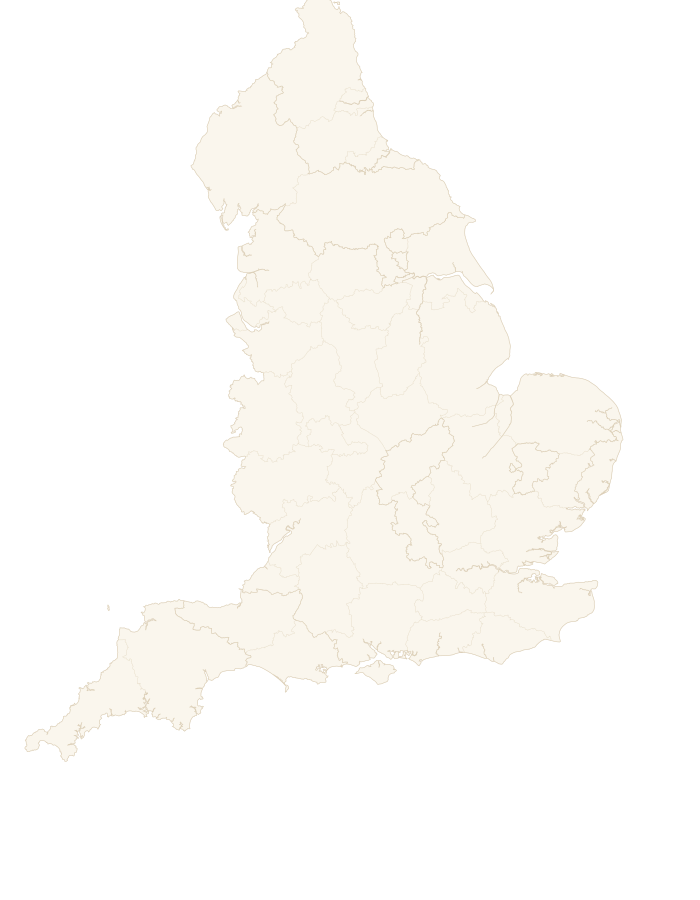
- North West, England
- Register
- English family
Where the Bates name comes from
CoreHistoric reach
The seat of Bates
Seat vacantChief
No one leads the Bates community yet. When the movement opens, you can stand for its leadership, or help elect whoever does.
Current mission
No shared goal set yet. Once Bates has leadership, it sets the public focus: a restoration, a gathering, a real-world project that helps its own.
The Bates clan is being rebuilt. Join the waiting list for the movement today, and you help decide who leads it and what it does.
Help rebuild the Bates clan →What does the Bates name mean?
Son of Bate, Bartholomew pet-form battlefield.
The history of Bates
Why medieval England needed a short name for Bartholomew
English surnames arrived by instalments. Christopher Daniell dates what might be the first recorded surname inherited by more than one generation to 1140, and family names in England are generally traced to the Domesday Book of 1086. They were taken up first among the feudal nobility and gentry and spread slowly outward; by 1400 most English families, and those of Lowland Scotland, had settled into hereditary surnames. Late medieval England resisted compulsory surnames because people associated them with tax.
The pressure that produced a name like Bates came from a shortage of given names. Of the boys born in London in 1510, 24.4 per cent were christened John, 13.3 per cent Thomas and 11.7 per cent William. A parish of men sharing a font name told them apart by pet forms, the way Richard gave Hick and then Hickman. Bartholomew gave Bate. The -s that made Bates is a genitive marking a man's son or his servant, as Roberts stood for the son or servant of Robert, and it clusters from Cumbria to the Humber.
One tower held in the 1700s, one bought as a ruin
Coupland Castle stands in the village of Coupland, four miles north-west of Wooler in Northumberland. Its core, built after 1584, is a three-storey rubble stone tower with an attic and a small projecting tower on the south wall. The Wallis family sold the estate in 1713 to Sir Chaloner Ogle, a successful naval officer; the Bates family owned it through the 18th century. By 1820 it was the residence of Matthew Culley, High Sheriff of Northumberland that year.
Langley Castle had a harder history before any Bates came near it. Owned by Adam de Tindal from 1165, it passed to the de Lucys, whose manor house on the land David Bruce destroyed in 1346. Sir Thomas de Lucy then raised the H-shaped tower house completed in 1364, four storeys with a major tower at each corner, and his daughter Maud inherited it with her second husband, Henry Percy, Earl of Northumberland. Fire gutted it in 1405 and it lay in ruins for five centuries.
In 1882 the local historian Cadwallader Bates bought the shell, and in 1914 he and his wife Josephine restored it, enlarging the windows and adding a south door. The Robb family bought it in the 1980s and it works as a hotel now. Its south-west tower still holds twelve garderobes, four to each floor, some of the most exceptional survivals of their kind in Europe.
The Leicester apprentice who wrote to the Linnean Society at nineteen
Henry Walter Bates was born at Leicester in February 1825, eldest son of a hosier who ran a stocking-frame workshop in the town. Apprenticed to the knitwear trade at thirteen, he educated himself in the evenings at the Mechanics' Institute. By sixteen he was collecting beetles on the canal towpath; by nineteen he was writing to the Linnean Society.
At the Mechanics' Institute library in 1844 he met Alfred Russel Wallace, then a schoolmaster in Leicester, and that friendship was the foundation of both their careers. The two resolved to pay for a natural-history expedition to the Amazon by selling specimens to British museums and collectors. They sailed from Liverpool aboard the Mischief on 26 April 1848 and reached Pará at the mouth of the Amazon on 28 May. Bates was twenty-three.
Eleven years on the river, and fourteen thousand species new to science
Bates and Wallace worked together for eighteen months, then parted by agreement so each could cover the river's tributaries on his own line. Bates stayed. He went from Pará up to Santarém, then up the Tapajós into the Mato Grosso interior, then back to the main stream and up the Solimões to Ega on the upper Amazon, basing himself there for four years of collecting trips into the Japurá, the Içá and the Tonantins.
For most of that time he was the only European on the upper Amazon. He learned the Lingua Geral trade pidgin and conversational Portuguese, and shipped home fourteen thousand species new to science, mostly insects, the largest single collection made by any one collector in nineteenth-century natural history. He came home in 1859 and sat down to write up the field notebooks.
The edible butterfly wearing another species' warning colours
In 1861 Bates read to the Linnean Society the paper that gave evolutionary biology its first independent field evidence, Contributions to an Insect Fauna of the Amazon Valley. It set out, in 1862, the mechanism now called Batesian mimicry: an edible butterfly evolves the wing pattern of an inedible species the local birds have learned to avoid, and gains the protection without the cost. That needs natural selection as its engine, and Bates said so. Darwin called it one of the most admirable papers he had read.
The narrative that followed, the two-volume Naturalist on the River Amazons (1863), is the foundation document of English-language Amazonian natural history. On Darwin's recommendation Bates was made assistant secretary of the Royal Geographical Society in 1864 and held the post twenty-eight years, through the great age of African and Arctic exploration. He married Sarah Ann Mason of Leicester in 1861, was elected a Fellow of the Royal Society in 1881, and died at Dulwich on 16 February 1892.
From Lydd in Kent to a Massachusetts line
The Bates family of Maine and Massachusetts traced its own beginnings through the Norman-descended Mortimers and a connection to Henry Bate of Mechelen, then from an ancestral seat at Gyrn Castle to Lydd in Kent, where the family had lived since at least the 13th century. The family's prominence began with Benjamin Bates I (1651-1710), who worked his way into the law as a boy in Edinburgh, won a reputation for argument among the town's senior councilmen, and moved into banking.
The family moved back and forth between England and Massachusetts, some children born abroad and others in New England. Alfred Bates fought in the American Revolution as a captain and later became a brigadier general of the Massachusetts State Militia. Through the marriage of Elkanah Bates (1779-1841) to Hannah Copeland the line joined that of John Alden, crew member on the 1620 Mayflower voyage, and took its crest at that wedding.
The mill owner who did not want the college named after him
Benjamin Bates IV was born at Mansfield, Massachusetts, on 12 July 1808, third of the eight children of Elkanah Bates and Hannah Copeland. Schooled at Wrentham Academy, he moved to Boston in 1829 and co-founded the firm of Davis & Bates. His principal achievement was the Bates Manufacturing Company, which became the largest manufacturing company in Maine and produced two-thirds of the state's textile output.
Moving to Lewiston, he founded the Lewiston Water Company and built the Bates Mill, the largest in the city, its works running from the Androscoggin River to northern Lewiston. It was Maine's largest employer for three decades and supplied uniforms and other textiles to the Union Army during the Civil War. He came to control 15 per cent of all railroads in the state.
His friend Oren Burbank Cheney was founding the Maine State Seminary in central Lewiston, and Bates put his mills, canals and other holdings behind the building of it, pledging $6,000 in 1852. He was made a trustee in 1853 and chairman of the board in 1854, and on 21 February 1873 gave $100,000 on condition that other donors matched it within five years. Cheney renamed the college after him without telling him; Bates replied on 18 May 1863 that he would rather it carried the name of someone more worthy of its inception and history.
Edward Bates, who wrote a state's preamble and joined Lincoln's cabinet
Edward Bates (1793-1869) was born in Goochland County, Virginia, tutored privately at home as a boy and later sent to the Charlotte Hall Military Academy in Maryland. His first move into politics came in 1820, with election to Missouri's constitutional convention, where he wrote the preamble to the state constitution. That authorship stayed with him, shaping his later fight against the radical Missouri Constitution of 1865. He was then appointed the state's Attorney General.
He became a prominent Whig during the 1840s, his political philosophy close to Henry Clay's. President Millard Fillmore asked him to serve as United States Secretary of War in 1850 and he declined; at the Whig National Convention of 1852 he led the first ballot for the vice-presidential nomination before losing on the second to William Alexander Graham. He went on to serve as the 26th United States Attorney General under Abraham Lincoln. His brother Frederick was the second Governor of Missouri and his brother James Woodson sat in the US House for Arkansas.
Champions of the Bates name
The bearers whose lives are inseparable from this surname. Each has their own page, biography, achievements, geography, connection to the family.
Historic Places, Rebuilt
Explore the streets and seats the Bates name knew, rebuilt with AI as they stood in history.
Castles the Bates held
Strongholds this name held for a decade or more, look one up, or rebuild it to explore.
- Langley Castle
Bought in 1882 by the historian Cadwallader Bates, who restored it with his wife Josephine in 1914.
- Coupland Castle
The Bates family owned the estate in the 18th century.
Landmarks the Bates held
Palaces, houses and great buildings tied to this name, look one up, or rebuild it to explore.
- HM Fort Roughs
Occupied in 1967 by Roy Bates, who declared the wartime fort the Principality of Sealand; the Bates family has held it ever since.
The castles of the homeland
The great strongholds of the homeland, look one up, see what it looked like in its prime, and recreate it to explore.
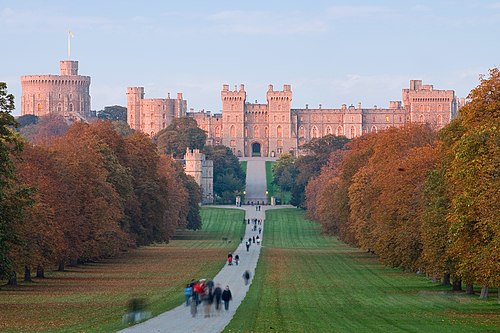 Windsor CastleRestored · prime 1820
 Tower of LondonRestored · prime 1285
 Bamburgh CastleRestored · prime 1904
All castles in England → · Strongest castles in England → · Castles of Europe
Play As Your Clan
Hold a real castle against whatever you choose to send at it, take a ship out in her own service years, or stand at the shoulder of someone the record remembers. The chronicler sets the scene; the deeds are yours.