Brooks
By the brook, every wet valley had one.
- Origin
- West Midlands, England
- Famous bearer
- Henry Brooks Adams (1838–1918), American historian; great-grandson of John Adams (US 2nd President)
- Register
- English family
The Brooks arms and country

Coat of armsEscutcheon of Brooks, Baron CrawshawBorne by Baron Crawshaw: the ennobled line of the name, not the name at large.CC BY-SA 4.0

- Coat of arms: Granted to an individual and inherited down that one documented line. These are the arms of particular families of the name, not of everyone who shares the surname.
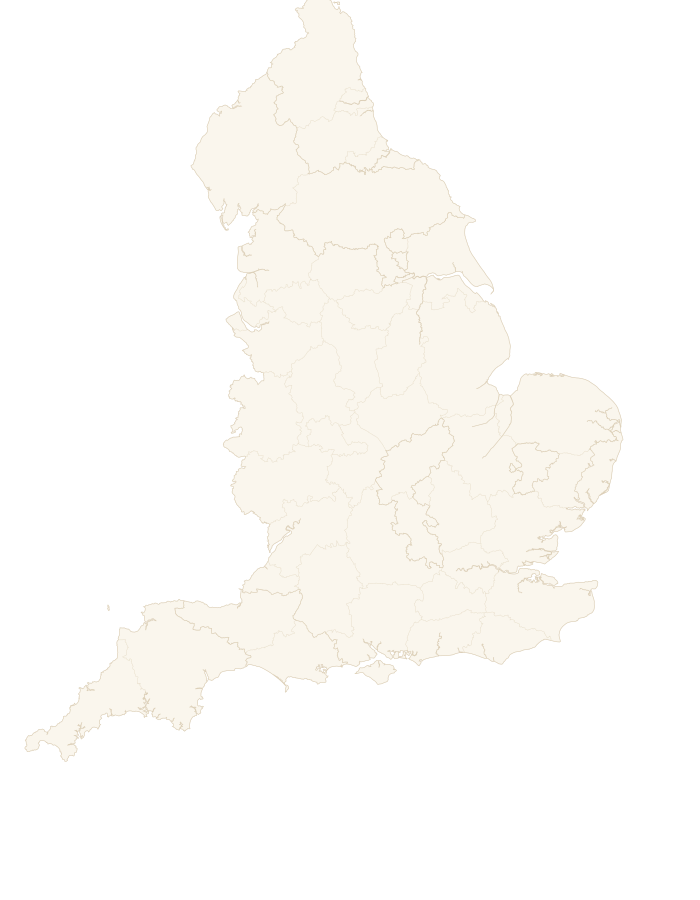
CoreHistoric reach
The seat of Brooks
Seat vacantChief
No one leads the Brooks community yet. When the movement opens, you can stand for its leadership, or help elect whoever does.
Current mission
No shared goal set yet. Once Brooks has leadership, it sets the public focus: a restoration, a gathering, a real-world project that helps its own.
The Brooks clan is being rebuilt. Join the waiting list for the movement today, and you help decide who leads it and what it does.
Help rebuild the Brooks clan →What does the Brooks name mean?
Locative, dweller by the brook. Old English brōc.
The history of Brooks
Atte Broc: the man who lived at the brook
Brooks is one of the plainest names in England and its meaning has never been in doubt. It comes from the Old English broc, a small running stream, and it survives in the medieval predecessors of the modern spelling: Ate-Broc and Atte-Broc, literally at the brook. That little preposition is the whole story. It was not a title, not a trade and not a father's name. It was an address, given to a man by his neighbours because everybody in the parish knew which house stood by the water.
Names like that were never chosen. English surnames began as descriptions of some aspect of an individual (his trade, his father's name, the place he was born, his physical features) and for a long while they were not inherited at all. A man was atte broke because he lived there; if he moved, the byname could be dropped.
Then the preposition wore away and the description hardened, and that has a rough date: by 1400 most English families, and those of Lowland Scotland with them, had adopted hereditary surnames. After that the sons of the man at the brook were Brooks whether they still drew water from it or had gone forty miles to a town.
Why your Brooks and the next Brooks are probably not cousins
This is the most useful thing a Brooks reader can learn, and it is the opposite of a disappointment. Topographic names are the class that arose independently in hundreds of places at once. Every wet valley in England had a brook, every brook had a house nearest to it, and every parish reached for the same obvious description without any reference to what the next parish had done. There is no founder and no first Brooks: there are hundreds of first Brookses, all of them equally original.
The scholarship bears the point out. A four-year study led by the University of the West of England, concluded in 2016, analysed sources from the 11th to the 19th century and found that over 90% of the 45,602 surnames it catalogued are native to Britain and Ireland. Its leader, Richard Coates, set out the classes plainly: occupational names like Smith and Baker, patronymics like Jackson, descriptive names like Brown and Short, and names linked to a place; his examples were Hill and Green, the company Brooks keeps.
So two Brooks families from opposite ends of England are no more likely to share an ancestor than two families called Hill. What they share is a way of life rather than a bloodline: the water at the bottom of the lane, the fording place, the fuller rinsing cloth, the man who knew every stone in the stream. The surname is not the evidence. The parish register is.
Brook, Brooke, Brooks: what that s is doing on the end
The genitive Brooks, with the s, is the dominant English-Midlands spelling of the underlying locative. Brook without it carried as the Anglo-Norman gentry variant, fixed by the medieval Brooke-of-Cobham line in Kent and by the medieval Brokes of Cheshire and Staffordshire. The two forms are the same word wearing different clothes, and which one a family ended up with often had more to do with the clerk holding the pen than with anything the family decided.
The s itself was a busy letter in English naming. It could mark the possessive (the household of the brook) and it could mark service or descent: Vickers is recorded as the name taken by a vicar's servant, formed by adding an s, and Roberts could be taken by either the son or the servant of a man named Robert.
Set that beside how the conquerors named themselves. English surnames are generally traced from the preparation of the Domesday Book in 1086, and the earliest fixed ones belonged to the feudal nobility and gentry before spreading slowly through the rest of society. Some of the Norman nobility who came over in 1066 put de (of, from) before the name of their village or estate in France, a territorial surname born of feudal landownership. A Norman de name points at one estate a man owned. Brooks points at a stream a man did not own, and never needed to.
Pennine chapels and Black Country brick
The name's later concentrations are not where a reader might guess. The post-Reformation period generated fresh surname fixation through the Brook chapel-and-meetinghouse Quaker and Methodist communities of the Pennine valleys, and the West Riding parish records of Yorkshire from the 1660s onwards register a Brook-and-Brooks population of substantial size in the mill-and-weaving villages of the Calder, Aire and Ribble valleys. These were dissenting, self-recording communities, which is a gift to descendants: they kept their own registers when the established church would not keep them.
Industrial Birmingham, the Black Country and the Lancashire mill towns then drew the name off the land and into the terraces. The brook itself often vanished under brick and culvert, but the surname kept the babble of it long after nobody could hear the water.
The bearers of those districts belong recognisably to that world. Edmund Wright Brooks, 1834 to 1928, was an English Quaker philanthropist and cement maker: dissent and industry in one man. David Brooks, 1864 to 1930, was Lord Mayor of Birmingham from 1917 to 1919, wartime civic head of the city at the centre of the Brooks heartland.
The Irish Brooks and the Hebrew one
Two other roads end at the same six letters, and neither is a footnote. The surname Brooks is recorded in Ireland from the 1600s, and O'Laughlin notes that some of the name could stem from Irish origins, the name being changed into the English word Brook or Brooks. An Irish Brooks may therefore be tracing a line with nothing to do with any English watercourse.
The second road is European-Jewish. Brooks is found among English-speaking Ashkenazi Jews, deriving from the male Hebrew given name Boruch, meaning blessed. That a given name became a hereditary surname at all was a matter of law rather than choice: Prussia enacted the Hoym Ordinance at Breslau in 1790, mandating the adoption of Jewish surnames, and Napoleon insisted on Jews adopting fixed names by decree in 1808. Families who had gone for centuries without a fixed surname had to produce one within a generation.
The move from Boruch to Brooks came later and further west. European Jews arriving in the United States, particularly those fleeing Nazi persecution, sometimes anglicised their surnames to avoid discrimination, and Brooks was waiting: an ordinary English name that sounded near enough to the one the family already had. That reader is not carrying a borrowed name. They are carrying two European naming laws and one hard crossing, compressed into six letters.
Muddy Brook, and the name in America
The surname arrived in North America from England in the mid-seventeenth century, carried by the New England Puritan settlement of the 1630s and 1640s, and it marked the map almost immediately. The Brookline neighbourhood of suburban Boston, named for the Muddy Brook on its western boundary, took its name in connection with an early-generation Brookes settler family that ran the largest farm-and-mill operation in colonial Suffolk County, Massachusetts, through the early eighteenth century.
The distribution has stayed true to that beginning. The American Brooks population in the modern census remains heavily concentrated in the New England states and in the Pennsylvania-and-Ohio Quaker-Anglican settlement belt, the same dissenting geography that produced the Pennine Brookses, transplanted whole. The Australian and Canadian Brookses descend from later nineteenth-century emigration cohorts.
Daniel Brooks and Elisha Brooks were among the Brooks Brothers, the American clothiers whose name became a fixture of the trade. Further out, Dallas Brooks, 1896 to 1966, was an Australian general and politician, and Harriet Brooks, 1876 to 1933, a Canadian physicist, among the earliest women in the field in her country.
A carol, a Pulitzer, and a hockey coach at Lake Placid
The Brooks contribution to public life over the past two centuries has run through journalism, music and Anglo-American letters rather than through land. Phillips Brooks, 1835 to 1893, was Rector of Trinity Church, Boston, from 1869 to 1891 and the Episcopal cleric of his post-Civil-War American generation. He is known now for four verses: O Little Town of Bethlehem, written out of a Christmas Eve spent in the Holy Land in 1865 and given to the world in 1868, sung every December by millions who have never heard his name.
Henry Brooks Adams, 1838 to 1918, great-grandson of John Adams and grandson of John Quincy Adams, became the dean of American historians of his generation; The Education of Henry Adams was privately printed in 1907 and took the Pulitzer Prize posthumously in 1919. In Britain the name stayed close to print: Shirley Brooks, 1816 to 1874, was a journalist and novelist, and Rebekah Brooks, born 1968, edited the News of the World and The Sun and ran News International through the 2011 phone-hacking scandal that closed the News of the World on 10 July 2011.
Sir Charles Brooke, 1829 to 1917, carried the Brooke form of the name to Borneo as the second White Rajah of Sarawak. And Herb Brooks, the Saint Paul ice-hockey coach, took a United States Olympic team of twenty college amateurs against the four-time defending Olympic champions of the Soviet Union at Lake Placid on 22 February 1980 and won 4-3: the Miracle on Ice, the most-watched ice-hockey game in American television history. Not bad for a name that began as a way of telling one villager from another by which side of the water he slept on.
Champions of the Brooks name
The bearers whose lives are inseparable from this surname. Each has their own page, biography, achievements, geography, connection to the family.
Historic Places, Rebuilt
Explore the streets and seats the Brooks name knew, rebuilt with AI as they stood in history.
The castles of the homeland
The great strongholds of the homeland, look one up, see what it looked like in its prime, and recreate it to explore.
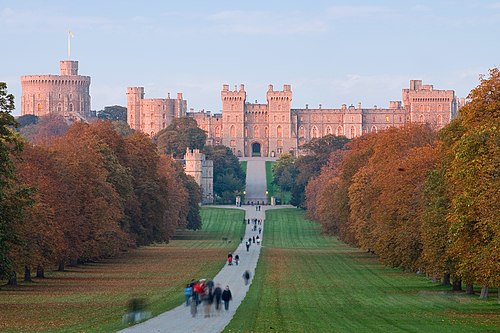 Windsor CastleRestored · prime 1820
 Tower of LondonRestored · prime 1285
 Bamburgh CastleRestored · prime 1904
All castles in England → · Strongest castles in England → · Castles of Europe
Play As Your Clan
Hold a real castle against whatever you choose to send at it, take a ship out in her own service years, or stand at the shoulder of someone the record remembers. The chronicler sets the scene; the deeds are yours.
Notable bearers of the Brooks name
- Henry Brooks Adams (1838–1918), American historian; great-grandson of John Adams (US 2nd President)
- Phillips Brooks (1835–1893), Boston Episcopal bishop and author of the carol O Little Town of Bethlehem
- Sir Charles Brooke (1829–1917), second White Rajah of Sarawak
- Rebekah Brooks (b. 1968), English newspaper editor; chief executive of News International through the 2011 phone-hacking scandal