Carter
The carter, and the man who opened Tutankhamun's tomb.
- Origin
- London, England
- Famous bearer
- Howard Carter (1874–1939), Egyptologist, discoverer of the tomb of Tutankhamun
- Register
- English family
Where the Carter name comes from
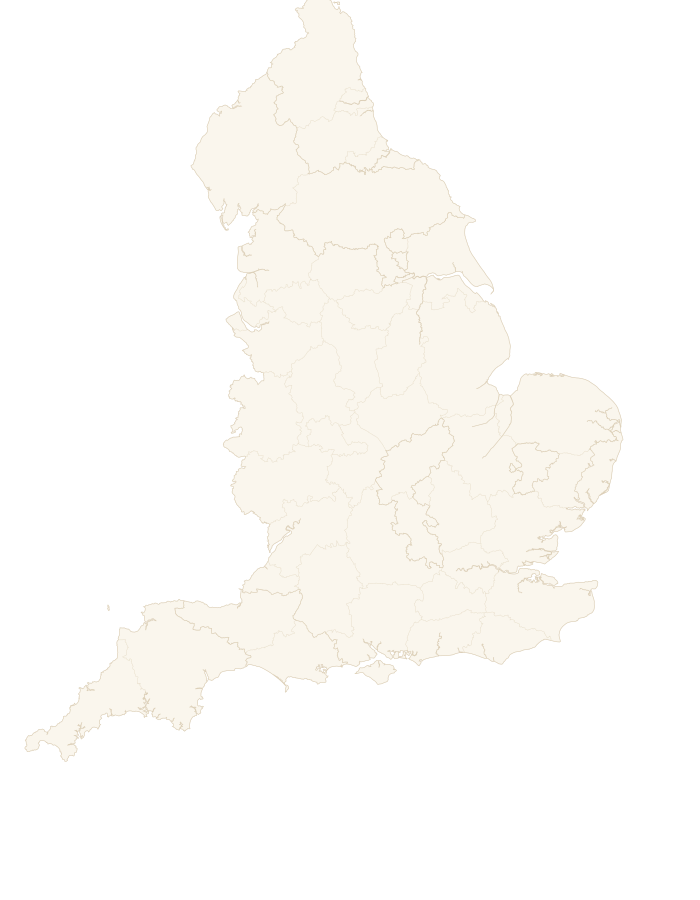
CoreHistoric reach
The seat of Carter
Seat vacantChief
No one leads the Carter community yet. When the movement opens, you can stand for its leadership, or help elect whoever does.
Current mission
No shared goal set yet. Once Carter has leadership, it sets the public focus: a restoration, a gathering, a real-world project that helps its own.
The Carter clan is being rebuilt. Join the waiting list for the movement today, and you help decide who leads it and what it does.
Help rebuild the Carter clan →What does the Carter name mean?
Occupational, carter, one who carts goods. Old Norse kartr influenced Middle English.
The history of Carter
The man who drove the cart
Carter means what it sounds like: one who uses a cart, the man who moved goods belonging to somebody else. It reached English from Anglo-Norman careter or caretier, from Latin carettarius, which traces back through the Celtic cairt to a Proto-Indo-European root, kars or kart, for a wheeled vehicle. The label is French rather than English for a reason with a date on it: after 1066 Anglo-Norman became the speech of the ruling class and official documents shifted from Old English to Latin, so the clerk who wrote down which villager hauled the lord's grain used the record keepers' vocabulary.
That is also why the name is everywhere and concentrated nowhere. Every manor, market town, wharf, quarry and abbey needed a man with a cart and a beast to pull it, and the byname stuck to whoever had one. Hereditary surnames began among the feudal nobility after the Conquest and spread slowly downwards; by 1400 most English and Lowland Scottish families carried one. Carter is now the 56th commonest surname in England and the 44th in the United States, and the arithmetic behind those figures is repetition rather than descent.
Rannulf le Caretier and the six names of 1273
The earliest recorded bearer in England is Rannulf le Caretier, a Norman knight entered in the Pipe Rolls of Huntingdonshire in 1192-1193, in the reign of Richard I. The Hundred Rolls of 1273, a survey of England and Wales, catch the name mid-formation and not yet fixed in spelling: Jocius Catetarius and Nicholas le Carter in Oxfordshire, Juliana le Cartere in Cambridgeshire, John le Cartere in Norfolk, Robert le Caretter and Margaret le Careter in Huntingdonshire. Six bearers, five spellings, four counties, and two of them women. By the Poll Tax of Yorkshire in 1379 the modern spelling has arrived, in Richardus Carter.
None of those people is known to be related to any of the others, and there is no reason to suppose they were. The name was coined separately in Oxfordshire, in Norfolk, in Huntingdonshire and in Yorkshire, by different clerks about different men, so a Carter today descends from one of those local coinages rather than from a founding family.
Two wheels, four wheels, and the price of moving anything
A cart has two wheels. A wagon has four, was formerly called a wain, and was pulled by horses, mules or oxen, singly, in a pair or in a team. A common farm form across Europe was the ladder wagon, its sides ladders strapped in place to hold hay or sheaves of grain and lifted out when the load changed.
The work was not comfortable. Wagons built for hauling bulk overland were never built for carrying people: many had no driver's seat at all, so the carter walked beside his team or rode one of the horses, and sat when he could on a lazyboard, a plank that pulled out and pushed back in. Trolleys and lorries were the light flatbeds that shifted goods between rail yards, docks and warehouses; the dray was the heavy one, so bound to a single cargo that brewer's dray became a phrase.
Elm for the nave, oak for the spokes, ash for the felloes
No carter went anywhere without a wheelwright. A wooden wheel was built outwards from its centre: the nave or hub first, the spokes tenoned into it, then curved felloes pieced into a rim. Elm for the nave, because its interwoven grain will not split when the spokes are driven home tight; oak for the spokes, because it does not bend or compress and passes the load straight from rim to hub; ash for the felloes, because it is springy and takes the shock of the road. The iron came last: a blacksmith made the tyre slightly smaller than the wheel and heated it until it expanded, and it was hammered on and quenched, so that in shrinking it pulled every joint tight at once.
The craft produced surnames of its own, Wright, Cartwright and Wainwright among them, from the Old English wryhta, a worker. Those are the men who built the vehicle; Carter is the man who drove it, and the names are not variants of each other. The trade declined in the industrial age, when factory-made hubs and pre-manufactured parts spread through the later nineteenth century and made the village wheelwright obsolete.
Francis Carter and the keep at Guildford
In 1611 James I granted the estate of Guildford Castle in Surrey to Francis Carter. What he received was already more than five centuries old: a motte and bailey thought to have been raised by William the Conqueror or one of his barons soon after 1066, its large quadrangular keep still dominating the mound in the middle of the town. Mainly a royal residence, upgraded in the thirteenth century, it was never attacked; Prince Louis took possession in 1216, during the First Barons' War, without any fighting at all.
The men who ran it before the grant were not of the name and no kin to Francis Carter: William de Coniers was constable in 1218 and Elias de Maunsel in 1247, and custody later went to William de Aguillon, sheriff of Surrey, probably so the castle could serve as a prison. The keep and its earthworks stand in public gardens today. Surrey is one of the counties where the surname sits thickest, with London, Kent, Sussex, Hampshire, Berkshire, Oxfordshire and Buckinghamshire.
The Pale, the Statutes of Kilkenny, and the Mc that was dropped
English-derived Carters crossed to Ireland after the Norman invasion of the 1100s and settled in the walled towns the Normans built. Many assimilated so completely into Gaelic custom, language and religion that Irish historiography gave the whole population a phrase of its own: more Irish than the Irish themselves. The Statutes of Kilkenny of 1366, framed to arrest the decline of the Hiberno-Norman lordship, required every Englishman, and every Irishman living among the English, to use English and take English naming and custom, on pain of prison and loss of property. The Irish of the Pale were to take an English surname after a town, a colour, a trade or an office: a clause that manufactured occupational surnames where they had not grown by themselves.
A further layer arrived with the English and Scottish Protestant planters who came between the 1550s and 1700 and settled mainly in Ulster. A third road ran through the emigration desks, where Carter served as a shortened form of the Irish McCarter, cut down by immigration clerks in the United States and Canada in the nineteenth and early twentieth centuries. In Ireland the name is commonest today in County Laois, where it ranks 70th; in Scotland it is densest in the Outer Hebrides. In the United States roughly 35 per cent of its holders came to it by a wholly different road, when people held in slavery lost their own family names and were given those of enslavers, a history of its own rather than a branch of the English carters.
Bristol, Tennessee, 1 August 1927
On the last day of July 1927 A. P. Carter persuaded his wife Sara and his sister-in-law Maybelle to make the 24-mile trip from Maces Spring, Virginia, to Bristol, Tennessee, and audition for the record producer Ralph Peer. They recorded the next day, 1 August, on the empty second floor of the Taylor-Christian hat company warehouse, for fifty dollars a song and half a cent on every copy sold. Maybelle was Sara's first cousin and had married A. P.'s brother Ezra; all three were raised in southwest Virginia on mountain gospel and shape note singing.
Victor released Wandering Boy and Poor Orphan Child that November, and by the end of 1930 the Carter Family had sold 300,000 records. A. P. travelled southwestern Virginia collecting songs, Sara sang lead, and Maybelle sang harmony and played lead guitar. The technique Maybelle worked out largely in isolation, thumb picking melody on the bass strings while her fingers brushed rhythm across the high ones, is known as the Carter scratch. Hers became the most widely imitated guitar style in American music, at a time when the guitar was rarely used as a lead instrument at all.
From 1938 to 1941 they broadcast twice a day on the border station XERA, heard across the central and western United States, and in the 1939-40 season the children joined the radio programmes: Janette and Joe, and Maybelle's daughters Helen, June and Anita. Maybelle and her daughters reached the Grand Ole Opry on 29 May 1950. Can the Circle Be Unbroken and Keep on the Sunny Side became standards, and in 1970 the family was the first group elected to the Country Music Hall of Fame.
A tomb in November and thirteen days at Camp David
Howard Carter, born in Kensington in 1874 and died in 1939, was the Egyptologist who found the intact tomb of Tutankhamun in the Valley of the Kings in November 1922, the single most consequential archaeological discovery of the twentieth century.
James Earl Carter Jr. was born at Plains, Georgia, on 1 October 1924. He trained at the United States Naval Academy at Annapolis and served as a submarine officer in the early nuclear navy under Admiral Rickover before going home to run the family farm, then rose through Georgia state politics to the governorship and was elected President of the United States in 1976. The signal achievement of his presidency was the Camp David Accords of 1978, brokered in person over thirteen days between Egypt and Israel, which produced their peace treaty the following year and has held ever since. June Carter and her sisters were distant cousins of his.
The forty years after the White House were the longer half of the work. He founded the Carter Center in 1982, monitored elections across the world, led a global health campaign that has all but eradicated Guinea-worm disease, and gave his hands for decades to Habitat for Humanity, building houses for people who had none. In 2002 he was awarded the Nobel Peace Prize, and he lived to a hundred years of age, the longest-lived president in American history. The name he carried from a Georgia farm to the presidency, and then to the poorest places on earth, began as the plainest job description there is: the man who moved the goods along the road.
Champions of the Carter name
The bearers whose lives are inseparable from this surname. Each has their own page, biography, achievements, geography, connection to the family.
Historic Places, Rebuilt
Explore the streets and seats the Carter name knew, rebuilt with AI as they stood in history.
Castles the Carter held
Strongholds this name held for a decade or more, look one up, or rebuild it to explore.
- Guildford Castle
Granted to Francis Carter by James I in 1611.
The castles of the homeland
The great strongholds of the homeland, look one up, see what it looked like in its prime, and recreate it to explore.
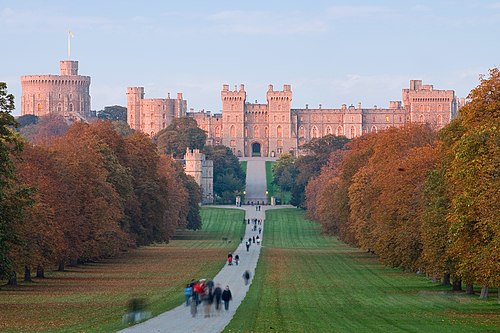 Windsor CastleRestored · prime 1820
 Tower of LondonRestored · prime 1285
 Bamburgh CastleRestored · prime 1904
All castles in England → · Strongest castles in England → · Castles of Europe
Play As Your Clan
Hold a real castle against whatever you choose to send at it, take a ship out in her own service years, or stand at the shoulder of someone the record remembers. The chronicler sets the scene; the deeds are yours.
Notable bearers of the Carter name
- Howard Carter (1874–1939), Egyptologist, discoverer of the tomb of Tutankhamun