Cole
Coal-black or Saint Nicholas' pet form.
- Origin
- South West, England
- Register
- English family
Where the Cole name comes from
CoreHistoric reach
The seat of Cole
Seat vacantChief
No one leads the Cole community yet. When the movement opens, you can stand for its leadership, or help elect whoever does.
Current mission
No shared goal set yet. Once Cole has leadership, it sets the public focus: a restoration, a gathering, a real-world project that helps its own.
The Cole clan is being rebuilt. Join the waiting list for the movement today, and you help decide who leads it and what it does.
Help rebuild the Cole clan →What does the Cole name mean?
Swarthy nickname Old English col, or short Nicholas, or Welsh Coch anglicised.
The history of Cole
Three doors into four letters
Middle English col meant swarthy, coal-black, charcoal, and it stuck to a dark-complexioned man or one who worked at a charcoal heap. Cole was also the affectionate short form of Nicholas, one of the Greek-derived given names that English families used so heavily that a pet form could harden into a surname of its own. And Welsh Coch was anglicised into the same four letters by clerks writing English. Three unrelated doors, one spelling, and which one a family walked through is a question of parish context rather than of the letters.
Nickname surnames of this kind form the broadest class in English, the cognominal group that also produced Short, Brown and Daft, names describing the first bearer rather than his trade or his village. One further current runs in from outside England: Cole is the Americanised spelling of the German Kohl, the Dutch Kool, and the Scottish and Irish McCool.
Ralph Cole buys a castle the Crown had confiscated twice
Brancepeth in County Durham began as a Norman castle raised by the Bulmers and was rebuilt by the Nevilles in the late fourteenth century. The Nevilles held it until 1569, when the Crown seized it for the family's part in the Rising of the North. Early in the seventeenth century it was granted to Robert Carr, 1st Earl of Somerset, and confiscated a second time after his involvement in a poisoning scandal. A great house the Crown had taken twice was a bargain with a warning attached to it.
In 1636 Ralph Cole of Newcastle bought it. The purchase moved a Newcastle fortune into a Neville stronghold and gave the family a seat that a reader can still stand in front of. The Coles held Brancepeth for sixty-five years and a baronetcy with it: the sale in 1701 was made by Sir Ralph Cole, 2nd Baronet, who passed the castle to Sir Henry Belaysyse.
The fifteen-year-old clerk who abolished his own office
Henry Cole was born at Bath in July 1808, son of a captain in the 1st Royal Dragoons who had served at the siege of Copenhagen, and of Laetitia Dormer, a Bath dressmaker's daughter. His father's retirement on half-pay took the family to London. He was at Christ's Hospital from nine to fifteen and went straight from the schoolroom into the public service in 1823, a junior clerk at the Record Commission on ninety pounds a year.
The Record Commission was a corruption-riddled Georgian sinecure whose declared business was the cataloguing of state papers. Cole spent eleven years, partly on his own time, assembling the documentary case against it, and gave evidence to the parliamentary select committee that abolished it in 1834.
The Public Record Office Act of 1838 was effectively his bill. It created the modern state archive at the Rolls Estate in Chancery Lane and the post of Deputy Keeper to run it, and Cole served four years as senior assistant under the first holder of that office. The cataloguing reform he pushed through made medieval English government records systematically findable for the first time, and the repository he helped legislate into being is the ancestor of the National Archives at Kew.
Felix Summerly, and a thousand cards at Christmas 1843
He left the Record Office in 1842 and turned to design reform and decorative-arts publishing under the pen name Felix Summerly. The Felix Summerly Art Manufactures, running from 1847 to 1850, commissioned tea services, pottery and ink wells from contemporary artists on the founding principle that good design was a matter of public education and could properly be undertaken by the state. In the same decade he sat on the Royal Commission that designed the Penny Post stamp with Rowland Hill, and ran a children's-book imprint that pioneered cheap illustrated editions of the Aesopian and folkloric canon.
At Christmas 1843 he commissioned John Callcott Horsley to design the first commercial Christmas card. It was a three-panel hand-coloured lithograph printed by Joseph Cundall in an edition of about a thousand, reading A Merry Christmas and a Happy New Year to You, sent to Cole's friends and family. Every printed Christmas card since descends from that commission, and the inland Penny Post that made sending them practical was the other Cole and Hill project of the same years.
Six million visitors, and what was done with the surplus
The Great Exhibition of 1851 was the project his career turned on. As an executive commissioner working to Prince Albert, Cole carried the proposal from a Royal Society of Arts dinner in 1849 through Hyde Park to opening day on 1 May 1851. He oversaw the design competition that produced Joseph Paxton's Crystal Palace, wrote much of the catalogue, and ran the operational logistics for the six million visitors who passed through across the summer.
The Exhibition closed with a profit of nearly two hundred thousand pounds, the largest single surplus on any nineteenth-century English public project, and Cole was the man who proposed spending it on an estate at South Kensington and a permanent quarter of museums, schools and learned societies devoted to design and science. He saw the scheme through against the entire opposition of the Tory governments that followed Albert's death in 1861.
The South Kensington Museum opened in 1857 and Cole ran it as first general superintendent for sixteen years; it was renamed the Victoria and Albert Museum when it moved into new buildings in 1899. The Science Museum of 1857, the Royal Albert Hall of 1871, the Natural History Museum of 1881 and the Royal College of Music of 1882 all stand on ground he assembled. He retired in 1873, was knighted in 1875, and died at his Kensington home on 18 April 1882 at seventy-three.
Lowry Cole, and the name in the Irish peerage
One forename recurs across the Cole record. Galbraith Lowry Cole (1772-1842) was a British army officer. Lowry Cole, 4th Earl of Enniskillen (1845-1924), was an Irish politician, the name sitting inside an Irish earldom. Galbraith Lowry Egerton Cole (1881-1929) is recorded as an Irish pioneer and Reginald Berkeley Cole (1882-1925) as a British colonist.
Engravers, physicians and arguers
The earliest firmly dated Cole in the record is Humfray Cole (1530-1591), an English engraver. Abdiah Cole (1610-1670) was an English physician. Three centuries later the name is still on scientific title pages: Grenville Cole (1859-1924), English geologist; Francis Cole (1872-1959), English zoologist; Monica Cole (1922-1994), English geographer.
It sits just as often on canvases and pamphlets. Tennyson Cole (1862-1939) and Elsie Vera Cole (1885-1967) were English painters and Rex Vicat Cole (1870-1940) a British artist. Ada Cole (1860-1930) was an English nurse and Clara Gilbert Cole (1868-1956) an English activist. G. D. H. Cole (1889-1959) was an English political theorist, Margaret Cole (1893-1980) an English novelist and politician, and Barry Cole (1936-2014) an English poet.
Where the name lives, and who carries it now
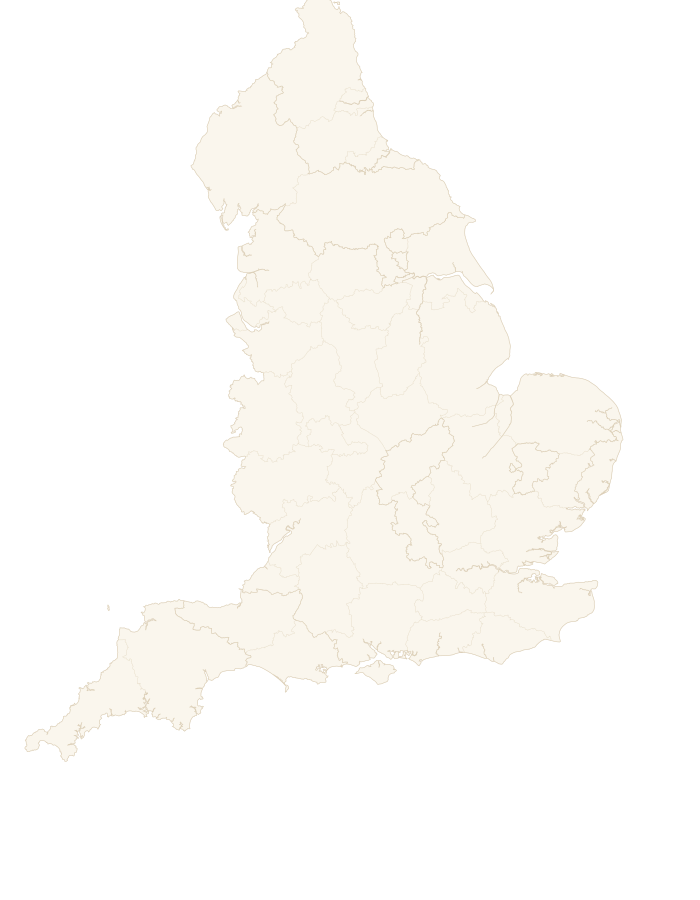
The living weight of the name is southern and western English: Cornwall, Devon, Somerset and Bristol, Dorset and Wiltshire, Gloucestershire, Hampshire and the Isle of Wight, Berkshire and Oxfordshire, Buckinghamshire, Surrey, Kent and both Sussexes. Its historic footprint runs elsewhere entirely, through London, Birmingham and the Black Country, Staffordshire, Warwickshire, Worcestershire and Herefordshire and Shropshire, and up the north-west from Cheshire through Merseyside, Manchester and Lancashire into Cumbria.
The name went overseas early. Susanna Cole (1633-1713) is recorded as an American colonist, and Eunice Cole (1590-1680), set down under the goodwife's title as Goody Cole as well, is remembered in American record as a witch. Later came Cornelius Cole (1822-1924), American politician, and Chester C. Cole (1824-1913), American judge, while Edward Irham Cole (1857-1942) took the name to Australia as a theatrical entrepreneur and film director.
In England now it is a name of stages and paperbacks. Lloyd Cole (born 1961) is an English singer-songwriter and Martina Cole (born 1959) an English novelist; Stephanie Cole (born 1941) is an English actress, Lily Cole (born 1988) an English model and Nigel Cole (born 1959) an English film director.
Champions of the Cole name
The bearers whose lives are inseparable from this surname. Each has their own page, biography, achievements, geography, connection to the family.
Historic Places, Rebuilt
Explore the streets and seats the Cole name knew, rebuilt with AI as they stood in history.
Castles the Cole held
Strongholds this name held for a decade or more, look one up, or rebuild it to explore.
- Brancepeth Castle
Held by the Coles from Ralph Cole's purchase in 1636 until Sir Ralph Cole, 2nd Baronet, sold it in 1701.
The castles of the homeland
The great strongholds of the homeland, look one up, see what it looked like in its prime, and recreate it to explore.
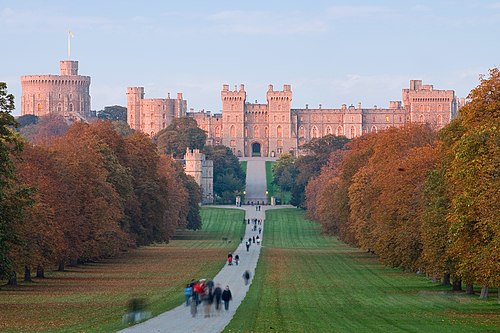 Windsor CastleRestored · prime 1820
 Tower of LondonRestored · prime 1285
 Bamburgh CastleRestored · prime 1904
All castles in England → · Strongest castles in England → · Castles of Europe
Play As Your Clan
Hold a real castle against whatever you choose to send at it, take a ship out in her own service years, or stand at the shoulder of someone the record remembers. The chronicler sets the scene; the deeds are yours.