Kelly
also O'Kelly, Ó Ceallaigh
Second most common Irish surname, the Uí Maine of Galway, and six other dynasties besides.
- Origin
- Connacht, Ireland
- Motto
- Turris fortis mihi Deus
- Famous bearer
- William Buidhe Ó Ceallaigh, 14th-c. lord of Uí Maine, host of the great 1351 feast
- Register
- Irish family
Ranked of all time
The 10 Oldest Clans in Ireland
The Kelly arms and country
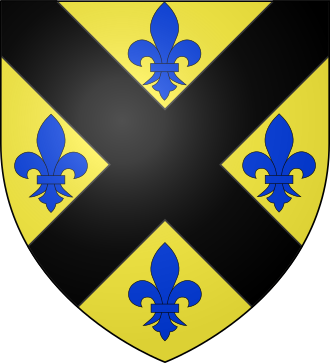
Coat of armsArms of Kelly of that IlkThe chief's own arms, borne by the head of the name alone; “of that Ilk” is the designation that says so.Celtus · CC BY-SA 3.0

- Coat of arms: Granted to an individual and inherited down that one documented line. These are the arms of particular families of the name, not of everyone who shares the surname.
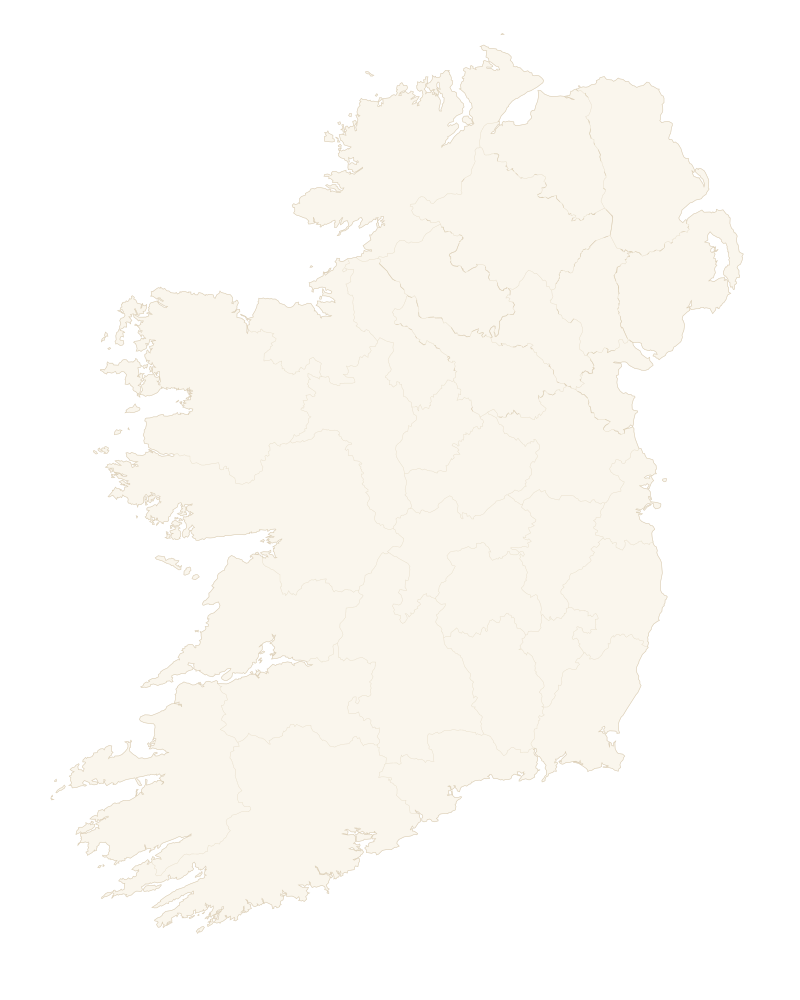
CoreHistoric reach
The seat of Kelly
Seat vacantChief
No one leads the Kelly community yet. When the movement opens, you can stand for its leadership, or help elect whoever does.
Current mission
No shared goal set yet. Once Kelly has leadership, it sets the public focus: a restoration, a gathering, a real-world project that helps its own.
The Kelly clan is being rebuilt. Join the waiting list for the movement today, and you help decide who leads it and what it does.
Help rebuild the Kelly clan →Motto
Turris fortis mihi Deus
“God is to me a tower of strength”
What does the Kelly name mean?
Anglicised from Ó Ceallaigh, descendant of Ceallach. Ceallach is an Old Irish personal name often glossed as 'bright-headed' or 'frequenter of churches', though the etymology is contested. At least seven distinct Ó Ceallaigh kindreds gave rise to the modern Kellys, the principal one being the Uí Maine of east Galway and south Roscommon. The Anglicised form Kelly displaced the Gaelic by the 18th century; the older O'Kelly form persists in family-name register but is less commonly written.
The history of Kelly
Seven kindreds, one spelling
Kelly is not one family. It is at least seven, unrelated to each other, squeezed into a single English spelling. Most Kellys descend from Ó Ceallaigh, 'descendant of Ceallach', but the separate line Ó Cadhla was also anglicised as Kelly, and the O'Kelly of Clan Brasil Mac Coolechan began as a chieftain kindred of the Ulaid in the north-east, with no connection to the western Ó Ceallaigh at all. The name arose independently in several parts of Ireland, and again in Scotland, the Isle of Man and England.
Even the meaning is contested: Ceallach was long glossed as 'bright-headed', the current reading takes it from the Irish ceall as 'frequenting churches', and a third tradition reads it as warrior. The scale is not. Counting Kelly, Kelley, Kellie, O'Kelly and Ó Ceallaigh together it is the most prevalent surname in Ireland; on the plain Kelly spelling alone it stands second only to Murphy.
The flattening happened in the anglicising, as clerks stripped the Gaelic prefixes writing names into English records. Kelly had displaced the Gaelic form by the 18th century, and the kindreds were compressed into one word before anyone thought to keep them apart.
Uí Maine: the kingdom on the Shannon
The greatest Ó Ceallaigh kindred ruled Uí Maine, a kingdom in south Connacht taking in all of County Galway east of Athenry and all of southern and central County Roscommon. It stood as an independent kingdom from prehistoric times and as a subject kingdom to the end of the medieval era. Tadhg Mór Ua Cellaigh died in 1014; Conchobar reigned from 1221 to 1268; Aedh mac Brian held the kingship for forty-three years, from 1424 to 1467.
The genealogy behind those kings must be read with care. Tradition traces the kindred to Maine Mór, placed around 357 to 407, and pedigrees compiled from the 8th century onward (Rawlinson B 502, the Book of Ballymote, MacFhirbisigh's Leabhar Mór na nGenealach) carry it further still. At least one genetic study concludes that while such genealogies appear fairly accurate back into the Middle Ages, they are unreliable before the 7th century. The earliest Uí Maine kings are semi-historic and their dates approximate.
The welcome of the O'Kellys
William Buidhe Ó Ceallaigh, who ruled Uí Maine from about 1349 to 1381, is remembered for a feast rather than a battle. At Christmas 1351, at his castle of Galey on Lough Ree, he entertained the poets, harpers and historians of Ireland, the largest gathering of the learned orders in the medieval Irish record, drawing men from every part of the island and running the full twelve days.
From it the phrase fáilte Uí Cheallaigh, the welcome of the O'Kellys, entered the Irish language, and it still means hospitality without limit. Few families leave a proverb behind in a living tongue.
Tower houses, surrender and regrant, and the fall
The Ó Ceallaigh built in stone across east Galway: Monivea Castle began as an O'Kelly tower house, and Clonbrock was theirs, estate and tower both, until the late 16th century. Then the ground moved. English common law spread through Ireland, sheriff and county displacing chief and country, and when the Kingdom of Ireland was created in 1541 Dublin drew the Gaelic lords inside it, granting them new arms in 1552. Surrender and regrant swapped Irish tanistry, under which a chief was elected from a group of eligible cousins, for primogeniture.
The Ó Ceallaigh went down hard. Tomás MacCnaimhín O'Kelly held the chiefship from 1590 to 1602 and was executed; Feardorcha followed to 1611, at the end of the Gaelic order. The Cromwellian dispossession of 1652 took land held for six centuries, and on 12 July 1691 James O'Kelly of the Aughrim branch was killed at the Battle of Aughrim, fought on ground his own family had ruled.
What survived went into branches and into Continental nobility. The senior line is the O'Kelly de Gallagh and Tycooly, Counts of the Holy Roman Empire and Chiefs of the Name, beside O'Kelly of Aughrim, of Mullaghmore and of Screen. The motto Turris fortis mihi Deus (God is to me a tower of strength) reads differently once you know how many towers they lost.
Why the surname proves nothing about descent
An Irish clan, a fine, was never a closed blood group. It held the chief and his patrilineal relatives, but also unrelated clients of the chief, and those clients and their descendants took the name of the leading lineage as a show of allegiance. They could never be elected chief and they were not kin, but they were Kellys, and so were their children. Uí Maine was shared ground too: the Ó Ceallaigh were its chiefs, but the same grouping carried the O'Maddens, O'Donnellans, O'Fahys and O'Concannons. A Madden and a Kelly from east Galway may be closer kin than two Kellys from opposite ends of Ireland.
Outside Ireland the spelling multiplies again. Kelly is common in Galloway and on the Isle of Man, partly through Irish migration before and during the Famine, but not only. A John de Kelly was Abbot of Arbroath in 1373, and William de Kellaw bailiff to Alexander III in 1278. There is a Kelly in Devon from the Cornish celli, 'wood' or 'grove', and on Man, in Cornwall and probably in Antrim the name grew from that root instead: man of the woods, not descendant of Ceallach.
The Kellys who left
Ned Kelly (1854-1880), born at Beveridge to a Tipperary man transported to Australia, led the Kelly Gang through the north-east Victorian high country from 1878 and on 27 June 1880 stood at Glenrowan in home-made plough-steel armour, the central image of Australian folk memory. Captain Edward Kelly won the Victoria Cross in the Boer War. Grace Kelly (1929-1982), born in Philadelphia of Mayo-Kelly descent, became Princess of Monaco in 1956; Gene Kelly (1912-1996) rebuilt screen dance around athleticism and the ordinary street.
A Kelly today cannot know for certain which of the seven kindreds is theirs. What they can know is that the name was worth taking: that unrelated men chose it deliberately, to stand under a lord whose hospitality became a proverb and whose kingdom on the Shannon outlasted almost every other in Europe.
Champions of the Kelly name
The bearers whose lives are inseparable from this surname. Each has their own page, biography, achievements, geography, connection to the family.
Historic Places, Rebuilt
Explore the streets and seats the Kelly name knew, rebuilt with AI as they stood in history.
Castles the Kelly held
Strongholds this name held for a decade or more, look one up, or rebuild it to explore.
- Clonbrock Castle
Original owners of the estate and tower house until the late 16th century.
- Monivea Castle
Original builders, Monivea began as an O'Kelly tower house.
The castles of the homeland
The great strongholds of the homeland, look one up, see what it looked like in its prime, and recreate it to explore.
 Ashford Castle, County MayoRestored · prime 1880
 Manderley CastleRestored · prime 1840
 Dublin CastleRestored · prime 1790
All castles in Ireland → · Strongest castles in Ireland → · Castles of Europe
Play As Your Clan
Hold a real castle against whatever you choose to send at it, take a ship out in her own service years, or stand at the shoulder of someone the record remembers. The chronicler sets the scene; the deeds are yours.
Notable bearers of the Kelly name
- William Buidhe Ó Ceallaigh, 14th-c. lord of Uí Maine, host of the great 1351 feast
- Grace Kelly (1929–1982), actress, Princess of Monaco
- Ned Kelly (1854–1880), Australian bushranger of Tipperary-Kelly descent
- Gene Kelly (1912–1996), dancer, choreographer