Mills
By the mill, wheels on every river.
- Origin
- South East, England
- Register
- English family
The Mills arms and country

Coat of armsMills Coat of ArmsCollege of Arms · CC BY-SA 4.0 
Coat of armsArms of the Viscount MillsBorne by Viscount Mills: the ennobled line of the name, not the name at large.MostEpic · CC BY-SA 4.0


- Coat of arms: Granted to an individual and inherited down that one documented line. These are the arms of particular families of the name, not of everyone who shares the surname.
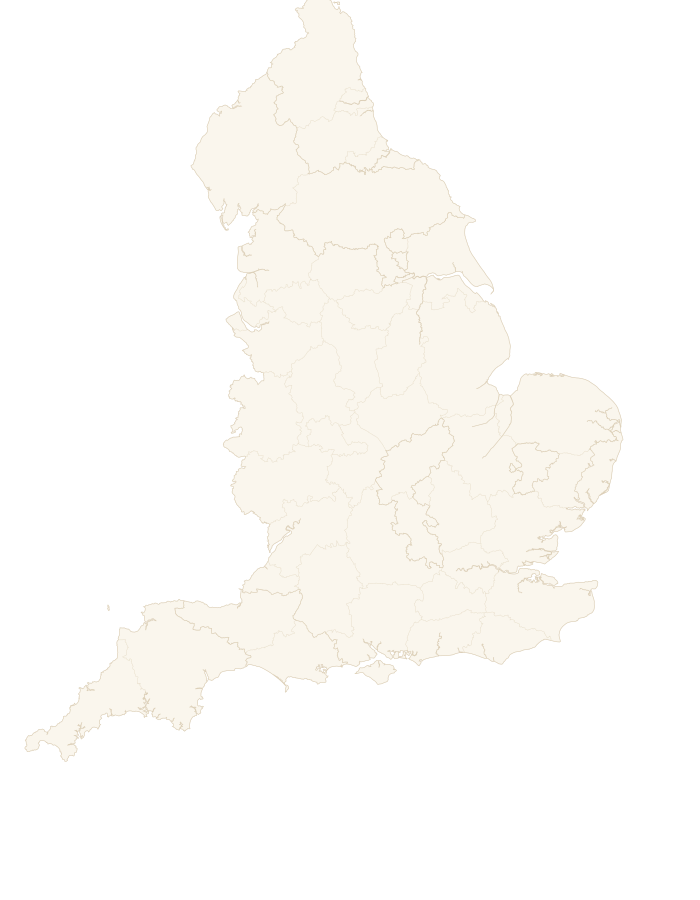
CoreHistoric reach
The seat of Mills
Seat vacantChief
No one leads the Mills community yet. When the movement opens, you can stand for its leadership, or help elect whoever does.
Current mission
No shared goal set yet. Once Mills has leadership, it sets the public focus: a restoration, a gathering, a real-world project that helps its own.
The Mills clan is being rebuilt. Join the waiting list for the movement today, and you help decide who leads it and what it does.
Help rebuild the Mills clan →What does the Mills name mean?
Locative, the mills or mill-hill. Plural -s like Hills and Fields.
The history of Mills
Not the miller, but the mills
Mills is read here as a locative name: the family at the mills, or on the mill hill, the plural formed the way Hills and Fields are. Surname lists take a blunter view and call it an English and Scottish occupational surname outright. Both can hold, because the -s ending does more than one job. Servants in England commonly took a version of an employer's name by adding an s, which is why Vickers is thought to have begun as the name of a vicar's servant, though the same ending can equally be a patronymic. Mills covers the man who lived by the mills, the man in the mill household, and the son of the man who ran it.
The machinery that froze such bynames into inherited names is dated. In England the introduction of family names is generally attributed to the preparation of the Domesday Book in 1086, taken up first among the nobility and gentry and spreading slowly through the rest of society; by 1400 most English families, and those of Lowland Scotland, used hereditary surnames. The University of the West of England study concluded in 2016 examined 45,602 surnames for the Oxford English Dictionary of Family Names in Britain and Ireland and found more than 90 per cent native to Britain and Ireland. Its leader, Richard Coates, set the classes out plainly: occupational names like Smith and Baker, and names linked to a place, like Hill or Green. Mills belongs with the second.
Five thousand six hundred wheels in the Domesday returns
The reason so many English families ended up living next to a mill is a matter of record. The Domesday Book, compiled in 1086, lists 5,624 watermills in England alone; later research puts the figure at 6,082 and treats even that as a minimum, since the northern reaches of the country were never properly surveyed. By 1300 the count had risen to between 10,000 and 15,000. That is not an occasional landmark but the basic industrial plant of the countryside, and it is why a byname drawn from it fixed on so many unrelated households at once.
A mill was a landscape of its own, and its vocabulary survives in field names. Water was pulled from a river or a mill pond along a channel called the flume, the head race, the leat, the lade in Scots or the penstock, drove the wheel, and left down the tail race, which might feed the next mill downstream. Wheels came as undershot, breastshot, overshot and pitchback, the overshot about two and a half times more efficient because it takes the weight of water in filled buckets rather than fighting its own paddles. The miller set his sluice against the seasons, then made finer adjustments by tentering, closing the gap between the stones to suit the flow, the grain and the grade of flour wanted.
The lord's mill and the charge for grinding
Under manorialism the mill was rarely the miller's. A manor held up to three classes of land: the demesne worked for the lord's household, dependent villein holdings owing labour or produce, and free peasant land paying money rent but still under manorial custom. Beyond that, the additional income listed for a lord runs: charges for the use of his mill, his bakery or his wine-press, for the right to hunt or to let pigs feed in his woodland, the revenues of his court, and a payment on every change of tenant. The wheel a family took its name from was a franchise, and the flour was taxed in the grinding.
The people around it were held as tightly. Villein holdings became in practice almost universally hereditary, with a payment due on each succession in the family, and the land could not simply be abandoned or passed to a third party without the lord's permission and the customary payment. In 1086 about 17 per cent of England by value belonged directly to the king and rather more than a quarter to bishoprics and monasteries, whose manors ran larger and carried a greater villein area than lay ones. The same survey recorded the Norman expropriation: only about 5 per cent of the land south of the Tees was still in English hands. Lowland eastern England is the exception worth naming, because it is the country the Mills name concentrates in today, and it is credited with an exceptionally large free peasantry, in part a legacy of Scandinavian settlement.
Weedley, 1185, and the first sails in the north
The other mill arrived later and changed the skyline. The vertical windmill, its sails turning on a horizontal shaft, is a development of the twelfth century and appears first in the triangle of northern France, eastern England and Flanders. The earliest certain reference to a windmill in northern Europe dates from 1185, in the former village of Weedley in Yorkshire, at the southern tip of the Wold overlooking the Humber Estuary. They went where water would not serve: flat country where rivers ran too slowly, districts with too little water, places where the streams froze in winter.
The earliest European type was the post mill, its whole body balanced on an upright post so the miller could swing the building round to meet a wind that shifts constantly in north-western Europe. By the end of the thirteenth century the masonry tower mill had arrived, turning only its cap into the wind, which allowed a taller structure and longer sails that would work in a light breeze. Sails were cloth spread on a lattice and the mill had to be stopped every time they were reset, until William Cubitt's patent sails of 1807 substituted connected shutters. Mills of five, six and eight sails were built in Britain, especially around Lincolnshire and Yorkshire. At the peak, around 1850, an estimated 200,000 wind-powered mills were turning against some 500,000 water wheels.
Tide mills, and the wheels beneath London Bridge
A third kind took its power from the sea. A tide mill stood behind a mole thrown across the mouth of a small bay: gates were opened to let the flood fill the basin, closed at high water to trap it, and a sluice opened later to drive the wheel with the draining water. The derelict village of Tide Mills in East Sussex still carries the name, and the two examples in the United Kingdom restored to working order are at Eling in Hampshire and at Woodbridge in Suffolk, all three counties among those where the Mills name sits thickest today.
The oldest tide mills yet found are Irish: a sixth-century vertical-wheeled mill at Killoteran near Waterford, a twin-flume horizontal-wheeled mill of about 630 on Little Island, and the Nendrum Monastery mill of 787 on an island in Strangford Lough. Elsewhere millers took power where the water ran fastest, setting wheels beneath large bridges to catch the race between the stanchions; London Bridge at one point carried so many that the bargemen complained passage through it had been spoiled.
Fulling, slitting, needles and gunpowder
Flour was only the start of what a mill did. Fulling or walk mills finished woollen cloth. Bark mills ground oak and chestnut bark for the tanneries. Blast furnaces, finery forges and tinplate works were, until the steam engine, almost invariably water-powered, and were sometimes called iron mills outright. Slitting mills cut iron bars into rods for nail-making, paper mills wanted the water for the process as well as the power, and powder mills, which made gunpowder, were usually water-driven too. Cotton took the same wheels into the factory age, with steam engines brought in at first simply to increase the flow to the wheel and only later to drive the shafting direct.
The trade went out slowly. As late as 1870 watermills still produced two-thirds of the power available for British grain milling, and it was cheap electricity in the early twentieth century, not steam, that finally made them obsolete. Daniels Mill near Bewdley in Worcestershire holds the whole argument in one building, built to run on a breastshot wheel, converted to a pitchback, and working today as a breastshot mill again.
The Norfolk schoolmaster's son who became the everyman of British screen
John Lewis Ernest Watts Mills was born at North Elmham in Norfolk on 22 February 1908, third child of the village schoolmaster. He did not go to university. He spent three years as a clerk to a Norwich corn merchant, then left for London in 1928, at twenty, on the assumption that the revue stage might pay better than the corn business. He came up through the chorus line at the Hippodrome from 1929, took his first speaking role in 1931, reached his first West End lead in 1933, and moved into film at Ealing in 1932, making fourteen pictures in supporting parts across the decade.
He enlisted in the Royal Engineers in 1940 and was commissioned, and on being invalided out in 1942 went straight to Denham, where Noel Coward and David Lean were casting In Which We Serve. The lower-deck rating Shorty Blake was the foundation of his cinema career. Coward and Lean formed Cineguild and Mills was its lead actor through the 1940s: This Happy Breed in 1944, the adult Pip in Great Expectations in 1946, The October Man in 1947. By 1948 he was the leading man of British post-war cinema.
The next twenty years turned that register into character work: The Colditz Story in 1955, Ice Cold in Alex in 1958, Tiger Bay in 1959 with his ten-year-old daughter Hayley, Tunes of Glory in 1960 opposite Alec Guinness. The Oscar came in 1971 for the mute Michael in David Lean's Ryan's Daughter, a part with no spoken lines at all, won as Best Supporting Actor against Gene Hackman and Chief Dan George. He was knighted in 1976 and was still working into his ninetieth year. He died at his home at Denham in Buckinghamshire on 23 April 2005, aged ninety-seven, after sixty-four years of marriage to the writer Mary Hayley Bell, whom he had met in 1939 and married in 1941; his daughters Hayley and Juliet Mills carried the name into the next generation of the profession.
Mills in the record, from a Restoration stage onward
The name surfaces in print early and keeps odd company. Margaret Mills, who died in 1717, was a British stage actress of the late seventeenth and early eighteenth centuries. Ann Mills was an eighteenth-century British woman disguised as a sailor. Hannah Mills, who died in 1790, was a British Quaker; Selina Mills (1767-1831) an English educator and evangelist; Abraham Mills (1750-1828) a British geologist. The nineteenth century adds the chemist Edmund James Mills (1840-1921) and Brusher Mills (1840-1905), an English snake-catcher.
The twentieth century spread it across public life in Britain and Ireland: the circus owner Bertram Mills (1873-1938), the enameller Ernestine Mills (1871-1959), the broadcaster Annette Mills (1894-1955), the boxer Freddie Mills (1919-1965), the army general Graham Mills (1917-1992) and the barrister Barbara Mills (1940-2011). Kathleen Mills played camogie for Dublin from 1941 to 1961; Rosaleen Mills (1905-1993) was an Irish activist and educator. More recently the name belongs to the Welsh artist Eleri Mills, the English novelist Magnus Mills and the British sailor Hannah Mills.
Emigration carried it everywhere the language went. The United States produced the banker Darius Ogden Mills (1825-1910), Susan Tolman Mills (1825-1912), co-founder and first president of Mills College, the sculptor Clark Mills (1810-1883), the generals Anson Mills (1834-1924) and Albert Leopold Mills (1854-1916, a Medal of Honor awardee), the natural history writer Enos Mills (1870-1922) and the sociologist C. Wright Mills (1916-1962). Australia has Beryl Mills (1907-1977), the first Miss Australia, and the radio astronomy pioneer Bernard Mills (1920-2011); New Zealand has the Olympic athlete Les Mills. It is a long way from a mill pond in an English parish.
Champions of the Mills name
The bearers whose lives are inseparable from this surname. Each has their own page, biography, achievements, geography, connection to the family.
Historic Places, Rebuilt
Explore the streets and seats the Mills name knew, rebuilt with AI as they stood in history.
The castles of the homeland
The great strongholds of the homeland, look one up, see what it looked like in its prime, and recreate it to explore.
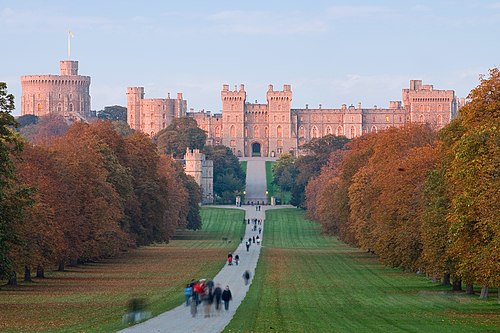 Windsor CastleRestored · prime 1820
 Tower of LondonRestored · prime 1285
 Bamburgh CastleRestored · prime 1904
All castles in England → · Strongest castles in England → · Castles of Europe
Play As Your Clan
Hold a real castle against whatever you choose to send at it, take a ship out in her own service years, or stand at the shoulder of someone the record remembers. The chronicler sets the scene; the deeds are yours.