Morris
Son of Maurice, the Norman name that took English root.
- Origin
- West Midlands, England
- Famous bearer
- William Morris (1834–1896), designer, poet, founder of the Arts and Crafts movement
- Register
- English family
The Morris arms and country

Coat of armsCoat of arms of Morris baronets of ClasemontBorne by the Clasemont line, one branch of the name rather than all of it.CC BY-SA 4.0

- Coat of arms: Granted to an individual and inherited down that one documented line. These are the arms of particular families of the name, not of everyone who shares the surname.
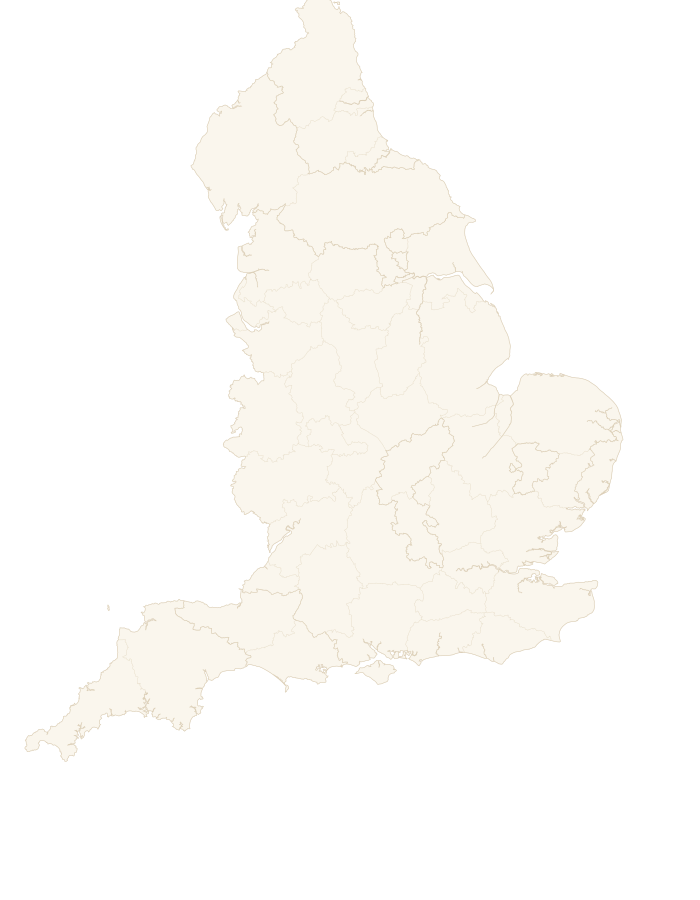
CoreHistoric reach
The seat of Morris
Seat vacantChief
No one leads the Morris community yet. When the movement opens, you can stand for its leadership, or help elect whoever does.
Current mission
No shared goal set yet. Once Morris has leadership, it sets the public focus: a restoration, a gathering, a real-world project that helps its own.
The Morris clan is being rebuilt. Join the waiting list for the movement today, and you help decide who leads it and what it does.
Help rebuild the Morris clan →What does the Morris name mean?
From the Norman name Maurice (Latin Mauritius, 'dark-skinned' or 'Moorish'), which displaced earlier Old English names of the same root. The surname Morris also independently exists as a Welsh patronymic compression of ap Morys (son of Morys, the Welsh form of Maurice), particularly in Anglesey and Caernarfonshire, though for the English Morris pool the Norman line is dominant. Morris-dancing carries the surname forward in folk usage; the etymology of the dance is debated.
The history of Morris
Saint Maurice and the name the Normans carried in
Morris begins as a font-name, not a farm or a trade. It runs back through Middle English and Old French to the Latin Mauritius, meaning Moorish, dark or swarthy, from Maurus, a Moor. That was the name of the third-century Christian martyr Saint Maurice, and it was the saint who carried it across Latin Christendom: into French as Maurice, into German as Moritz, into Welsh as Meurig. Morris is what English mouths did with it.
It reached England on the back of an invasion. The Normans were Vikings settled on the lower Seine in 911 by the Treaty of Saint-Clair-sur-Epte, who took the local speech and faith. Their duke landed at Pevensey on 28 September 1066, broke Harold Godwinson's shield wall at Senlac Hill on 14 October and was crowned at Westminster on Christmas Day. Some 8,000 continental landholders followed him over.
One quieter consequence mattered more to ordinary families than any castle. Anglo-Norman replaced Old English as the speech of the ruling class, and a new stock of given names came with it. William, Robert and Richard displaced the Anglo-Saxon names at the font, and Maurice came in alongside them, pushing aside the older English names built on the same root. Intermarriage between incomers and natives, rare at first, was ordinary at every level of society by the early 1160s. Within a century a French saint's name was an English one.
The century the name stopped changing every generation
Before surnames were hereditary, an Englishman was described rather than labelled. The extra word named his trade, his father, his birthplace or his body, and it died with him; his son got a description of his own. Surnames came into use in western Europe only in the 11th century, and their introduction here is generally credited to the preparation of the Domesday Book in 1086.
A byname becomes a surname at the point where a grandson still carries it. Christopher Daniell dates what may be the first recorded inherited English surname to 1140. The habit began with the nobility and gentry and worked slowly downwards, until by 1400 most English families, and those of Lowland Scotland, carried hereditary surnames. Compulsory surnames were resisted in late medieval England, for the obvious reason that being listed under a fixed name meant being taxed under it.
Morris belongs to the patronymic class, the oldest and largest group of European surnames: a son identified by his father's given name, until one generation forgot to change it. A four-year study led by the University of the West of England, concluded in 2016, traced 45,602 surnames of Britain and Ireland through sources from the 11th century to the 19th and found over 90 per cent of them native to these islands. Richard Coates, who led it, divided them into occupational, locative and patronymic names. Morris is the last kind, and the father was called Maurice.
Anglesey, Caernarfonshire and the name after ap
There is a second Morris, and it is Welsh. Meurig is the Welsh form of the same saint's name; Morus and Morys are its anglicised spellings. Under the Welsh patronymic system a man was Morys's son and said so: ap Morys, the particle carried afresh each generation. Compressed and hardened, ap Morys becomes Morris, identical in spelling to the Norman name and wholly separate in descent. That line is strongest in Anglesey and Caernarfonshire.
The Welsh system did not fade; it was ended. Wales adopted fixed surnames following unification under Henry VIII in 1536, some 140 years after the English pool had set. Because the change came late and froze a narrow stock of given names all at once, Wales finished with very few surnames spread across very many people: Jones, Williams and Davies sit among the seven commonest surnames in the United Kingdom. Morris rode into that same crowded pool from Morys.
For the English Morris pool the Norman line is dominant, but the two streams did not stay apart: the Welsh Morrises converged with the English through the 18th century and are now indistinguishable in census distribution. The Welsh strand keeps its own roll of bearers all the same, among them the politician Rhys Hopkin Morris (1888 to 1956), the conductor Wyn Morris (1929 to 2010) and the historian and travel writer Jan Morris (1926 to 2020).
Ó Muiris, de Marisco and the Tribes of Galway
The Irish Morrises are a third line again, and predominantly Norman. The name there descends from de Mareys or de Marreis, Latin de Marisco, of the marsh: a family described by the wet ground they held rather than by an ancestor. Rendered into Irish as Ó Muiris, and less often de Moiréis, it became common across the south (Kilkenny, Tipperary, Offaly, Laois, Cork and Limerick) and was anglicised back to Morris. In 1485 a family of the name settled at Galway and rose to become one of the Tribes of Galway, the merchant dynasties who governed that city and its trade.
A Gaelic strand runs alongside it and is not cleanly separable from it. Morris may also stand for a descendant of Muiris, a name meaning sea-choice, as a variant of Ó Muireasa, a branch of the Uí Fiachrach, formerly chiefs on the southern shore of Sligo Bay in the barony of Tireragh, whose anglicised name was afterwards taken up by Morrises well beyond Sligo. Anyone tracing an Irish Morris should hold all three possibilities open: Norman marsh-holder, Norman font-name, or Gaelic chiefly line absorbed into a convenient English spelling.
Benduff, renamed Salem
The one house the name holds in the atlas stands near Rosscarbery in County Cork. It began as Benduff Castle, a fortified house of around 1470, and even its building is disputed: it is usually credited to Catherine Fitzgerald, daughter of Thomas, 7th Earl of Desmond, on her marriage to Finghin MacCarthy Reagh, while the antiquary Charles Smith gave it to the O'Donovans. Catherine is probably the figure who survives in local story as the Black Lady of Benduff.
The Morrises came in through the wreckage of the Cromwellian settlement. The family made the house their home from around 1660, and the land was formally granted to William Morris under the Act of Settlement in 1678; they had lived in it the better part of two decades before the paperwork caught up. It was the Morrises who left it the name it still carries. They held Castle Salem until the early 1800s; the Daly family bought it in 1895 and their descendants run it as a guest house today, the late-medieval tower still standing.
Where the Morrises were counted
The 1881 census found the great bulk of Morrises in Lancashire, mostly in what is now Greater Manchester: 8,723 people, a density of 2,516 per million. After that came London, Glamorgan and Wales as a whole, and the West Midlands: the cotton towns, the capital, the coalfield and the Black Country, the places pulling labour in hardest. The name has since spread out; 95,101 bearers were recorded across the United Kingdom in 2016, distributed fairly evenly through the Midlands and the South, the pattern typical of Norman-French given-name patronymics that fixed early.
It is a very large name. In 2014 Morris ranked 39th out of 104,537 surnames in England and 55th out of 400,980 in the United States, and that American figure is the measure of an emigration. Gouverneur Morris (1752 to 1816) was an American statesman and diplomat; Staats Long Morris (1728 to 1800) took the other side, rising to major-general in the British Army during the Revolution and afterwards governing Quebec; Gideon Morris (1756 to 1798) founded the Tennessee town that still carries the name, Morristown.
Kelmscott and Cowley: the two William Morrises
The name produced two men called William Morris who between them reshaped how the British lived. The first was born at Elm House, Walthamstow, in Essex on 24 March 1834. He married Jane Burden at Oxford in April 1859 and on 11 April 1861, in his twenty-seventh year, founded Morris, Marshall, Faulkner and Co at Red Lion Square in Holborn, the foundational firm of the English Arts and Crafts movement, whose Trellis, Daisy and Strawberry Thief designs have been in production ever since. He wrote the three volumes of The Earthly Paradise between 1868 and 1870, translated the Icelandic sagas with Eiríkr Magnússon, and published News from Nowhere in 1890.
He also refused to keep the two halves of his life apart. He founded the Socialist League in 1884 and edited its paper Commonweal from 1885 to 1890, which makes him the central English literary and design figure of the early Labour movement. In 1891 he set up the Kelmscott Press at Hammersmith and produced fifty-three books in five years, ending with the Kelmscott Chaucer of 1896 and its eighty-seven Burne-Jones wood-engravings. He died at Kelmscott House on 3 October 1896 and lies in the churchyard at Kelmscott under a slab Philip Webb designed. Jane Morris (1839 to 1914), the embroiderer and artists' model, and May Morris (1862 to 1938), craftswoman and designer, carried the workshop tradition on.
The second was born at Hawkesbury Road, Worcester, on 10 October 1877 and opened a bicycle-repair shop at 16 James Street, Cowley, in 1893 with four pounds of capital. In 1912 he founded WRM Motors there and built the first Morris Oxford, a two-seater of eight horsepower listed at one hundred and seventy-five pounds: the first British car priced for a working family. By 1925 Morris Motors was the largest car maker in Britain, with 41 per cent of the market. Created Baron Nuffield in 1934 and Viscount Nuffield in 1938, he then gave the money away: two million pounds to found the Nuffield Foundation in 1937, another 1.25 million for Nuffield College, Oxford, and some thirty million across his lifetime, more than thirty billion pounds in today's money and the largest single act of industrial philanthropy in British history. He died on 22 August 1963, and the Cowley works still builds cars.
The name keeps producing them: Desmond Morris (1928 to 2026), the Wiltshire-born zoologist whose The Naked Ape appeared in 1967, and Mark Morris (born 1956), whose Mark Morris Dance Group stands at the front of American choreography. For a name that began as a saint's byword for a stranger from over the sea, and was fixed into permanence three separate times in three different languages, that is a considerable thing to have been handed.
Champions of the Morris name
The bearers whose lives are inseparable from this surname. Each has their own page, biography, achievements, geography, connection to the family.
- William Morris, Viscount Nuffield
The Oxford bicycle-mechanic who in 1912 built the first British car priced for the working family, and who gave away in his lifetime the equivalent of more than thirty billion pounds in today's money.
- William Morris
The Walthamstow-born Arts and Crafts founder whose firm Morris, Marshall, Faulkner & Co (founded 1861) returned hand-craft principles to mid-Victorian English design, whose epic verse and Icelandic-saga translations occupy the long Earthly Paradise (1868 to 1870), and whose socialist platform-and-pamphlet work of the 1880s made him the central English-language founder of the modern democratic-socialist tradition.
Historic Places, Rebuilt
Explore the streets and seats the Morris name knew, rebuilt with AI as they stood in history.
Castles the Morris held
Strongholds this name held for a decade or more, look one up, or rebuild it to explore.
- Castle Salem
Home of the Morris family from around 1660 until the early 1800s; formally granted to William Morris in 1678.
Landmarks the Morris held
Palaces, houses and great buildings tied to this name, look one up, or rebuild it to explore.
- Red House
Co-designed by Philip Webb and William Morris as Morris's family home; the Morrises lived there from 1860 until 1865.
The castles of the homeland
The great strongholds of the homeland, look one up, see what it looked like in its prime, and recreate it to explore.
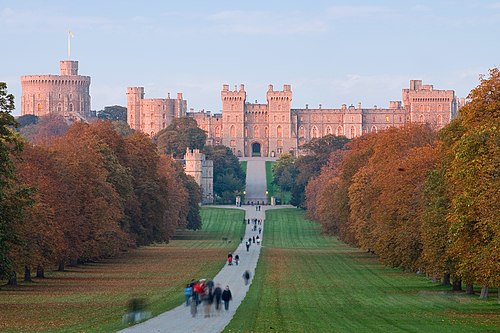 Windsor CastleRestored · prime 1820
 Tower of LondonRestored · prime 1285
 Bamburgh CastleRestored · prime 1904
All castles in England → · Strongest castles in England → · Castles of Europe
Play As Your Clan
Hold a real castle against whatever you choose to send at it, take a ship out in her own service years, or stand at the shoulder of someone the record remembers. The chronicler sets the scene; the deeds are yours.
Notable bearers of the Morris name
- William Morris (1834–1896), designer, poet, founder of the Arts and Crafts movement
- Desmond Morris (1928–2026), zoologist (The Naked Ape)
- Mark Morris (b. 1956), American choreographer