Porter
The gate, the burden, same spelling.
- Origin
- London, England
- Register
- English family
The Porter arms and country

Coat of armsPorter (of Merrion Square) EscutcheonBorne by the Merrion Square line, one branch of the name rather than all of it.Robin S. Taylor · CC BY-SA 4.0 
Coat of armsEscutcheon of the Porter baronets of Frimley (1889)Borne by the Frimley line, one branch of the name rather than all of it.Charles Matthews · CC BY-SA 4.0
_Escutcheon.png)
.svg)
- Coat of arms: Granted to an individual and inherited down that one documented line. These are the arms of particular families of the name, not of everyone who shares the surname.
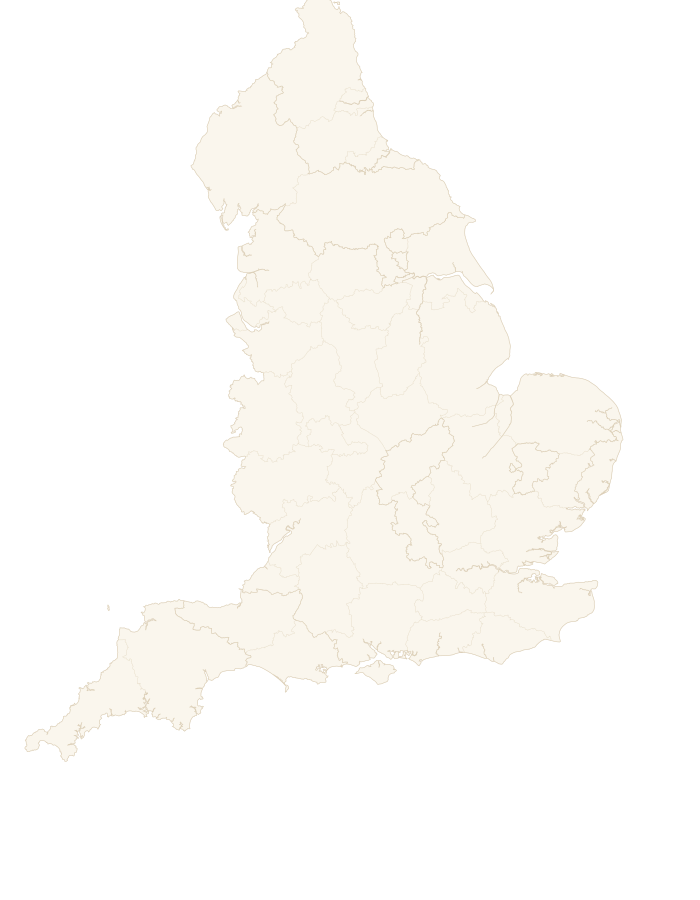
CoreHistoric reach
The seat of Porter
Seat vacantChief
No one leads the Porter community yet. When the movement opens, you can stand for its leadership, or help elect whoever does.
Current mission
No shared goal set yet. Once Porter has leadership, it sets the public focus: a restoration, a gathering, a real-world project that helps its own.
The Porter clan is being rebuilt. Join the waiting list for the movement today, and you help decide who leads it and what it does.
Help rebuild the Porter clan →What does the Porter name mean?
Occupational, gatekeeper or wine-carrier; Norman portour.
The history of Porter
The gate and the burden, one spelling
Porter is a Norman word that landed in England doing two jobs at once. The Norman portour covered the man who kept a door and the man who carried a load, and English took both meanings without ever separating the spelling. A porter was the servant who held the gate of a castle, an abbey or a walled town, and a porter was the man who shouldered a merchant's bale off a quay. The medieval mind saw no contradiction: both were positions of trust at a threshold, and both were jobs that a lord, a prior or a corporation had to fill with somebody they could name.
The word arrived with the thing itself. After 1066 Anglo-Norman, a northern dialect of Old French, became the language of the English ruling classes and displaced Old English at court, and Norman French words moved into English along with Norman personal names such as William, Robert and Richard. At the same time the Normans were building castles and fortifications in unprecedented numbers, at first mostly on the motte-and-bailey pattern, because William granted lands to his followers and needed strong points to hold a kingdom that rebelled for years after Hastings. Every one of those buildings had a single door that mattered, and a Frenchman's word for the man standing at it went into English with the masonry.
Surnames in England began as descriptions rather than inheritances: a man's trade, his father's name, where he came from, or what he looked like, none of it necessarily passed on. By 1400 most English families, and most in Lowland Scotland, had settled into hereditary surnames, and the occupational group froze early alongside Smith, Taylor, Miller, Thatcher and Potter. Historians of naming warn that titles like King, Bishop and Abbot are usually nicknames rather than descriptions of work. Porter is not in that category. It is a job that men actually held, which is why the name is thick in the towns and ports of southern and northern England alike rather than concentrated in one lordship.
Porters in the Commons before the Tudors
The name reaches the parliamentary record early. A William Porter is recorded as a Member of Parliament in 1388, and a John Porter sat between 1390 and 1394, listed by the borough office he held, portreeve. Simon Porter appears across a long span, from 1421 to 1451. A second William Porter died in 1436. That is four men of the name in the parliamentary record between 1388 and 1451, at a period when the surname itself was only just hardening into something a son automatically received.
The Tudor century keeps the pattern going. Thomas Porter, Member of Parliament, died in 1522. Arthur Porter, born about 1505 and dead in 1559, sat as an English politician across the reigns that made and unmade the English church. A third William Porter died around 1593. Their generation is the one in which the hereditary surname stopped being a habit and became an administrative fact: Henry VIII, who reigned from 1509 to 1547, ordered that marital births be recorded under the father's surname, and the union of Wales with England in 1536 pushed fixed surnames across the border as well.
It is worth saying plainly what the record does and does not show. These men shared a name and a country, not a proven descent. A common occupational surname multiplies independently, in Gloucestershire and in Kent and in a Yorkshire port town at the same time, because the same job existed in all of them. The Porters who kept turning up in the Commons were not a dynasty working its way up. They were the ordinary result of a very ordinary job producing a very large number of families.
The Stuart court, the playhouse and the war
By the late sixteenth century the name is in print. Henry Porter, English dramatist, died in 1599, writing for the London stage. Walter Porter, born about 1587 and dead in 1659, was an English church musician and composer, whose working life ran from the last Elizabethan years to the Commonwealth. Endymion Porter, 1587 to 1649, served the Stuart crown as a royalist diplomat, carrying the king's business abroad in the years the monarchy was losing its argument at home. The word itself had by then climbed into the palace: the Groom Porter was the Tudor court official in charge of gambling, a title that later slid outwards to mean the owner or operator of a gaming hall.
The Civil War split the name the way it split everything else. George Porter, baptised in 1621 and dead in 1683, was an English army officer on the royalist side. Robert Porter, a sword-cutler born after 1603 and dead in 1648, supplied swords to Parliament, which is to say that two men called Porter stood on opposite sides of the same war. In the settlement that followed, Henry Porter, born 1613, sat as a member of the parliaments held under Cromwell, and his son, another Henry, born about 1636, went into politics after him: one of the very few father-and-son pairs the record actually attests for this surname.
Around them the name keeps surfacing in the professions the wars did not close. John Porter, Member of Parliament for Maldon, an English lawyer, died about 1660. Thomas Porter, 1636 to 1680, was an English dramatist and a duellist, a combination the Restoration stage produced more than once. The pattern of the century is a name distributed across every faction, which is what happens to a surname that was never the property of a single house.
Exile with James II, and a Lord Chancellor for Ireland
When the Stuart cause collapsed a second time, a Porter went with it. James Porter, active between 1686 and 1701, was Vice-Chamberlain of the household of King James II of England and followed the king into exile rather than take the new settlement. George Porter, 1659 to 1728, is recorded as an English soldier and conspirator, the plotting decades after 1688 having offered ample scope for both. Aubrey Porter, born about 1660 and dead in 1717, sat as an English Member of Parliament on the other side of that divide.
Ireland gave the name two very different careers in the same years. Charles Porter, born about 1630 and dead in 1696, was an English-born politician and judge who rose to be Lord Chancellor of Ireland, the senior legal office in the country. Francis Porter, active from about 1650 to 1702, was an Irish Franciscan. Neither man is known to be related to the other; the name simply reached both ends of the Irish settlement at once.
The eighteenth century widened the range again. James Porter, 1710 to 1776, served as a British diplomat. Elizabeth Porter, who died in 1752, was the wife of Samuel Johnson the author. Mary Porter, who died in 1765, was an English actress. Agnes Porter, born about 1752 and dead in 1814, was a Scottish diarist, and Hugh Porter, 1780 to 1812, was a Scots-Irish weaver who wrote poetry at the loom.
Belle Isle: a Lough Erne estate the family held for 161 years
The one seat the Porters can genuinely point at sits on an island in Lough Erne. In Gaelic times it was Ballymacmanus Island, Senadh-Mic-Maghnusa, and the house on it was built around 1700 for the Gore family. Sir Ralph Gore's grandson, the 1st Earl of Ross, was born there in 1725 and spent his life enlarging the place, adding cottages and a tower and working with the designer Thomas Wright on a garden that ran down to the shore of the lough. When Lord Ross died in 1801 the estate went to his only surviving child, Lady Mary Hardinge, wife of Sir Richard Hardinge, 1st Baronet.
In 1830 Belle Isle was sold for sixty-eight thousand pounds to the Reverend John Grey Porter of Kilskeery, a clergyman buying an earl's island. His descendants held it for the next hundred and sixty-one years. That is the longest continuous tenure of anything in this family's record: not a medieval grant, not a war prize, but a nineteenth-century purchase held quietly through the land agitations, the partition of Ireland and two world wars. It ended in 1991, when the Porter descendant Miss Lavinia Baird sold the estate to the 5th Duke of Abercorn, who bought it for his youngest son, Lord Nicholas Hamilton.
The house did not go under. Restored, with its gallery, overlook tower, courtyard and grand banquet hall intact, Belle Isle now runs as a hotel and wedding venue on a four hundred and seventy acre estate near Lisbellaw. The Belle Isle Cookery School opened behind the castle in 2004, and since 2018 pine martens have been reintroduced on the grounds to press back the grey squirrel. A reader of the name who wants somewhere to go and stand can stand there.
Ulster pulpits, Dublin operating theatres, the Irish bench
Ulster carried the name into the Presbyterian ministry and kept it there for a century and a half. James Porter, 1753 to 1798, was an Irish Presbyterian minister and a satirist, a man who preached and wrote in the same voice. John Scott Porter, 1801 to 1880, was an Irish biblical scholar and Unitarian minister, working on the text of scripture itself. Josias Leslie Porter, 1823 to 1889, was an Irish Presbyterian minister, missionary and traveller who took the name well beyond Ireland. Margaret Grey Porter, who died in 1881, is remembered as an Irish philanthropist.
Medicine and law took the rest. William Henry Porter, 1790 to 1861, rose to be president of the Royal College of Surgeons in Ireland. George Hornidge Porter, 1822 to 1895, was an Irish surgeon of the next generation in the same city. Sir Andrew Porter, 1st Baronet, 1837 to 1919, was an Irish lawyer who ended on the bench as a judge; his son Marshall Porter, 1874 to 1900, was an Irish barrister and sportsman who died at twenty-six. F. W. Porter, 1821 to 1901, worked as an Anglo-Irish architect.
The name stayed in Irish public life into the twentieth century. John Porter-Porter, 1855 to 1939, sat as a Northern Ireland unionist politician under a doubled surname of the kind English inheritance conditions produced. Samuel Clarke Porter, 1875 to 1956, served as a Northern Ireland politician and judge. Whatever a reader thinks of the politics, the shape is unmistakeable: in Ulster the Porters became a professional class, in pulpits, hospitals and courtrooms, rather than a landed one, and Belle Isle was the exception rather than the rule.
Ledgers, regiments and the writing desk
The nineteenth century put Porters into the machinery of the British state and the industrial cities. George Richardson Porter, 1792 to 1852, worked as a British statistician in the decades when government first began measuring what it governed. Thomas Colley Porter, 1780 to 1833, was a British businessman who served as mayor of Liverpool. William Haldane Porter, 1867 to 1944, spent his career as a British civil servant, and Ludovic Porter, 1869 to 1928, as a British colonial administrator in India.
There were soldiers as well. Whitworth Porter, 1827 to 1892, reached the rank of major-general in the English army. Robert Porter, 1858 to 1928, served as a British Army general and medical officer, holding both a commission and a doctor's training. Andrew Horsbrugh-Porter, 1907 to 1986, was a British Army officer and baronet. Outside the services, John Porter, 1838 to 1922, made his name as a British racehorse trainer, and George Porter, born 1786 and dead in 1872, went out as a British mariner and became an early settler of South Australia.
The writing is where the name goes deepest. Jane Porter, 1776 to 1850, was a Scottish novelist and dramatist. Anna Maria Porter, 1778 to 1832, was an English poet and novelist. Robert Ker Porter, 1777 to 1842, worked as a British archaeologist and diplomat. Bertha Porter, 1852 to 1941, was an English biographer and bibliographer, and Enid Porter, 1908 to 1984, an English curator and collector of folklore who spent her working life saving what ordinary people remembered before it went.
That line has not stopped. Joyce Porter, 1924 to 1990, wrote English crime fiction. Peter Porter, 1929 to 2010, was an Australian-born British poet. Henry Porter, born 1953, is an English thriller writer and journalist, and Max Porter, born 1981, an English author. Phil Porter, born 1977, writes for the British stage and for television. Crime fiction, poetry, thrillers, literary novels and stage plays, all under one occupational surname, and none of these writers descended from any of the others as far as the record shows. That is what a common name looks like when it is working properly.
From a Doncaster railway clerk's house to the Royal Institution
George Porter was born at Stainforth, a colliery village near Doncaster, on 6 December 1920, the elder son of a railway clerk. He won a scholarship to the University of Leeds in 1938 and took a first in chemistry in 1941. Commissioned into the Royal Naval Volunteer Reserve in 1942, he spent four years as a radar officer and ended the war with the British Pacific Fleet. The radar work was the making of him: it taught him electronic measurement on the microsecond scale, which was exactly the skill his Nobel Prize would later rest on.
He went up to Emmanuel College, Cambridge in 1945 to work under Ronald Norrish on the kinetics of very fast chemical reactions, a problem the laboratory instruments of the day simply could not reach. Between 1947 and 1950 Porter brought the radar habit to the bench and worked out flash photolysis: a short bright flash to start a reaction at a known instant, then a second probing flash microseconds later to photograph its intermediates, one slice at a time. It made the intermediate states of photochemical reactions visible for the first time. He took the chair of physical chemistry at Sheffield in 1955, the youngest holder of such a chair in Britain for half a century, and pushed the method down into the nanosecond and picosecond range.
In 1967 he shared the Nobel Prize in Chemistry with Norrish and Manfred Eigen, the youngest British chemist to win it since William Ramsay. He had already become Director of the Royal Institution in 1966, the house through which Davy and Faraday had run British chemistry, and he held that post for nineteen years, rebuilding its laboratories and keeping up the Christmas Lectures Faraday started in 1825. He gave them himself three times; the 1969 series, The Laws of Disorder, became the most watched chemistry lectures in the history of British broadcasting. He used every platform he had to argue that a country's basic-science laboratory is the foundation of its long-term economy.
He was knighted in 1972, given the Order of Merit in 1989 and raised to the peerage as Baron Porter of Luddenham in 1990. As President of the Royal Society from 1985 to 1990 he commissioned and signed off the Society's foundational report on climate change. He then went back to the bench at Imperial College and worked into his eighties on the photochemistry of photosynthesis, the problem he believed the next energy economy would have to solve. He died at Canterbury on 31 August 2002, aged eighty-one.
He is not alone in the laboratories. Rodney Porter, 1917 to 1985, was a British biochemist. Helen Porter, 1899 to 1987, was a British botanist, and Mary Winearls Porter, 1886 to 1980, an English crystallographer and geologist. Arthur Porter, 1910 to 2010, worked as a British-Canadian engineer and computer pioneer, and Martin Porter as a British computer scientist. Roy Porter, 1946 to 2002, was a British historian of medicine, and James Porter, 1827 to 1900, served as Master of Peterhouse, Cambridge. There is a pleasing symmetry in the last of those: at Cambridge, Durham, Lancaster, Oxford and York the college porter still keeps the lodge and the gate, doing the job the surname was named for, in the same university where a Doncaster railway clerk's son learned to photograph a molecule in the act of breaking.
Champions of the Porter name
The bearers whose lives are inseparable from this surname. Each has their own page, biography, achievements, geography, connection to the family.
Historic Places, Rebuilt
Explore the streets and seats the Porter name knew, rebuilt with AI as they stood in history.
Castles the Porter held
Strongholds this name held for a decade or more, look one up, or rebuild it to explore.
- Belle Isle Castle
Held by the Porters from the Rev. John Grey Porter's 1830 purchase until 1991.
The castles of the homeland
The great strongholds of the homeland, look one up, see what it looked like in its prime, and recreate it to explore.
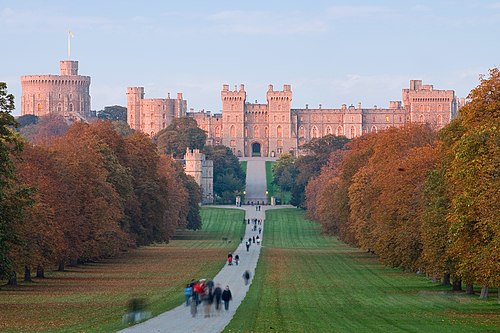 Windsor CastleRestored · prime 1820
 Tower of LondonRestored · prime 1285
 Bamburgh CastleRestored · prime 1904
All castles in England → · Strongest castles in England → · Castles of Europe
Play As Your Clan
Hold a real castle against whatever you choose to send at it, take a ship out in her own service years, or stand at the shoulder of someone the record remembers. The chronicler sets the scene; the deeds are yours.