Rothschild
also Rothschilds, von Rothschild
Bankers of empire, peerage 1885.
- Origin
- London, England
- Motto
- Concordia, Integritas, Industria
- Famous bearer
- Nathan Mayer Rothschild (1777-1836), founder of the London bank
- Register
- English family
Ranked of all time
The 15 Most Powerful English Houses of All Time
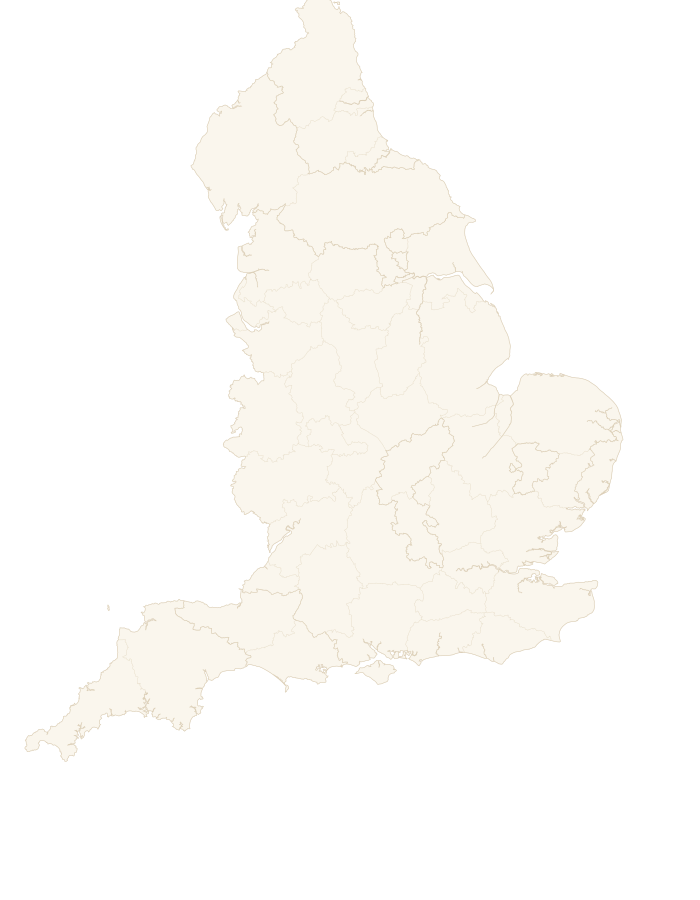
The Rothschild arms and country

Coat of armsArms of the House of RothschildThe arms of the house itself: the main line, not one of its cadet branches.CC BY-SA 4.0 
Coat of armsGreat coat of arms of Rothschild familyMathieu CHAINE · CC BY-SA 3.0


- Coat of arms: Granted to an individual and inherited down that one documented line. These are the arms of particular families of the name, not of everyone who shares the surname.
CoreHistoric reach
The seat of Rothschild
Seat vacantChief
No one leads the Rothschild community yet. When the movement opens, you can stand for its leadership, or help elect whoever does.
Current mission
No shared goal set yet. Once Rothschild has leadership, it sets the public focus: a restoration, a gathering, a real-world project that helps its own.
The Rothschild clan is being rebuilt. Join the waiting list for the movement today, and you help decide who leads it and what it does.
Help rebuild the Rothschild clan →Motto
Concordia, Integritas, Industria
“Harmony, integrity, industry”
What does the Rothschild name mean?
From the German 'rotes Schild' (red shield), the house sign in the Judengasse of Frankfurt-am-Main where the family lived from the 16th century. The London branch of the dynasty was established in 1798 by Nathan Mayer Rothschild, third son of the Frankfurt founder Mayer Amschel Rothschild. The English family was naturalised, baronetised (1847), and elevated to the peerage as Barons Rothschild in 1885.
The history of Rothschild
The house at the sign of the red shield
Frankfurt-am-Main numbered nothing. In the Judengasse, the walled Jewish street of the free city, a house was known by the sign painted on it, and one of them, built by Isaak Elchanan Bacharach in 1567, carried a red shield. The family that lived in it took the sign for a name: zum rothen Schild, at the red shield. The first man known to have used it was Isaak Elchanan Rothschild, born in 1577. A red shield still sits at the centre of the family arms four and a half centuries later.
The rise begins with Mayer Amschel Rothschild, born in the Judengasse in 1744, son of Amschel Moses Rothschild, a money changer born around 1710 who had traded with the Prince of Hesse. Mayer Amschel established his own banking business in the 1760s and became a court factor to the Landgraves of Hesse-Kassel: the man a German prince used to raise, move and place money he could not handle himself. It was a well-worn position and a dangerous one: court factors had financed noble houses for generations and had a habit of losing everything they built to a riot, a war or an expropriation.
What Mayer Amschel did that his predecessors had not was arrange for the money to survive him. He installed each of his five sons in a different European financial centre, so that the house existed in five jurisdictions at once and no single prince or mob could reach all of it. The coat of arms records the plan: a clenched fist holding five arrows, after the psalm that says children are like arrows in the hand of a warrior. Beneath the shield runs the motto the family still uses, Concordia, Integritas, Industria, harmony, integrity and industry.
Five sons sent to five cities
The five were Amschel Mayer (1773-1855), who stayed in Frankfurt; Salomon Mayer (1774-1855), sent to Vienna; Nathan Mayer (1777-1836), sent to England; Kalman Mayer (1788-1855), known in the family as Carl, sent to Naples; and Jakob Mayer (1792-1868), who became James in Paris. The arrangement gave the house what no rival possessed: a private network of agents, shippers and couriers running between five capitals, carrying gold, bills and news across a continent that was at war for most of the years the plan was being built.
The second innovation was in what the family owned. Where earlier court bankers had held land, plate and the favour of a prince, the Rothschild fortune sat in financial instruments circulating through the world as stocks, bonds and debts. Paul Johnson put the consequence bluntly: their real wealth was henceforth beyond the reach of the mob and almost beyond the reach of greedy monarchs. For the better part of a century the five houses also kept a single set of commercial account records between them, so that no outsider, and no tax authority, could establish the size of the whole.
Control stayed inside the family by marriage as much as by contract. Mayer Amschel's testament obliged his descendants to marry first and second cousins, and they did: Salomon's daughter Betty married her uncle James in 1824, and Salomon's son Anselm married his cousin Charlotte, daughter of Nathan in London, in 1826. Endogamy was an old practice in Jewish communities rich and poor alike rather than a Rothschild invention. By the late nineteenth century almost all of them were marrying outside the family, into the aristocracy or into other financial dynasties.
Manchester cottons and the counting-house at New Court
Nathan Mayer Rothschild, the third son and by most accounts the most forceful, was sent to England in 1798 at the age of twenty-one, with twenty thousand pounds and instructions to buy Lancashire cottons and ship them to his brothers for sale. He settled at Manchester and did what the established houses there had not thought to do: he combined the three trades the local merchants kept separate, buying the raw cotton, contracting the spinning, and financing the bill of exchange himself. By 1803 he was the largest textile exporter in the north of England.
He had already begun to find the cloth less interesting than the credit. From 1804 he was dealing on the London Stock Exchange, and from 1805 he ran a banking enterprise trading in bills of exchange, foreign bills and government securities. In 1809 he acquired premises at 2 New Court in St Swithin's Lane in the City of London, and in that year began dealing in gold bullion, which became the cornerstone of the business. N M Rothschild & Sons was established in 1811. The firm has operated from the New Court address ever since, on the same lane, through three rebuildings.
A contemporary watching him work the floor of the Exchange, leaning against the pillar the traders came to call his, described a man whose eyes gave nothing away: visitor after visitor came up, a look was exchanged, and the stone posture resumed. Elizabeth Longford's description is warmer, of a financier with prominent blue eyes, light reddish curls and an astute humorous expression.
The gold that reached Wellington's army
The British government had a problem money alone could not solve. Wellington's army was in Portugal and Spain, it had to be paid in coin, and for two years the Treasury had been smuggling gold sovereigns across France at ruinous cost. In 1811 Nathan Rothschild opened negotiations with Commissary-General John Charles Herries and undertook to do the job properly. From 1812 his brother James was in Paris coordinating the purchase of specie and bullion; in 1814 and 1815 James was the linchpin of the operation.
What the brothers built was a bullion supply chain running through a war zone. Gold was assembled across the continent through the five houses, moved through the lines and delivered where Wellington's paymasters needed it, on margins no other house in Europe could match. The same network carried the British subsidies that put Austrian, Prussian and Russian troops back in the field after Napoleon's Russian campaign: in 1815 alone the family provided nine point eight million pounds in subsidy loans to Britain's continental allies. By Waterloo, N M Rothschild was the central organiser of British war finance.
The courier network also carried news, and in June 1815 it carried the most valuable news in Europe. Rothschild's men reached London with word of Wellington's victory ahead of the government's own messengers. His first act was not to trade on it: he and his courier took the news straight to the government, where it was disbelieved, because ministers had just heard of the reverse at Quatre Bras.
The famous profit came afterwards, and came from arithmetic rather than surprise. Once the victory was public, Nathan reasoned that peace would cut government borrowing and that British bonds would rise after a two-year stabilisation. He bought the bond market at what looked at the time an absurdly high price, sat on it for two years, and sold into the bounce of 1817 at a forty per cent profit. Given the leverage the family could bring to a position the sum was enormous, and it has been called one of the most audacious moves in financial history.
Prussia, Brazil and the funeral that left New Court
The war made the house; the peace made the business. In 1818 Nathan arranged a five million pound loan to the Prussian government, and the issuing of bonds for sovereign loans became the mainstay of the firm. In 1824 he founded the Alliance Assurance Company with his brother-in-law Sir Moses Montefiore, which survives inside Royal & Sun Alliance. In 1825 and 1826 his position in the City was such that he could supply the Bank of England with enough coin to see it through a liquidity crisis.
He also underwrote a country's independence. Portugal's price for recognising Brazil was a compensation payment of two million pounds sterling, and it was N M Rothschild & Sons that raised the capital for the new Empire of Brazil on the London market: two million pounds in 1825, probably alongside an earlier tranche of one million in 1824, with Brazil taking over repayment of a further one and a half million pound loan the firm had made to Portugal in 1823. In 1835 he secured from Madrid the rights to the Almaden mines in southern Spain, which gave him a European monopoly in mercury.
He died the following year. Travelling to Frankfurt in June 1836 for the wedding of his eldest son Lionel, he fell ill with an infected abscess, could not be brought home, and died there on 28 July at fifty-eight. His body was returned to London, and on 8 August the funeral went from New Court through the City to the Brady Street Ashkenazi cemetery in Whitechapel, the Lord Mayor walking with contingents from the Jews' Orphan Asylum and the Jews' Free School and the Chief Rabbi Solomon Hirschell giving the graveside address. His fortune at death came to 0.62 per cent of British national income, and the Barings, his great rivals, said that in money and funds he was what Bonaparte had been in war.
The oath that kept Lionel de Rothschild out of the Commons
Lionel de Rothschild (1808-1879) succeeded his father at New Court, and then spent eleven years fighting a sentence. The City of London elected him as its Member of Parliament in 1847 and re-elected him repeatedly, five times in all between 1847 and 1858, and each time he was unable to take the seat, because the parliamentary oath ended with the words on the true faith of a Christian. He would not swear it. The electors kept returning him anyway, which turned a private scruple into a standing constitutional problem the Commons could not ignore.
The Jewish Relief Act of 1858, which his repeated election helped force, removed the obstacle, and Lionel took his seat that year as the first practising Jew in the House of Commons. The other door took longer. A hereditary baronetcy of the United Kingdom went to Anthony de Rothschild in 1847, and in 1885 Lionel's son Nathan Mayer Rothschild, 2nd Baronet, was created Baron Rothschild of Tring in the County of Hertford, the first Jewish member of the House of Lords.
The family already had titles it barely used. Four of Mayer Amschel's sons were raised to the Austrian nobility by the Emperor Francis I in 1816, Nathan in 1818, and on 29 September 1822 all five were granted the hereditary rank of Freiherr, which is why the surname carries a von in German and a de in French. Nathan, having taken the barony for his family's sake, declined to use it himself and never asked for it to be recognised in England. Queen Victoria authorised the Austrian title in the United Kingdom in 1838, two years after he was dead.
Suez, Rio Tinto and the loans of empire
In 1875 the British government wanted Egypt's holding in the Suez Canal and needed four million pounds overnight to take it. Lionel arranged the money personally, an overnight loan to Disraeli at two and a half per cent, the security being the British government itself. It is the single transaction that fixed the bank's reputation in the public mind, and it was characteristic of the business the house had moved into, which was no longer war finance but the infrastructure of empire.
The mining came next. In 1873 de Rothschild Freres in Paris and N M Rothschild & Sons in London joined other investors to buy the Spanish government's loss-making Rio Tinto copper mines, restructured the company and made it profitable; by 1905 their interest exceeded thirty per cent. In 1887 the two houses lent to and invested in the De Beers diamond mines in South Africa and became their largest shareholders. The banks funded Cecil Rhodes in the British South Africa Company, and after Rhodes died in 1902 it was Leopold de Rothschild (1845-1917) who administered his estate and helped set up the Rhodes Scholarships at Oxford.
The sovereign business ran on the same scale. Between 1895 and 1907 the family lent close to four hundred and fifty million dollars to European governments. When Japan needed money for the war against Russia its government approached the London and Paris houses, and the London consortium's issue of Japanese war bonds came to eleven and a half million pounds. In 1909 the Chancellor of the Exchequer, David Lloyd George, said in public that Nathan, Lord Rothschild was the most powerful man in Britain.
Vienna, Naples and the brother who stayed at home
Salomon Mayer von Rothschild was sent to Austria in 1820 and founded S M von Rothschild at Vienna in the same year. He financed the Nordbahn, Austria's first steam railway, funded government undertakings needing capital the empire could not raise itself, and made himself indispensable to Prince Klemens von Metternich. In 1843 he became the first Jew granted honorary Austrian citizenship. The revolutions of 1848 cost him both his patron and a great deal of money; at seventy-four he handed the bank to his son Anselm, not graciously, and retired to Paris, where he died in 1855.
Anselm Salomon von Rothschild (1803-1874) founded the Creditanstalt in 1855, which grew into the largest bank in the Austro-Hungarian monarchy, then withdrew from banking through the 1860s into railways, art and public work. He refused to lend to either side in the Austro-Prussian War of 1866, founded the Vienna Rothschild Hospital in 1869, and sat in the Austrian House of Lords from 1861. His son Albert Salomon (1844-1911) took over the Viennese bank and in 1875 bought the old Freising castle at Waidhofen an der Ybbs, commissioning Friedrich von Schmidt to rebuild in neo-Gothic a house standing since the thirteenth century. It belongs to the town now.
Naples was the youngest venture and the shortest lived. The Austrian occupation of the kingdom in 1821 opened the door, and Carl Mayer von Rothschild went south to found C M de Rothschild & Figli. Reckoned the least gifted of the five brothers, he proved a formidable manager: through the finance minister Luigi de' Medici his house became the dominant bank in Naples, lending to the Bourbon king, the dukes of Parma and Tuscany, and the Papal States. In 1832 he arranged a loan of four hundred thousand pounds to the Holy See, and Rome was scandalised that Pope Gregory XVI let a Jewish banker kiss his hand rather than his foot.
Amschel Mayer, the eldest, never left. He took over M A Rothschild & Sohne at Frankfurt on his father's death in 1812 and ran it until 1855, close to Orthodox circles and known among Eastern European Jews as der frummer Rothschild, the pious Rothschild. He died childless, and the Frankfurt house passed to his nephews.
Ferrieres, Mouton and the Paris house
James Mayer de Rothschild, the youngest, opened De Rothschild Freres in Paris in 1817 and had made it banker to the French government by 1823. He financed the railways and mines that turned France into an industrial power, put together the loan package that stabilised Louis Philippe's new regime after the July Revolution of 1830 and a second in 1834, and was raised to Grand Officer of the Legion of Honour for it. He kept his house in the leading position through the fall of the July Monarchy in 1848 and a long commercial war with the rival Credit Mobilier from 1852.
He built to match. In 1838 he bought Talleyrand's great house at 2 rue Saint-Florentin on the Place de la Concorde, which stayed in the family until 1950. In 1854 he commissioned Joseph Paxton, of Crystal Palace fame, to build the Chateau de Ferrieres east of Paris, inaugurated in 1862 at a gala attended by Napoleon III and reckoned the largest French chateau of its century. His table, with Antonin Careme as chef, drew Rossini, Chopin, Balzac and Delacroix. When he died in 1868, four thousand mourners waited in his drawing rooms and six thousand more in the courtyard, and the road to Pere Lachaise was lined the whole way.
Nathaniel de Rothschild (1812-1870), Nathan's fourth child, was born in London, moved to Paris in 1850 to work with his uncle James, and in 1853 bought Chateau Brane Mouton at Pauillac in the Gironde, renaming it Chateau Mouton Rothschild. In 1868, three months before his death, James bought the neighbouring Chateau Lafite. Both are classified Premier Cru Classe and both are still run by the family: Philippine de Rothschild directed Mouton until her death in 2014 and her son Philippe Sereys after her, while Saskia de Rothschild took the chair of Lafite in 2018 from her father Eric.
The Rothschild row in the Vale of Aylesbury
The English family bought a county. Across Buckinghamshire and the country immediately around it they built or took over Waddesdon Manor, Mentmore Towers, Halton House, Ascott House, Aston Clinton, Eythrope and Tring Park, a cluster that came to be called the Rothschild row in the Vale of Aylesbury, with Gunnersbury Park and Exbury besides. Waddesdon was raised from 1874 by Ferdinand James de Rothschild (1839-1898), who had come to England from the Vienna branch; his sister Alice Charlotte (1847-1922), a friend of Queen Victoria, lived nearby at Eythrope and inherited Waddesdon from him.
The houses were the visible part of something larger. During the nineteenth century the family bought a large proportion of the property in Mayfair, and by the end of it owned or had built, on the lowest estimate, forty-one palaces across Europe. The interiors gave the century a term of art: le gout Rothschild, the Rothschild taste, an elaborate and densely furnished manner that the Astors, Vanderbilts and Rockefellers copied into the American Gilded Age and that still surfaced in the work of designers as late as Yves Saint Laurent.
What was collected has largely ended in public hands. Anselm in Vienna assembled a collection of Northern Renaissance metalwork, including the Holy Thorn Reliquary, that his son Ferdinand bequeathed to the British Museum in 1898 as the Waddesdon Bequest, where it is still shown as a single collection. Salomon's Italian and French Renaissance pieces went to the Louvre, among them two paintings by Carlo Dolci. A great deal of the Rothschild art in the world's public museums arrived as gifts, many of them made anonymously. Hannah Rothschild was appointed chair of the board of the National Gallery in December 2014.
The zoologist, the entomologist and the Jazz Baroness
Not everyone born to the bank went into it. Walter Rothschild, 2nd Baron Rothschild (1868-1937), was a zoologist, and it was to him, as a leading member of the Zionist Federation and the intermediary between the British government and Chaim Weizmann, that the letter of 1917 known since as the Balfour Declaration was addressed. Charles Rothschild (1877-1923) was a banker and an entomologist, and Miriam Louisa Rothschild (1908-2005) an entomologist and zoologist in her own right. Jacqueline Rebecca Louise de Rothschild (1911-2012) was a chess and tennis champion; Pannonica Rothschild, Baroness de Koenigswarter (1913-1988), became the patron and chronicler of American bebop and was known to the musicians as the Jazz Baroness. Evelyn Achille de Rothschild (1886-1917) was killed fighting for the British Army in 1917.
The philanthropy ran alongside the banking from the start and outlasted parts of it. In the 1870s the family archives record close to five hundred thousand francs a year given to the Alliance Israelite Universelle on behalf of Eastern European Jewry. Edmond James de Rothschild (1845-1934) of the Paris house, known in Hebrew simply as HaNadiv, the Benefactor, financed the first permanent Jewish agricultural settlements in Ottoman Palestine, at Rishon LeZion in 1882 and Petah Tikva in 1883. Rothschild Boulevard in Tel Aviv is named for him, as are Metulla, Zikhron Ya'akov and Rosh Pina, and James A. de Rothschild later paid for the Knesset building and Dorothy de Rothschild for the Supreme Court of Israel.
Confiscation, nationalisation, and a bank rebuilt from three desks
The five-house system unwound slowly and then all at once. Naples closed first, in the early 1860s, after Garibaldi took the city and the Italian aristocracy who had been its clients declined; the sources put the closure at 1861 and at 1863, and its assets went back to Frankfurt. The Frankfurt house shut in 1901 on the death of Wilhelm Rothschild without a male heir. National taxation systems ended the practice of keeping one set of accounts for all five houses, and the branches drifted into separate banks. By the First World War the arrangement Mayer Amschel had designed was effectively gone.
The twentieth century took the rest by force. After the crash of 1929 Louis Rothschild tried to shore up the Creditanstalt, Austria's largest bank, against collapse. After the annexation of Austria in 1938 the family was pressed to sell its banking business for a fraction of its worth; Louis was imprisoned for a year and released only on payment of a ransom, leaving the country in March 1939, whereupon S M von Rothschild was placed under compulsory administration. The Vienna palaces were confiscated, plundered and destroyed and their collections absorbed into state museums, and the fall of France brought the seizure of the French family's property. Elisabeth Pelletier de Chambure (1902-1945) was the only member of the family to die in the Holocaust.
Recovery took decades and was never complete. The Austrian Rothschilds could not reclaim most of their former assets, and not until 1999 did the government of Austria agree to return some two hundred and fifty looted art treasures taken into state collections after the war. The French bank was restored at the end of the war only to be nationalised in 1982 by Francois Mitterrand's government. David de Rothschild, then thirty-nine, chose to stay and start again, founding Rothschild & Cie Banque with three employees and about eight hundred and thirty thousand euros of capital; it now has more than twenty partners and carries a substantial share of the group's global business.
Still at New Court
The London house passed down a line that has never left the family: Lionel Nathan de Rothschild (1882-1942) and his brother Anthony Gustav de Rothschild (1887-1961), then Sir Evelyn de Rothschild (1931-2022). In 2003, on Evelyn's retirement, the British and French firms merged under David Rene de Rothschild, undoing the separation the twentieth century had forced on them. The group's banks now sit under a Swiss holding company reached through Dutch and French vehicles the family controls in turn, which is a modern rendering of a very old habit.
The business has changed shape more than once inside a single generation. In 1980 Jacob Rothschild, 4th Baron Rothschild (1936-2024), left N M Rothschild & Sons and took independent control of the trust that became RIT Capital Partners, one of the largest investment trusts in Britain, and in 1991 founded with Sir Mark Weinberg the assurance group now called St James's Place. In 2004 the London bank left the gold market altogether, a commodity Rothschild bankers had traded in for two centuries. The barony of Rothschild of Tring is now held by the 5th Baron, Nathaniel Rothschild, born in 1971.
What has not moved is the address. Nathan Mayer Rothschild took a counting-house at New Court in St Swithin's Lane in 1809 to sell cotton and lend on bills; the firm that grew out of it, now Rothschild & Co, is one of the largest independent investment banks in the world and works from the same few yards of City pavement, in a building rebuilt three times on the site. Few businesses in London can show an unbroken family management running back past Waterloo, and this one began with a twenty-one-year-old sent from a walled street in Frankfurt to buy Lancashire cloth.
Champions of the Rothschild name
The bearers whose lives are inseparable from this surname. Each has their own page, biography, achievements, geography, connection to the family.
Historic Places, Rebuilt
Explore the streets and seats the Rothschild name knew, rebuilt with AI as they stood in history.
Castles the Rothschild held
Strongholds this name held for a decade or more, look one up, or rebuild it to explore.
- Rothschildschloss
Acquired in 1875 by Albert Salomon Anselm von Rothschild, who rebuilt it in neo-Gothic style as the seat of his estates.
Landmarks the Rothschild held
Palaces, houses and great buildings tied to this name, look one up, or rebuild it to explore.
- Waddesdon Manor
Built 1874-1885 for Baron Ferdinand de Rothschild; held by the family until James de Rothschild bequeathed the manor to the National Trust in 1957, a Rothschild foundation managing it still.
- Villa Ephrussi de Rothschild
Built on Cap Ferrat for Baroness Béatrice de Rothschild from 1907, who filled it with her collections and bequeathed the villa to the Institut de France in 1934.
The castles of the homeland
The great strongholds of the homeland, look one up, see what it looked like in its prime, and recreate it to explore.
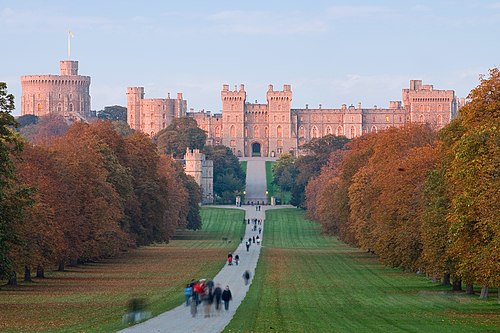 Windsor CastleRestored · prime 1820
 Tower of LondonRestored · prime 1285
 Bamburgh CastleRestored · prime 1904
All castles in England → · Strongest castles in England → · Castles of Europe
Play As Your Clan
Hold a real castle against whatever you choose to send at it, take a ship out in her own service years, or stand at the shoulder of someone the record remembers. The chronicler sets the scene; the deeds are yours.
Notable bearers of the Rothschild name
- Nathan Mayer Rothschild (1777-1836), founder of the London bank
- Lionel de Rothschild (1808-1879), first practising Jewish MP
- Nathan Mayer Rothschild, 1st Baron Rothschild (1840-1915), first Jewish member of the House of Lords
- Walter Rothschild, 2nd Baron Rothschild (1868-1937), zoologist and recipient of the Balfour Declaration in 1917
- Jacob Rothschild, 4th Baron Rothschild (1936-2024), investment manager and modern Rothschild philanthropist
Stories of Rothschild
The young Rothschild arrives at Manchester
1798In the third week of October 1798, on the wet autumn evening of the eighteenth of October, the twenty-one-year-old Frankfurt-Judengasse textile-trader Nathan Mayer Rothschild, third son of the Frankfurt court-banker Mayer Amschel Rothschild, alighted from the coach from Hull on the cobbled forecourt of the Bridgewater Arms coaching-inn in High Street, Manchester, with a small leather travelling-trunk, a banker's draft for the equivalent of approximately twenty thousand pounds in his coat pocket, the small private cipher his father had instructed him to use in correspondence between himself and the family bank at the Judengasse, and instructions from his father to establish a small cotton-and-textile export business at Manchester on the family's behalf. He spoke at the moment of arrival a few sentences of English (the language he had been taught by a private tutor at Frankfurt across the previous six months under his father's instruction), no Lancashire-dialect Manchester English (which he would acquire across the next eighteen months on the warehouse floor), no contemporary contacts among the Manchester cotton-merchant establishment (the small but powerful community of Manchester-Quaker and Manchester-Nonconformist cotton-merchant houses that controlled the spinning-and-weaving export trade), and the personal direction that he was to settle into the Manchester cotton trade as a junior independent merchant on the family's capital and develop the business across the next several years. He set up the small cotton-trading office at 25 Brown Street in the central Manchester warehouse district within three weeks of arrival, took the first wholesale cotton-purchase order at the Manchester Royal Exchange on the eighth of November 1798, and across the next decade built from the small Brown Street office the largest single textile-export business in the north of England, the foundation of the modern Rothschild international business that he would relocate to London in 1809 to establish NM Rothschild & Sons at New Court.
Read the story →
Rothschild and the Waterloo news at New Court
1815At approximately six o'clock on the morning of Wednesday the twenty-first of June 1815, at the small London commercial counting-house of NM Rothschild & Sons at New Court in St Swithin's Lane in the City of London, the thirty-seven-year-old Frankfurt-born financier Nathan Mayer Rothschild received from his private express-courier Rothworth of Ostend the brief handwritten note from his Brussels agent Salomon de Rothschild that the Duke of Wellington's Anglo-Allied army had decisively defeated the French Imperial army of Napoleon Bonaparte at the small village of Waterloo south of Brussels on the afternoon of the eighteenth of June 1815. The Rothschild private-courier despatch had been carried by Rothworth from the Waterloo battlefield to Brussels on the night of the eighteenth, from Brussels to Ostend on the morning of the nineteenth, from Ostend to Dover on the small chartered packet-boat Calais Packet on the afternoon of the nineteenth, from Dover to London by Rothschild private courier-coach across the twenty-day-and-night turnpike-route along the Dover Road, and was delivered to Nathan's hand at New Court at approximately six on the morning of the twenty-first of June 1815, almost forty-eight hours ahead of the official British government Waterloo despatch from Major Henry Percy of the Wellington staff, which reached Lord Bathurst at the War Office in London at approximately ten o'clock on the evening of the twenty-first. Nathan walked from the New Court counting-house to the Stock Exchange at Capel Court at ten in the morning, took the merchant's position at his Stock Exchange-trading pillar, conducted across the next several hours the careful sequence of trading-and-bond-selling operations on the strength of his advance Waterloo information that have been the foundation of every subsequent legend about the New Court trading-day of the twenty-first of June 1815, and from the closing of the day's trading-and-currency operations had consolidated the family's position as the central financial house of the post-Waterloo European order. He carried the official Waterloo confirmation personally to the Prime Minister Lord Liverpool at Downing Street at ten on the evening of the twenty-first, ten minutes after the official Percy despatch had reached the War Office, and met Liverpool with the Percy confirmation in hand across the rest of the night.
Read the story →