Sutton
The south farmstead.
- Origin
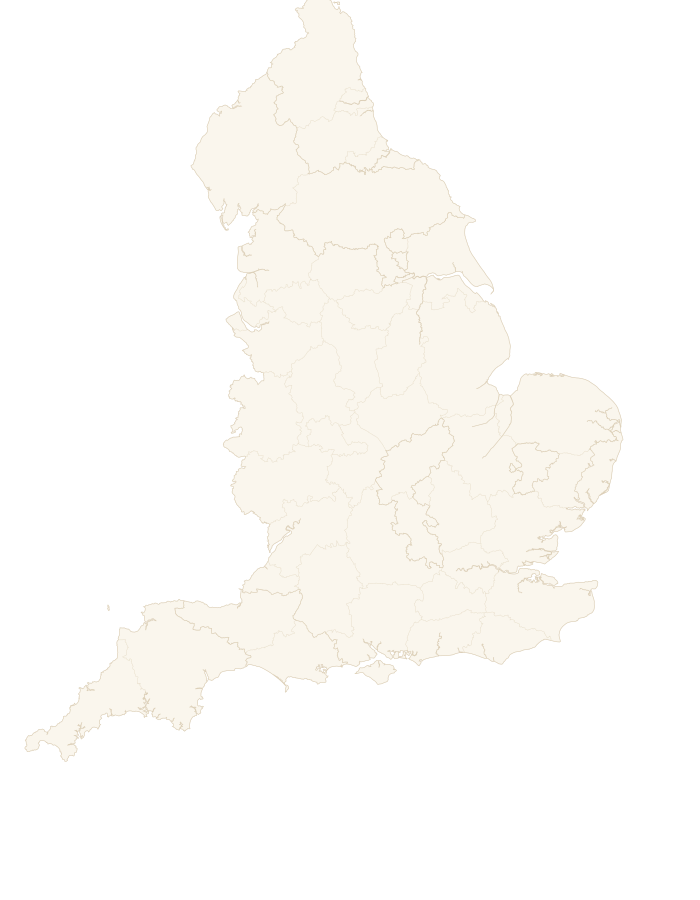
- East Midlands, England
- Famous bearer
- Thomas Sutton (1532–1611), founder of the Charterhouse
- Register
- English family
Where the Sutton name comes from
CoreHistoric reach
The seat of Sutton
Seat vacantChief
No one leads the Sutton community yet. When the movement opens, you can stand for its leadership, or help elect whoever does.
Current mission
No shared goal set yet. Once Sutton has leadership, it sets the public focus: a restoration, a gathering, a real-world project that helps its own.
The Sutton clan is being rebuilt. Join the waiting list for the movement today, and you help decide who leads it and what it does.
Help rebuild the Sutton clan →What does the Sutton name mean?
Locational, from Old English suth-tun, 'the south farmstead' or southern settlement. It is one of the commonest habitational surnames in England because almost every district had a Sutton, the farm to the south of somewhere, and each could give rise to a family of the name.
The history of Sutton
The south farm that almost every county owned
Sutton is Old English suth and tun, the southern farmstead, but tun was a slippery word, meaning an enclosure in one name and a farmstead, village, manor or whole estate in others, so a Sutton could be a row of cottages or a lordship. Almost every English county holds one or more: Sutton-in-Ashfield and Sutton-on-Trent in Nottinghamshire, Sutton in the Elms in Leicestershire, Sutton-under-Brailes in Warwickshire, Sutton-in-the-Isle among the Cambridgeshire fens, Sutton in Kent, and the Surrey Sutton that only became a London borough in 1965. Plymouth itself was once Sutton.
The earliest written forms are administrative. Domesday Book carries the first recorded spelling of the surname in 1086, Ketel de Sudtone, and Suttuna appears the same year in the records of Ely in Cambridgeshire; by the tax rolls of 1379 the standard form is de Sutton, of Southtown. Because the place was generic, the family never was singular. Drew de Sutton, lord of the manor of Thorncote, and Geoffrey de Sutton, lord of the manor of Tockholes, were both flourishing in the thirteenth century and shared nothing but a compass direction.
Margaret de Somery's marriage and the rock at Dudley
Dudley Castle was a wooden motte and bailey raised soon after the Conquest, and Domesday records it flatly: "the said William held Dudley; and there is his castle". It passed from Fitz-Ansculf to the Paganels, who built the first stone castle on the rock; that work was demolished on the orders of Henry II and rebuilt in the second half of the thirteenth century. In 1194 Ralph de Somery succeeded his uncle Gervase Paganel, and the Somery estates in time passed to John Somery's sister Margaret and her husband, John de Sutton. The family reached the strongest site it would ever hold by marriage, not by conquest.
What followed was a barony held by four consecutive Johns: John de Sutton II (1310–1359), 1st Baron Sutton of Dudley; John de Sutton III (1339 – c. 1370); John de Sutton IV (1361–1396); John de Sutton V (1380–1406). The style then shifted with the man: John Sutton, 1st Baron Dudley (1400–1487), took his title from the rock rather than the family, as did Edward Sutton, 2nd Baron Dudley (c. 1460–1531). They used Dudley as a surname often enough that the two became interchangeable, and the Dudleys descend from them.
1537, when a Sutton was put out of his own castle
The break came in 1537. John Dudley, later Duke of Northumberland and a great-grandson of John Sutton, 1st Baron Dudley, ousted a money-troubled Sutton from the castle and built a range of new buildings inside the fortifications. The line that had held the rock since the Somery inheritance lost it not to a rival house but to its own descendant, operating under the alias the family had adopted for itself, a debt and a displacement rather than a siege.
The castle outlasted them badly. Parliament ordered the fortifications slighted during the English Civil War, and fire destroyed the residential buildings in 1750.
Friars, priors and a member for Essex
The medieval name appears in the church as often as in the field. Thomas of Sutton, a Dominican friar and theologian, has a recorded career running from 1274 to some point after 1315. Hugh de Sutton was Prior of Christ Church Cathedral in Ireland in the fourteenth century, and Matrin de Sutton the first rector of the church of St George at Beckington. A John Sutton was working as an English composer in the fifteenth century, one of the few of the name whose surviving trace is music rather than a rent roll.
In secular office the name arrives early. John de Sutton sat as Member of Parliament for Essex around 1306; Allan Sutton was a Member of Parliament during the fourteenth century; John Sutton of Lincoln, politician, died about 1391. None of these men can be tied to the Dudley line, and that is the point of the surname: by the time it was hereditary there were already several Sutton families in public life, each from a different southern farm.
William Sutton's tower at Straffan
Barberstown Castle stands at Straffan in County Kildare, 25 km west of Dublin, built by Nicholas Barby around 1288 on land originally owned by the Fitzgerald family. By 1630 the property was owned by William Sutton, described as of one of the foremost families in the area, the name planted in Ireland and holding a late thirteenth-century tower there.
It did not stay with them. In 1689, after the accession of King James II, the castle was confiscated from Lord Kingston by the Earl of Tyrconnell, and in 1703 Bartholomew Vanhomrigh, Lord Mayor of Dublin in 1697, bought it with 335 acres for £1,033. It went on through the Henrys, Hugh Barton of the wine family behind Barton and Guestier, and the Huddlestons. Renovations in 1996 uncovered a tunnel running from the castle to the church at Straffan, thought to have been used under the Penal Laws.
A fortune made rather than inherited
Thomas Sutton (1532–1611) is the Sutton the wider record remembers, and he is not a landed one: the sources describe him as a merchant and civil servant. Where the Dudley branch had held a castle by descent and lost it to debt within his own century, Sutton's standing rested on money he made himself and then turned into an endowment. The surname's most durable monument was bought, not inherited.
The offices came afterwards. Robert Sutton (1671–1746) was a British diplomat, clergyman and Member of Parliament, and his brother Richard Sutton (1674–1737) a Major-General and likewise a Member of Parliament. Samuel Sutton (1760–1832) reached admiral in the Royal Navy, and Charles Sutton (1756–1846) combined the pulpit with botany.
The nineteenth century put the name on commercial and civic ground. John Sutton (1777–1863) founded Suttons Seeds; Thomas Sutton (1819–1875) worked as photographer, author and inventor while the medium was still being assembled from scratch; Richard Charles Sutton (1834–1915) practised as an English architect. Edith Sutton (1862–1957) became the first woman councillor in England, later Mayor of Reading and a suffragist. Bertine Sutton (1886–1946) rose to air marshal, and Oliver Graham Sutton (1903–1977) was a Welsh mathematician and meteorologist.
The night at the Kelly farmhouse
Emigrant Suttons scattered the name. Joseph William Sutton (1844–1914) left Britain for Australia and worked as a shipbuilder, inventor and X-ray pioneer; George Lowe Sutton (1872–1964) was an Australian agricultural scientist. In the United States the name belongs to Walter Sutton (1877–1916), biologist; George Miksch Sutton (1898–1982), ornithologist and bird artist; Willie Sutton (1901–1980), bank robber and prison escape-artist; and Crystal Lee Sutton (1940–2009), union organizer, the inspiration for the film Norma Rae.
One American Sutton household reached the folklore books by accident. On the night of 21–22 August 1955, five adults and seven children walked into the police station at Hopkinsville, Christian County, Kentucky, saying small creatures had been attacking their farmhouse near the community of Kelly and that they had held them off with gunfire for nearly four hours. Two of the adults, Elmer "Lucky" Sutton and Billy Ray Taylor, said they had shot at short dark figures that kept appearing at the doorway and peering in at the windows. The household was Glennie Lankford's: her minor children Lonnie, Charlton and Mary, her grown sons Elmer and John Charley "J.C." Sutton, their wives Vera and Alene, Alene's brother O. P. Baker, and Billy Ray Taylor with his wife June.
Four city police officers, five state troopers, three deputy sheriffs and four military policemen from Fort Campbell drove out to the Sutton farmhouse. Their search turned up nothing but broken windows and holes in screens, and when officers came back the next day the house was empty; neighbours said the families had packed up and left after the creatures returned at about half past three in the morning. The Kentucky New Era, the first paper to report it, raised the count to twelve to fifteen. Project Blue Book listed the case as a hoax and the skeptic Joe Nickell put it down to great horned owls, while psychologists now set it in front of students as an exercise in telling fiction from fact: a farm family's surname fixed to a story none of them wanted.
Historic Places, Rebuilt
Explore the streets and seats the Sutton name knew, rebuilt with AI as they stood in history.
Castles the Sutton held
Strongholds this name held for a decade or more, look one up, or rebuild it to explore.
- Dudley Castle
Held by the Suttons from the Somery inheritance of Margaret and John de Sutton until 1537; the family often used Dudley as a surname.
- Barberstown Castle
Owned in 1630 by William Sutton, of one of the foremost families in the area.
The castles of the homeland
The great strongholds of the homeland, look one up, see what it looked like in its prime, and recreate it to explore.
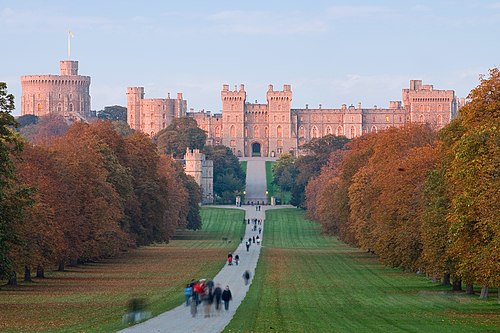 Windsor CastleRestored · prime 1820
 Tower of LondonRestored · prime 1285
 Bamburgh CastleRestored · prime 1904
All castles in England → · Strongest castles in England → · Castles of Europe
Play As Your Clan
Hold a real castle against whatever you choose to send at it, take a ship out in her own service years, or stand at the shoulder of someone the record remembers. The chronicler sets the scene; the deeds are yours.
Notable bearers of the Sutton name
- Thomas Sutton (1532–1611), founder of the Charterhouse