
Scotland · Still standing
Barnbougle Castle
Barnbougle Castle is a Scottish tower house on a rocky terrace overlooking the Firth of Forth, rebuilt in the Scots Baronial style in the late 19th century for the Rosebery family. The present building incorporates older north and east fabric and remains part of the Dalmeny estate as a category A listed property.
Its prime
1894
Today
Still standing
As it stood in 1894
What Barnbougle Castle looked like in its prime.
Three-storey tower house with an attic, built of rubble dressed in pale ashlar sandstone on a projecting rock terrace above the Firth of Forth. The roofline shows steep slate roofs, tall stone chimneys and crow-stepped gables; a crenellated parapet runs around the top. Small round bartizans sit on the western corners, and the façades feature tall mullioned windows and an arched ground-floor entrance; a low garden wall and balustrade separate the shore from the castle grounds.
Its story
The story of Barnbougle Castle.
Shepherd's Hill and the Mowbray Tower, 13th Century to 1402
Older forms of the name (Barnbughall, Barbogle, Pronbugele) reach back to the British brinn bugel, 'shepherd's hill', or pren bugel, 'shepherd's tree', all of them likely referring to the high ground that rises behind the shore above the grazing at the mouth of the Cockle Burn. The first building there was a thirteenth-century tower house raised by the Mowbrays, a Norman family who were also lords of Dalmeny and Inverkeithing, on the southern shore of the Firth of Forth between Cramond and Queensferry. Sir John Mowbray of Barnbougle, laird of Dalmeny, was knighted by Sir Thomas Erskine at the battle of Homildon Hill in 1402.
Mary's Servants and the Combat on the Links, 1586-1597
John Mowbray, laird in 1586, was a supporter of Mary, Queen of Scots. His wife was a sister of William Kirkcaldy of Grange, and two of their daughters served the queen in England: Barbara married Gilbert Curll, Mary's secretary, and Gillis was betrothed to her apothecary. The jewellery now known as the Penicuik Jewels is thought to have been Mary's gift to Gillis Mowbray.
On 15 March 1597 the Links of Barnbougle were the ground for a judicial combat. James Carmichael had killed Stephen Bruntfield, Captain of Tantallon, in a duel on 22 December the previous year, and was made to fight Adam Bruntfield in single combat before judges who included the Duke of Lennox, the Laird of Buccleuch and Sir James Sandilands. The two men fought in lightweight satin and taffeta, one in blue and one in red. Bruntfield killed Carmichael, in front of 5,000 spectators according to some accounts.
Hamilton, Primrose and the Move to Dalmeny House, 1615-1817
In 1615 the Mowbrays sold Barnbougle to Sir Thomas Hamilton, afterwards Earl of Haddington, and in 1662 Hamilton's grandson sold it on to Sir Archibald Primrose of Carrington, a senior judge who became Lord Justice General of Scotland in 1676. Primrose's eldest son by his second marriage, also Archibald, was created Earl of Rosebery in 1703, and Barnbougle became the family seat. The original tower house was rebuilt or replaced at some point during the seventeenth century.
In 1774 Robert Adam drew up a plan to rebuild the castle as a triangular building with the old tower at its seaward corner, but it was never executed. By the early nineteenth century the place had become dilapidated, and a wave is said to have washed into the dining room during supper. The 4th Earl of Rosebery had Dalmeny House built on the estate, and the family moved in on its completion in 1817.
The Bugle at Hound Point
The antiquary William Wallace Fyfe recorded in 1851 a legend attached to the castle and to nearby Hound Point: that whenever one of Barnbougle's lords was about to die, 'the unwonted apparition of a black man, accompanied by a hound' appeared on the point and wound from his bugle the death note of the baron. Fyfe offered this as the origin of the name Bar'n-bugle, and built on it a poem following one Sir Roger Mowbray and his dog on crusade in the Holy Land, closing at the knight's death. Other versions of the tale have the baying of a hound, rather than a trumpet, go before the death.
The Explosives Store and Rosebery's Library
The old castle was used to store explosives, and after being damaged in an accidental explosion it was left as a ruin. In 1881 it was entirely reconstructed and extended to plans by James Maitland Wardrop, of Wardrop & Reid, in the Scots Baronial style, with fabric of the older castle taken into the new building. It was built primarily to house the private library of Archibald Primrose, 5th Earl of Rosebery (1847-1929), who became Prime Minister in 1894; the collection specialised in Napoleonic material, as Rosebery was the author of Napoleon: The Last Phase. He practised his speeches there, in a purpose-built gallery hall.
Barnbougle remains part of the Dalmeny Estate and the property of the Rosebery family, and has been a category A listed building since 1981. A panel on the east wall carries the inscription 'Remove Not The Ancient Landmark Which Thy Fathers Have Set'.
Step inside
8 places to explore in 1894.
The record describes 8 distinct spots at Barnbougle Castle, including 3 interiors: purpose-built gallery hall, private library, dining room. Create your own photoreal reconstruction and explore every one, more scenes means more rooms, more angles, and more of the place to stand in.
Build Your Own Castle
Recreate Barnbougle Castle with AI to explore it.
The artist rebuilds it as it stood in 1894, a photoreal reconstruction that belongs to you alone. Pay with coins, no subscription needed.
Recreate this castle →Defend this castle →Whose castle
Clans who held Barnbougle Castle.
The families that held Barnbougle Castle for a decade or more across its history, follow a name to its clan.
Mowbray
Built the thirteenth-century tower at Barnbougle; lords of Dalmeny and Inverkeithing, they sold the castle in 1615.
Held 1615–1662, from Sir Thomas Hamilton, afterwards Earl of Haddington, to his grandson.
Primrose
Bought by Sir Archibald Primrose of Carrington in 1662; seat of the Primrose Earls of Rosebery from 1703, and still within the family's estate.
From the archive
Barnbougle Castle on paper: the measured plan and period views.
The survey plan and photographs below are the ground truth this page's reconstructions are checked against, drawn and photographed while the castle was still a working garrison. Every image is public-domain or openly licensed, with its source named.
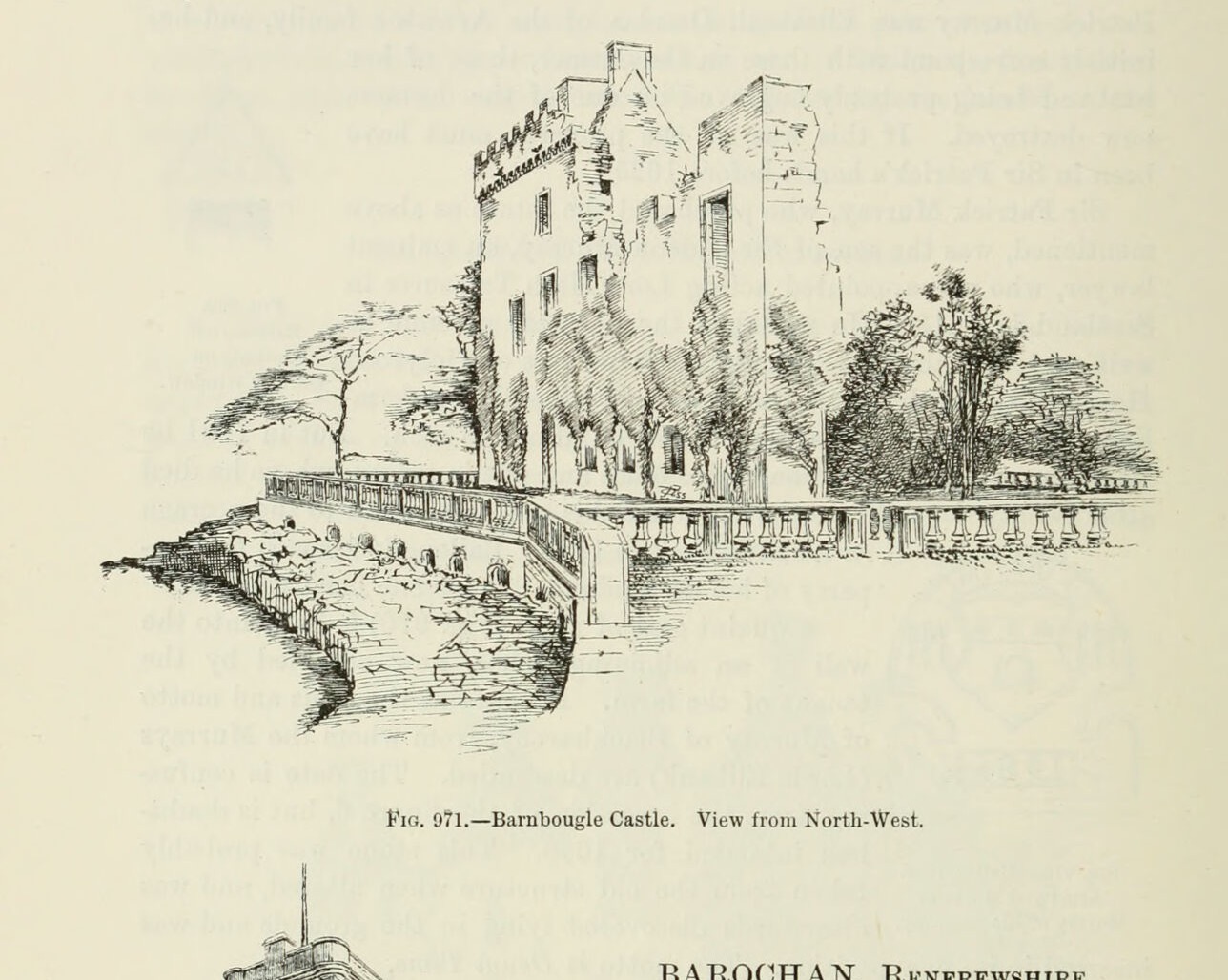
Fig. 971. Barnbougle Castle. View from North-West.
1892 · MacGibbon & Ross, vol. 4 (1892)
Public domain
Nearby
Landmarks within reach of Barnbougle Castle.


Questions about Barnbougle Castle
What is the history of Barnbougle Castle?
What is inside Barnbougle Castle?
Why was Barnbougle Castle built, and what was it used for?
Where is Barnbougle Castle?
When was Barnbougle Castle built?
Which family or clan held Barnbougle Castle?
What did Barnbougle Castle look like in its prime?
Is Barnbougle Castle still standing, or is it a ruin?
More castles of Scotland


Explore the city


