Miller
The miller, water and wind before steam.
- Origin
- North East, England
- Famous bearer
- Glenn Miller (1904–1944), American big-band leader and Major in the US Army Air Forces; disappeared over the English Channel, 15 December 1944
- Register
- English family
The Miller arms and country

Coat of armsMiller Coat of ArmsIlma.Bogdan · CC BY-SA 4.0

- Coat of arms: Granted to an individual and inherited down that one documented line. These are the arms of particular families of the name, not of everyone who shares the surname.
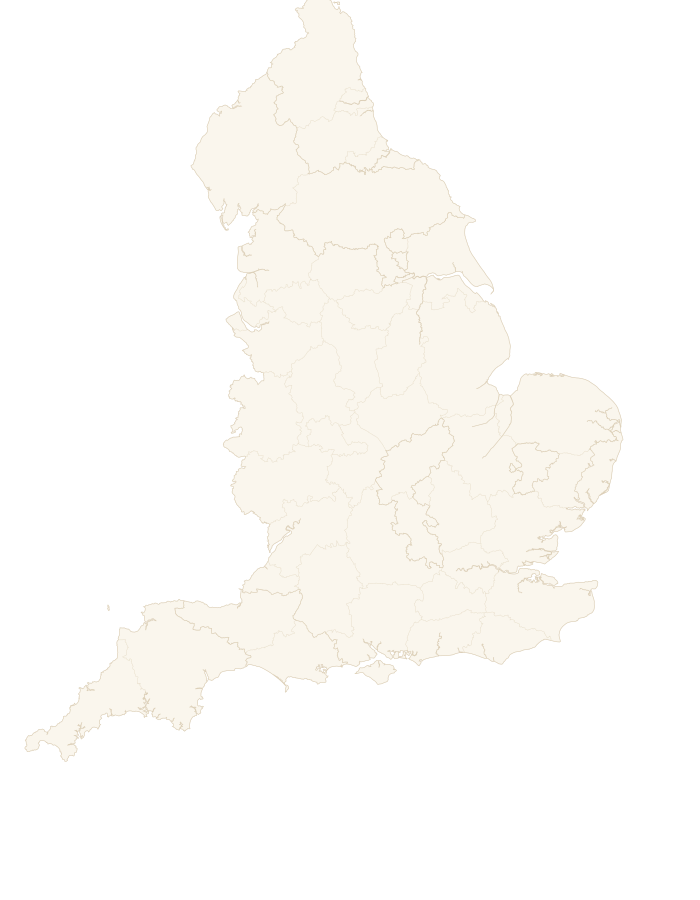
CoreHistoric reach
The seat of Miller
Seat vacantChief
No one leads the Miller community yet. When the movement opens, you can stand for its leadership, or help elect whoever does.
Current mission
No shared goal set yet. Once Miller has leadership, it sets the public focus: a restoration, a gathering, a real-world project that helps its own.
The Miller clan is being rebuilt. Join the waiting list for the movement today, and you help decide who leads it and what it does.
Help rebuild the Miller clan →What does the Miller name mean?
Occupational, miller. Northern Miller distinguishes orthographically from continental Müller / Muller diaspora.
The history of Miller
The one machine the whole village owned
Before a Miller was a family, a miller was the man who ran the most expensive object in the parish. Grinding grain is among the oldest human occupations, and for most of it the tool was the quern-stone: a fixed bedstone and a movable upper stone worked by hand. Then came stones turned by water and wind, and with them the mill: a building, a wheel, dressed millstones and a train of gearing no single household could afford or repair.
The Domesday Book of 1086 records 5,624 watermills in England; later research puts it nearer 6,082, and treats that as a minimum because the north was never properly surveyed. By 1300 the figure had risen to between 10,000 and 15,000. When English families began fixing hereditary surnames (largely complete by 1400 in England and Lowland Scotland), there was a miller beside almost every watercourse in the kingdom, waiting for a name.
The lord's mill and the charge for using it
The mill was rarely the miller's. Under manorialism an estate divided into the lord's demesne, villein holdings owing labour or produce, and free land paying money rent, all under a manorial court run on local custom. The lord's income came from more than crops: alongside court revenues and the payment due whenever a tenancy changed hands, the manor drew charges for the use of his mill, his bakery and his wine-press. The mill was less a service the lord provided than a monopoly he owned.
The miller took his cut in kind, a toll from every sack of grist that crossed the stones, and that one arrangement decided how he would be seen for five centuries. He was not paid in coin by an employer; he was paid by his neighbours, in their own flour, in a transaction none of them could audit. Bishoprics and monasteries held rather more than a quarter of England in 1086, so the man taking the toll often answered to an abbey rather than a knight.
Water: the leat, the sluice and the tentering of the stones
The craft was hydraulic before it was anything else. Water was drawn off a river or millpond down a channel called a flume, head race, leat or, in Scots, a lade, and let away down a tail race that might feed the next mill downstream. Wheels came in four kinds (undershot, breastshot, overshot and pitchback), and the difference was money: an overshot wheel, fed at the top so the weight of water in its buckets turns it, is about two and a half times more efficient than an undershot one.
The skill was in the adjustment. The miller worked the sluice against seasonal water and set the gap between the stones by tentering, judging it by the flow, the grain and the grade of flour wanted. Get it wrong and the meal came out coarse, or the stones ran dry. Floods, drought and a frozen millpond were all his problem and excused him to nobody. The same wheel could also full woollen cloth, saw timber, beat rag into paper or work a forge hammer, so the water beside a Miller was rarely idle.
1185, Weedley in Yorkshire: the wind arrives
The vertical windmill (sails on a horizontal shaft, the shape every child draws) is a twelfth-century invention of north-western Europe, developed in the triangle of northern France, eastern England and Flanders. The earliest certain reference to a windmill in northern Europe dates from 1185, in the vanished village of Weedley in Yorkshire, at the southern tip of the Wolds above the Humber estuary. That is Miller country: the name clusters along Yorkshire rivers and Northumberland burns.
The earliest type was the post mill, its whole body balanced on an upright post so the miller could swing the building round to face a shifting wind. By the end of the thirteenth century the masonry tower mill had arrived, taller and steadier, only its cap turning. William Cubitt's patent sails of 1807 let the canvas answer the wind without stopping the mill to reset it by hand. At the peak in 1850 Europe held an estimated 200,000 windmills against some 500,000 water wheels.
The golden thumb, and why nobody trusted him
A miller judged his meal by feel, rubbing it between thumb and forefinger, year after year, until the thumb broadened and flattened into what the trade called a miller's thumb, a shape thought to resemble a fish's head, which is why the European bullhead still carries the name. The sayings cut both ways: a thing might be worth a miller's thumb, but "an honest miller hath a golden thumb" was never a compliment.
In a rural society the miller was usually better off than the peasants around him, which bred resentment. Millers were routinely accused of keeping company with thieves, and in famine years they were a standing target of bread riots. Chaucer put one in the Canterbury company and made him coarse and overproud. The other side is usually left out: because he ran the machine the estate depended on, a miller often stood in a stronger position against his lord than any ordinary tenant could.
In pre-Reformation Scotland the rynd, the iron cross carrying the runner stone, was cut on millers' gravestones as the badge of the craft. At Ivrea in Piedmont the carnival still honours the Mugnaia, the miller's daughter of legend who refused a duke his claimed right of the first night and took his head off instead.
Why the name is northern, and where it travelled
Miller is specifically a northern word: the northern Middle English agent-noun from mille, reinforced by the Old Norse mylnari that also gives Milner. In southern, western and central England the usual word was Millward, mill keeper, and those regions carry that name instead. So a Miller in the diaspora is normally looking north: Yorkshire, Northumberland and Lowland Scotland, where the name still ranked 24th on the 2020 registers with Millar at 75th. A second, quite separate Miller is toponymic, from a locale in Glasgow.
The name crossed to Ireland with the seventeenth-century Ulster plantations, County Antrim above all, and from there to North America and the southern hemisphere. In the 2010 United States census Miller was the seventh most common surname, with 1,161,437 bearers; around 2007 roughly one American in twenty-five answered to Smith, Johnson, Williams, Brown, Jones, Miller or Davis. It stands 18th in Canada, 36th in New Zealand and 38th in Australia.
One trade, twenty languages, one name
Every European language built the same surname out of the same job, which is why families who never saw a Yorkshire beck now spell it Miller. The English form absorbed German Müller and Moeller; French Meunier and Dumoulin; Dutch Molenaar and Mulder; Danish Møller; Italian Molinaro; Spanish Molinero; Hungarian Molnár; South Slavic Mlinar; Ukrainian Melnyk; and Greek Mylonas. Miller is the third most common surname among Jews in the United States, after Cohen and Levy, from the Yiddish cognate of Müller, and the commonest surname among the Amish, carried out of Switzerland as Müller.
The machines lasted: as late as 1870 watermills still produced two thirds of the power available for British grain milling, and it took cheap electricity to finish them. The name outlasted the wheel. Sir Jonathan Miller, who qualified as a doctor, walked into Beyond the Fringe at twenty-six and then directed Shakespeare and Mozart across British theatre and opera for forty years, carried it into the century after milling ended. So did Glenn Miller (1904–1944), the American big-band leader and Major in the United States Army Air Forces who disappeared over the English Channel on 15 December 1944.
Champions of the Miller name
The bearers whose lives are inseparable from this surname. Each has their own page, biography, achievements, geography, connection to the family.
The same name across Europe
Miller shares its meaning, not its bloodline, with these names from other corners of Europe: cognates, the same word for the same thing, formed independently in each language. Cousins by meaning, with separate ancestral stories a search box flattens into near-twins.
Historic Places, Rebuilt
Explore the streets and seats the Miller name knew, rebuilt with AI as they stood in history.
The castles of the homeland
The great strongholds of the homeland, look one up, see what it looked like in its prime, and recreate it to explore.
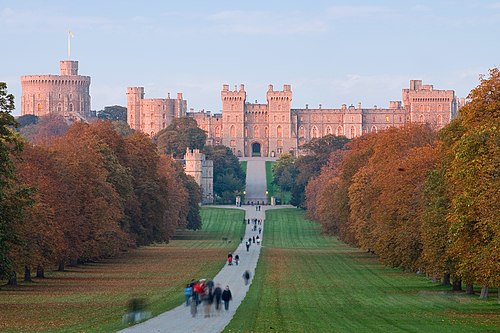 Windsor CastleRestored · prime 1820
 Tower of LondonRestored · prime 1285
 Bamburgh CastleRestored · prime 1904
All castles in England → · Strongest castles in England → · Castles of Europe
Play As Your Clan
Hold a real castle against whatever you choose to send at it, take a ship out in her own service years, or stand at the shoulder of someone the record remembers. The chronicler sets the scene; the deeds are yours.
Notable bearers of the Miller name
- Glenn Miller (1904–1944), American big-band leader and Major in the US Army Air Forces; disappeared over the English Channel, 15 December 1944