Reid
also Read, Reade
The red one, descriptive Scots surname, dense in the Lothians and the Borders.
- Origin
- Lothian & Edinburgh, Scotland
- Motto
- Virtutis gloria merces
- Famous bearer
- Thomas Reid (1710–1796), philosopher, founder of the Scottish School of Common Sense
- Register
- Scottish family
The Reid arms and country

Coat of armsEscutcheon of the Reid baronets of Ellon (1897)Borne by the Ellon line, one branch of the name rather than all of it.Charles Matthews · CC BY-SA 4.0 
Coat of armsEscutcheon of the Reid baronets of Barra (1703)Borne by the Barra line, one branch of the name rather than all of it.Charles Matthews · CC BY-SA 4.0
.svg)
.svg)
- Coat of arms: Granted to an individual and inherited down that one documented line. These are the arms of particular families of the name, not of everyone who shares the surname.
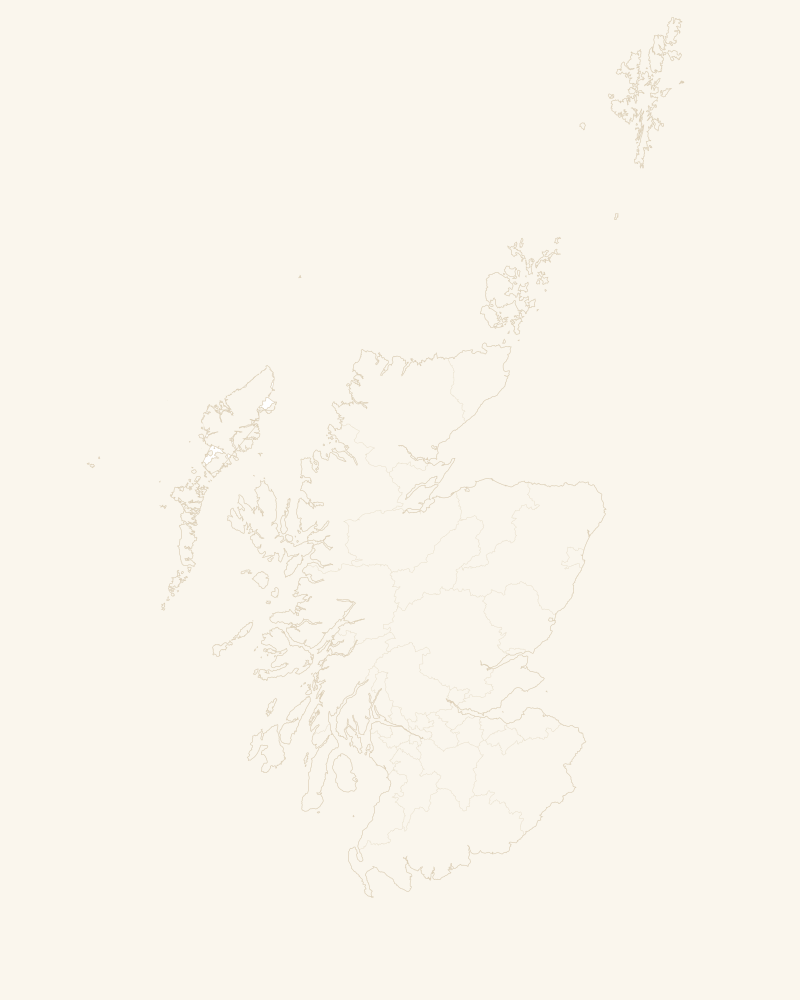
CoreHistoric reach
The seat of Reid
Seat vacantChief
No one leads the Reid community yet. When the movement opens, you can stand for its leadership, or help elect whoever does.
Current mission
No shared goal set yet. Once Reid has leadership, it sets the public focus: a restoration, a gathering, a real-world project that helps its own.
The Reid clan is being rebuilt. Join the waiting list for the movement today, and you help decide who leads it and what it does.
Help rebuild the Reid clan →Motto
Virtutis gloria merces
“Glory is the reward of valour”
What does the Reid name mean?
Descriptive, the red one. Scots 'reid' from Old English read, applied as a personal byname to a man of red hair or red complexion. The English equivalent is Read or Reade; the Welsh is Goch, the Gaelic Ruadh. Where most Scottish patronymics generated multiple variants, Reid stayed compact, the descriptive 'reid' was so embedded in everyday Scots that the surname needed no further compression.
The history of Reid
The red one, and the man he was told apart from
Reid is the Scots word for red, out of Old English read, and it began not as a family name but as a label fastened to one man for the colour of his hair or the high colour of his face. England kept the same word as Read and Reade; Wales made the identical observation and got Goch, Gaelic Scotland made it and got Ruadh. Surname scholars put all of these in the nickname class, the broadest class there is, alongside Brown, Short and Thin, with the caution that Short may well have been an ironic nickname for a tall man.
A byname is only half of a pair. It does no work unless there are two men in the parish who need telling apart, which is why the habit runs thickest where the stock of given names is thinnest. In Gaelic-speaking districts a man was fixed by an epithet instead: Raibeart Bhan, Fair Robert, a Robert with light-coloured hair; Calum na Coise, Calum of the leg. Whole surnames hardened out of the habit, Campbell from Caimbeul, crooked mouth, and Cameron from Camshron, crooked nose. Reid is the Lowlands doing the same job in Scots.
Hair and complexion are the first thing a neighbour notices, so the observation was made independently in Scots, English, Welsh and Gaelic rather than borrowed and carried outward. There is no founding Reid and no original Reid estate, because the name was coined again and again, in parish after parish.
The century the nickname stopped being a nickname
By 1400 most English families and most families of Lowland Scotland had adopted hereditary surnames, a habit that had spread downward from the feudal nobility since the Norman Conquest. That date is the hinge of the Reid story: up to it a man was Reid because he was red, and after it his grandchildren were Reid whether they were red, black or grey.
The name settled thickest in the Scots-speaking east and south, in the Lothians and the Borders above all, with long presence in Midlothian and East Lothian, Fife, Aberdeenshire, Stirling, Lanarkshire and south Ayrshire. In the Gaelic west, clan surnames were applied wholesale to everyone in a chief's territory once a non-Gaelic-speaking administration arrived to write them down. Reid appeared the other way round, in many parishes at once, carried by men who had never met.
The clan that counts Reid among its three principal names
Clan Donnachaidh, known in English as Clan Robertson, names Robertson, Reid and Duncan as its three principal surnames, and it is from that association that the Reid page carries the motto Virtutis gloria merces, glory is the reward of valour. The clan slogan is Garg 'nuair dhuisgear, fierce when roused, and its badge is bracken, for lands along the southern side of Loch Rannoch. Its first recognised chief was Donnchadh Reamhar, Stout Duncan, who headed a kin-group around Dunkeld and is remembered for looking after Robert the Bruce after Methven in 1306.
That association is real and old, and a Reid is entitled to it. It is worth being plain about what it is not. No chief of that line has ever been a Reid, and it is a common misconception that every bearer of a clan surname descends from the chiefly house: tenants and followers took the surname of the family on whose ground they lived, kin or not. Most people called Reid descend from no clan at all, but from a red-haired man in a Lowland parish whose name nobody wrote down.
Before you buy the tartan: how the sept lists were made
A sept, in Scottish usage, is a family that followed another family's chief while keeping a surname of its own, sometimes kin by marriage, often simply living on a powerful laird's land. The sept lists a modern reader meets, though, are a much later thing. Tartan had been largely given up by ordinary Highlanders by the nineteenth century, and what revived it was fashion: the Highland Society of London naming clan-specific tartans from 1815, Walter Scott's staging of George IV's visit in 1822 with the king himself in tartan, and later Queen Victoria at Balmoral. A good many clan tartans descend from the Vestiarium Scoticum, a forgery passed off by the Sobieski Stuarts as a copy of an ancient manuscript.
Into that market came the sept lists, drawn up by clan societies and tartan manufacturers to attach as many surnames as possible to a clan, whether or not any historical connection existed, so that a customer without a clan name could feel entitled to a tartan. Miller was made a sept of Clan MacFarlane, Taylor of Clan Cameron, Mason of Clan Sinclair. A common descriptive byname is exactly what that trade hoovered up. There is no official register of septs: each clan decides its own list, and the same surname can sit on several of them at once, which is a fact about the lists rather than about ancestry.
Nor does a Lowland family need to borrow a Highland one. Sir Crispin Agnew of Lochnaw, Albany Herald Extraordinary, has shown that the split between Highland clans and Lowland families is a nineteenth-century convention: an Act of the Scottish Parliament of 1587 spoke of the chiefs and chieftains of all clans, as well on the highlands as on the borders, and listed Maxwells, Johnstones and Turnbulls among them.
Two towers, two counties, two households of the name
Barra Castle stands in the Garioch of Aberdeenshire on ground that had already made history: it is where Robert the Bruce broke John Comyn, Earl of Buchan, at the Battle of Inverurie in 1308. The present house owes its form mainly to George Seton, chancellor of the University of Aberdeen, granted the estate in 1598; a charter of 1599 erected the lands of Barra into a free barony, and one of 1615 ordained that its fortalice should be the barony's chief seat.
James Reid, an advocate in Aberdeen, held the estate by 1630, and his family kept it until 1754. What they held is an unusual L-plan castle with conical-roofed round towers, crow-stepped gables and a small square courtyard entered through the east wall, now a Category A listed building. Its drawing room and bedrooms still carry panelling of the early to mid eighteenth century, fitted while the Reids were the family in the house.
In Angus, four miles north of Monifieth, a separate household of the name held Affleck Castle, a fifteenth-century L-plan tower raised on lands the Auchenlecks of that Ilk had held since 1471. It rises four storeys and sixty feet to a parapeted garret, and keeps a spy-hole from the withdrawing room down into the hall so that movement toward the main stair could be watched. A family of Reids had it from the middle of the seventeenth century and forfeited it in 1746 for their activities as Jacobites. Nothing ties them to the Aberdeen Reids; two households of a common name held two towers in two counties.
The Kincardineshire minister who told David Hume he was wrong
Thomas Reid was born on 26 April 1710 at the manse of Strachan in Kincardineshire, twenty miles south of Aberdeen, son of the Reverend Lewis Reid, the parish minister, and Margaret Gregory of the Gregory family of mathematicians and astronomers. That maternal side made him: his uncle David Gregory held the Savilian Chair at Oxford, his cousin John Gregory was professor of medicine at Aberdeen and later Edinburgh. He entered Marischal College at twelve, graduated M.A. in 1726, was licensed to preach in 1731, and kept the Marischal library until 1737.
He was presented to New Machar in 1737 and stayed fourteen years, marrying Elizabeth Reid in 1740 and gathering round him the Aberdeen philosophers David Fordyce, George Campbell and John Stewart in what became the Aberdeen Philosophical Society. He had read David Hume's Treatise of Human Nature when it appeared in 1739 and spent decades worrying at it. Hume's conclusion, that the mind has no direct access to an external world and no rational warrant even for expecting the sun to rise, struck Reid as a result that had to be wrong: not because the reasoning stumbled, but because a philosophy ending in the impossibility of the world must have a hidden flaw in its premises.
He found it in Hume's theory of ideas, and said so in An Inquiry into the Human Mind on the Principles of Common Sense, published in Edinburgh in 1764. The mind does not perceive its own ideas, Reid argued; it perceives the world itself, through senses that are instruments of real access to a real order. The book made his name at once in the lecture rooms of Edinburgh, Aberdeen and Glasgow, and on the strength of it he was offered, that same year, the chair of moral philosophy at Glasgow that Adam Smith was vacating. He held it twenty-three years, and turned his lectures into Essays on the Intellectual Powers of Man (1785) and Essays on the Active Powers of Man (1788).
He gave up the chair in 1780 and died on 7 October 1796, aged eighty-six, buried in Blackfriars Kirkyard in Glasgow. The school he founded shaped the philosophical curriculum of every major American college from Princeton to Yale across the nineteenth century, and James Madison's notes from his Princeton studies under John Witherspoon are full of Reid. His argument that we are in direct contact with a real world, made when the cleverest men of his generation had concluded we could not be, became a load-bearing assumption of two centuries of thought in English.
From a Renfrewshire manse to the premiership of Australia
George Houstoun Reid was born at Johnstone in Renfrewshire on 25 February 1845, the son of a Presbyterian minister, and went out with his family to New South Wales as a boy, one household among the great nineteenth-century movement of Scots to North America and Australasia. He trained in commerce and then in law, was called to the bar, and was Premier of New South Wales from 1894 to 1899.
He was central to the campaign for federation, carrying New South Wales through the conventions and referendums that brought the Commonwealth of Australia into being in 1901, and sat as a foundation member of the first federal Parliament. He was the fourth Prime Minister of Australia in 1904 and 1905, and for years the leading parliamentary voice of free trade. In 1910 he was appointed the first High Commissioner of Australia in London, a post he held through the opening years of the First World War.
The name travelled well and kept travelling; Beryl Reid (1919–1996) carried it as an actress. What holds the whole of it together is not a chief or a charter but the word itself: a plain Scots adjective for the colour of a man's hair, picked up independently in the Lothians, the Borders, Fife, Angus, the Garioch and a hundred places besides, hardened into a family name before 1400, and carried out of Scotland by people who took with them their language, their trade and their name.
Champions of the Reid name
The bearers whose lives are inseparable from this surname. Each has their own page, biography, achievements, geography, connection to the family.
- Thomas Reid
The Aberdeen-trained minister who answered David Hume's skepticism with the philosophy of Common Sense and founded the Scottish school that would shape American thought through the nineteenth century.
- George Reid
The Renfrewshire-born Prime Minister of Australia who became its first High Commissioner in London.
Historic Places, Rebuilt
Explore the streets and seats the Reid name knew, rebuilt with AI as they stood in history.
Historic Places, Rebuilt · New
The castle on its crag, St Giles' crown spire, and the closes tumbling to the Cowgate.
Historic Places, Rebuilt · New
Scotland's ecclesiastical capital at its peak, the great cathedral, the bishop's castle on the sea, and the new university.
Castles the Reid held
Strongholds this name held for a decade or more, look one up, or rebuild it to explore.
- Affleck Castle
A family of Reids held Affleck from the mid-17th century until 1746, when they forfeited it for their Jacobite activities.
- Barra Castle
Held by the Reid family of Aberdeen from around 1630 until 1754.
The castles of the homeland
The great strongholds of the homeland, look one up, see what it looked like in its prime, and recreate it to explore.
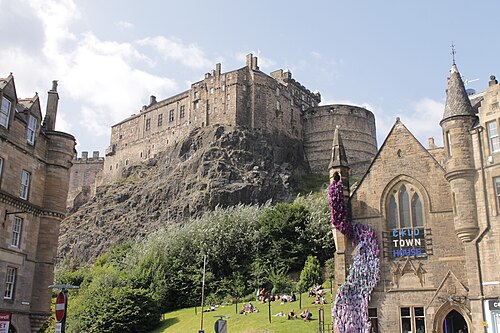 Edinburgh CastleRestored · prime 1520
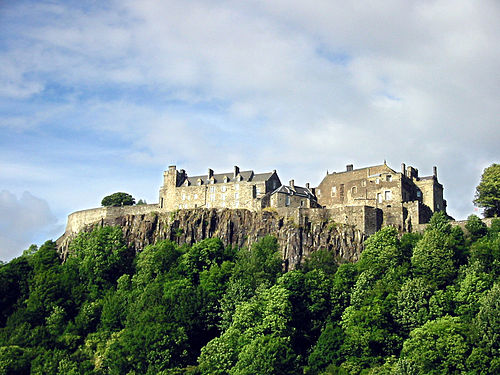 Stirling CastleRestored · prime 1542
 Glamis CastleStill standing · prime 1900
All castles in Scotland → · Strongest castles in Scotland → · Castles of Europe
Play As Your Clan
Hold a real castle against whatever you choose to send at it, take a ship out in her own service years, or stand at the shoulder of someone the record remembers. The chronicler sets the scene; the deeds are yours.
Notable bearers of the Reid name
- Thomas Reid (1710–1796), philosopher, founder of the Scottish School of Common Sense
- Sir George Reid (1841–1913), fourth Prime Minister of Australia
- Beryl Reid (1919–1996), actress