Taylor
also Tailyour
The tailor, Norman-French occupational, Scots and English in parallel.
- Origin
- Lothian & Edinburgh, Scotland
- Famous bearer
- James Taylor (1753–1825), steam-engine pioneer
- Register
- Scottish family
The Taylor arms, crest badge and country

Crest badgeClan Tailyour Crest BadgeSemperAdiuvans · CC BY-SA 4.0 
Coat of armsCoat of arms of Taylor of HolbeachBorne by the Holbeach line, one branch of the name rather than all of it.Aergia · CC BY 4.0 
Coat of armsStem arms of Clan Tailyour Clan TaylorSemperAdiuvans · CC BY-SA 4.0


- Crest badge: The chief's crest inside a belt and buckle: the badge a clansman wears to show whose following he is in.
- Coat of arms: Granted to an individual and inherited down that one documented line. These are the arms of particular families of the name, not of everyone who shares the surname.
This name is thick on both sides of the border, so the map shows the whole of Britain and Ireland with every region it touches highlighted. It is a regional pattern for the surname, not proof that your branch lived in each place.
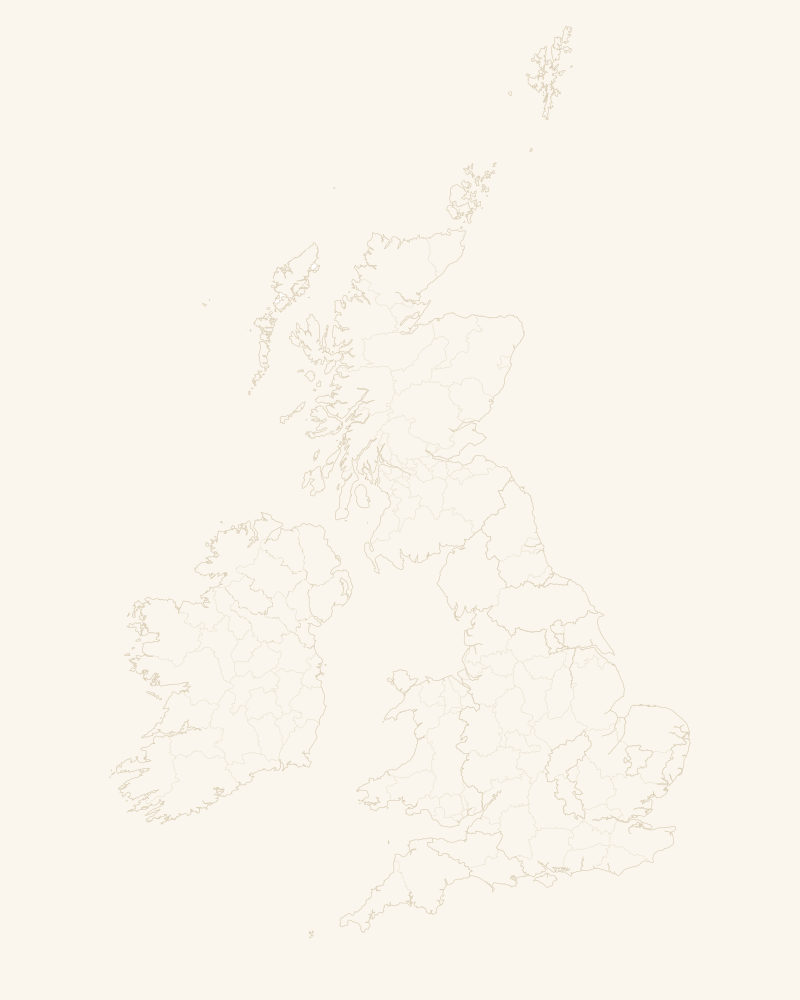
CoreHistoric reach
The seat of Taylor
Seat vacantChief
No one leads the Taylor community yet. When the movement opens, you can stand for its leadership, or help elect whoever does.
Current mission
No shared goal set yet. Once Taylor has leadership, it sets the public focus: a restoration, a gathering, a real-world project that helps its own.
The Taylor clan is being rebuilt. Join the waiting list for the movement today, and you help decide who leads it and what it does.
Help rebuild the Taylor clan →What does the Taylor name mean?
Occupational, the tailor, from Old French tailleur. One of the principal Norman-imported occupational surnames; in Scotland it appears in the older record as Tailyour (the 'lyour' a Scots phonetic spelling of the Norman ending). Spread across both England and Scotland in parallel, a surname that the Border has never sorted into one country or the other.
The history of Taylor
Tailleur, the man who cut the cloth
The name is not a family, it is a verb. Old French tailler means to cut, a tailleur was the man who cut, and the surname Tailyour derives straight from it. Scribes working in Latin wrote the same man down as cissor, and it is in that form that the trade first surfaces in Scotland: in around 1137 Walter Cissor received a grant of land from David I. The earliest evidence of the surname in England is dated to Somerset in 1182.
Beyond tailler the trail is disputed (one line runs the Old French back to Catalan tauler, a cutting board, another to Galician tello, a tile) but every version is about a flat surface and a blade rather than about cloth. The Scots spellings went their own way as Tailyour, Tailzeour and Macintaylor, and the historian George Fraser Black notes that Taylor is a very common name in early Scots records. In Germany the same trade produced Schneider, of which Taylor is often treated as the English form.
Cutting is not weaving, and never was
A tailor did not make cloth. The weaver made it and the draper sold it; the tailor took a flat woven length and turned it into a thing fitted to a particular body. The Oxford English Dictionary dates the English word to the thirteenth century, and by the fourteenth, padding the underlayers of men's jackets had become fashionable in Europe, the start of a craft of understructure, refined over centuries so a garment would lie neatly on the body instead of hanging off it.
That skill was hoarded. Masters used proprietary drafting methods, and until roughly 1790 their patterns were personal trade secrets. The earliest surviving work on cutting is Spanish: in 1580 Juan de Alcega published his Libro de Geometria, practica, y traca, illustrating 163 patterns to scale across 23 categories of garment, a book about getting the most garment out of the least cloth. Even today, nearly 75 per cent of the stitching in a custom-tailored suit is done by hand.
The guild that owned the trade
The profession was formalised in the High Middle Ages through the guilds, and the guild is why the name is urban. A guild's key privilege, held under charter or letters patent, was that only its members could sell goods or practise their skill within a given city; guilds fixed prices, trading hours and how many apprentices a master could keep. No such authority existed over a hillside, so the trade gathered where the market crosses and burgh charters were.
Tailors moved early. In 1244 the tailors' guild of Bologna set statutes governing the profession and required anyone working as a tailor to join. Guilds ran the ladder of master, journeyman and apprentice, kept welfare funds for the sick and elderly, supported widows and orphans, and in the cities of Italy, Germany and the Low Countries carried weight in municipal government.
England put the principle into statute. The Statute of Artificers of 1563 listed tailoring among the trades enterable only by serving an apprenticeship, typically of seven years. That gate is why the byname stuck: it marked a licensed, guild-controlled position in a town, and it was worth naming a man after.
The bench, the goose and the house of call
A tailoring shop was a well-appointed room where the master measured customers, with cutting, sewing, buttonholes and finishing done in adjoining rooms out of sight. Apprentices, indentured by their parents for a fee while still young adolescents, ran errands, matched trims and kept the fires going for the pressing-irons. They were taught the tailor's posture, cross-legged on a raised board, and many went virtually blind from years of hand-stitching by candlelight.
Work came through the house of call, a trade club where masters procured workmen; a journeyman whose work was reported poor was struck off the call book, and a master who broke the rules on wages or hours lost access to the houses. Demand peaked in winter and left tailors unemployed for months each summer. England repaid the craft with mockery: tailors were called snips, bodkins, thimbles, shreds and geese (the last after the tailor's goose, his iron) and the standing insult was that nine tailors make a man.
Why the name reached every parish
The inherited surname was general across England and Lowland Scotland by 1400. The trade names froze at the moment when every settlement holding a market needed someone who could cut, which is why Taylor stands beside Smith, Walker and Cooper in nearly every Lowland parish, densest in the central belt and the Lothians on the Scottish side, in Lancashire and the Midlands on the English.
The reach is extraordinary for a name nobody inherited from a lord. Taylor is the fourth most common surname in the United Kingdom, fifth in England, eleventh in Scotland and twenty-second in Wales, and was tenth in the 2000 United States census; it is rarer in Ireland, concentrated in the north. The name did not spread from one founding family. It was coined independently, thousands of times over, in thousands of workshops.
Slops, sweating and the first strikes
The eighteenth century broke the workshop apart. Production shifted towards scale and specialisation, and a hierarchy hardened: the men who cut the cloth ranked highest, mere sewers below them, and by the century's end one worker might do nothing but collars and sleeves. Then came slops (cheap ready-made clothing) and the move of work out of the master's shop into the worker's own home, where masters fined outworkers for poor products instead of paying foremen, and the legal limits on hours and wages did not reach.
Tailors fought. Theirs was one of the first English trades to see labour disputes, and the strikes of 1827 and 1834 were driven largely by opposition to employing women as outworkers. They generally failed, and some men were imprisoned or transported to America and Australia, but the unrest pushed Parliament into regulating the trade, and tailors were among the first English workers to form a labour union. The 1851 census counted 152,672 tailors, more than the entire railway industry, all of it decades before the mechanical sewing machine.
Tailyour in the Scottish record
The Scottish paper trail starts at court. In 1276 Alexander le Taillur is listed as valet to Alexander III. Twenty years later the name is in the wars: in 1296 Bryce le Taillur was among the Scottish prisoners taken at Dunbar Castle, and in the same year six people of the name appear on the Ragman Rolls rendering homage to Edward I, from counties as far apart as Angus and Roxburgh. Six men, six places: the clearest evidence that this was never one family. Donald Cissor and Bricius Cissor witnessed a deed at Inverness in 1462, and in around 1552 Gillepatrick Tailzeour was sergeant of Dornoch.
Clan Tailyour, also known as Clan Taylor, is recognised by the Lord Lyon King of Arms but has no chief at present, making it an armigerous clan, a name group without the standing in Scots law that a recognised chief confers. Taylor is also carried as a sept of Clan Cameron, whose Taylor sept traces to Taillear Dubh na Tuaighe, born about 1550. That link deserves stating honestly: most sept lists date from the nineteenth century, when clan societies and tartan manufacturers attached common British surnames to particular clans.
The Taylors who left the bench
The name's greatest Scot never sewed a stitch. James Taylor (1753–1825), born in Lanarkshire and of Strathaven, is credited with the first practical application of steam power to vessels for inland navigation, the boat run on Dalswinton Loch in 1788 with Patrick Miller and William Symington. From it descend the Comet, the Clyde steamship industry, and the paddle steamers that later worked the rivers of North America. Others turned trade into land, not always cleanly: Kirktonhill in Aberdeenshire was held from the eighteenth century by Taylors who had made their money from sugar plantations in Jamaica, while in Ireland the Reverend Robert Taylor built Ardgillan Castle in 1738 and his family kept it until 1962.
A. J. P. Taylor (1906–1990), a Birkdale cotton merchant's son of Lancashire-Scots stock, was Magdalen College Oxford's senior modern historian for nearly forty years, gave the first unscripted televised history lectures in 1957, and wrote The Origins of the Second World War. Elizabeth Taylor (1932–2011) came of a Hampstead family with distant Scots-Taylor descent on her father's side; Phil Taylor, born 1960, took sixteen World Darts Championships between 1990 and 2013.
None of that is a dynasty, and it does not need to be. The name means a man who could look at a flat piece of cloth and see a shoulder in it, a skill so useful that thousands of towns named a man for it, and so closely guarded that the trade fought for seven-year apprenticeships to control who entered it.
Champions of the Taylor name
The bearers whose lives are inseparable from this surname. Each has their own page, biography, achievements, geography, connection to the family.
- A. J. P. Taylor
The Birkdale cotton merchant's son who was Magdalen College Oxford's senior modern historian for nearly forty years, gave the first unscripted televised history lectures in 1957, and wrote The Origins of the Second World War, which sparked the most-discussed historiographical debate of the post-war British academic decade.
- Angus Taylor
The Goulburn sheep-farmer's son who took a Rhodes Scholarship to Oxford, ran McKinsey's Sydney office, won the Liberal seat of Hume in 2013, served as Australia's Minister for Energy, and is the Liberal shadow Treasurer.
Also found in
The Taylor name has substantial historical presence beyond Scotland. See it on England.
Historic Places, Rebuilt
Explore the streets and seats the Taylor name knew, rebuilt with AI as they stood in history.
Historic Places, Rebuilt · New
The castle on its crag, St Giles' crown spire, and the closes tumbling to the Cowgate.
Historic Places, Rebuilt · New
The merchant city on the Clyde on the eve of mass emigration, the Cathedral, the Trongate, and the Broomielaw where the ships left.
Historic Places, Rebuilt · New
Scotland's ecclesiastical capital at its peak, the great cathedral, the bishop's castle on the sea, and the new university.
Historic Places, Rebuilt · New
John Brown's shipyard on launch day for the Queen Mary, the great hull on the ways, the cranes and the cloth-capped crowd.
Castles the Taylor held
Strongholds this name held for a decade or more, look one up, or rebuild it to explore.
- Chipchase Castle
Bought by Hugh Taylor in 1861.
- Ardgillan Castle
Built by the Reverend Robert Taylor in 1738; the Taylor family kept the house until the estate was sold in 1962.
The castles of the homeland
The great strongholds of the homeland, look one up, see what it looked like in its prime, and recreate it to explore.
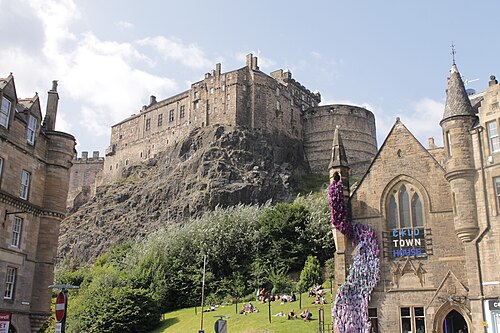 Edinburgh CastleRestored · prime 1520
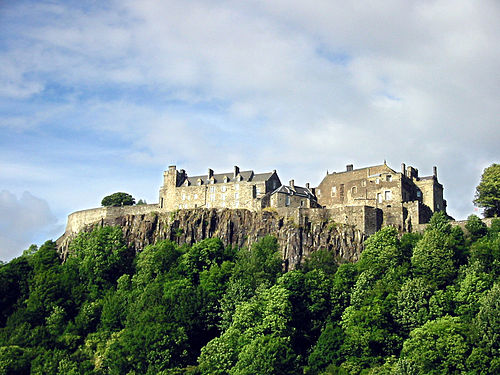 Stirling CastleRestored · prime 1542
 Glamis CastleStill standing · prime 1900
All castles in Scotland → · Strongest castles in Scotland → · Castles of Europe
Play As Your Clan
Hold a real castle against whatever you choose to send at it, take a ship out in her own service years, or stand at the shoulder of someone the record remembers. The chronicler sets the scene; the deeds are yours.
Notable bearers of the Taylor name
- James Taylor (1753–1825), steam-engine pioneer
- A. J. P. Taylor (1906–1990), historian
- Elizabeth Taylor (1932–2011), actress
- Phil Taylor (b. 1960), English professional darts player; sixteen-time World Darts Champion (1990–2013), the dominant single figure of the modern darts era