Walker
The cloth-fuller, the foot trade that thickened the medieval weave.
- Origin
- Lothian & Edinburgh, Scotland
- Famous bearer
- John Walker (1781–1859) of Stockton-on-Tees, inventor of the friction match
- Register
- Scottish family
The Walker arms and country

Coat of armsArms of Walker of Bushey HallBorne by the Bushey Hall line, one branch of the name rather than all of it.Aergia · CC BY-SA 4.0

- Coat of arms: Granted to an individual and inherited down that one documented line. These are the arms of particular families of the name, not of everyone who shares the surname.
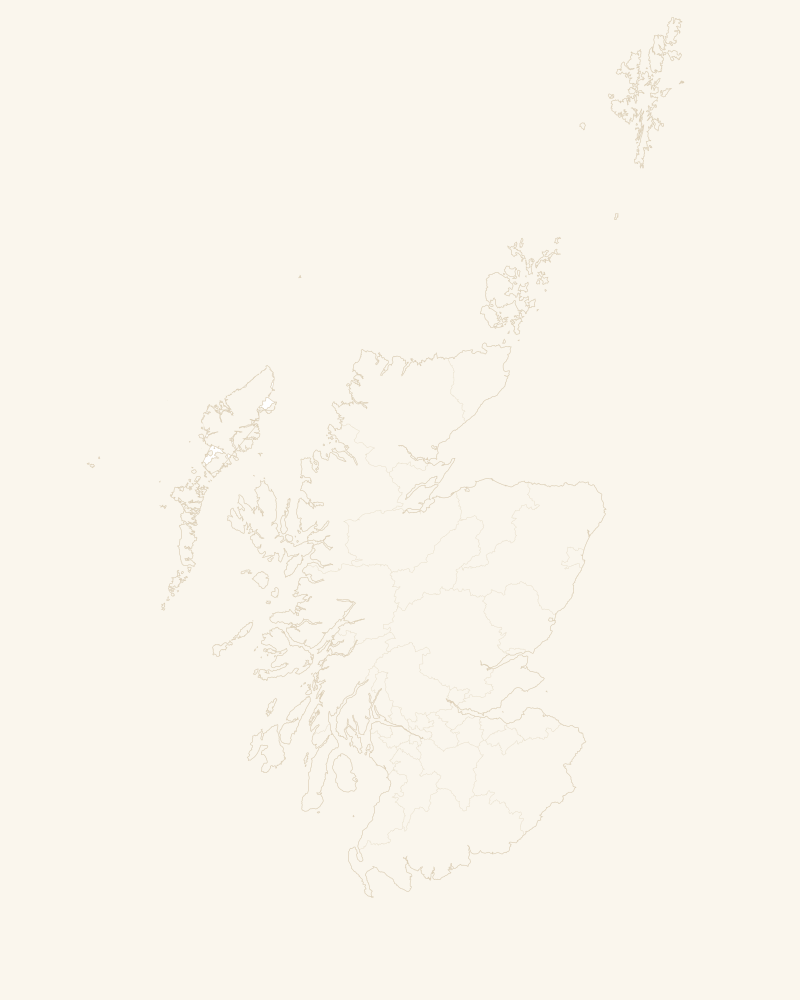
CoreHistoric reach
The seat of Walker
Seat vacantChief
No one leads the Walker community yet. When the movement opens, you can stand for its leadership, or help elect whoever does.
Current mission
No shared goal set yet. Once Walker has leadership, it sets the public focus: a restoration, a gathering, a real-world project that helps its own.
The Walker clan is being rebuilt. Join the waiting list for the movement today, and you help decide who leads it and what it does.
Help rebuild the Walker clan →What does the Walker name mean?
Occupational, the walker, the medieval cloth-fuller, from Old English wealcere. Cloth fresh from the loom was 'walked', trampled in vats of stale urine and fuller's earth, to thicken and full the weave. The Scots equivalent was waulker; the parallel English occupational 'fuller' carried the same trade. Walker survives as the surname; the trade has not.
The history of Walker
The trough, the earth and the smell of new cloth
Cloth coming off a medieval loom was not finished. It was loose, greasy and open, still carrying the lanolin of the sheep and the dirt of the fold. The man who closed it was the walker. The job had two halves: scouring, which cleaned the oils out, and milling, which pounded the woven web until the fibres locked and the cloth thickened into something dense, warm and shower-proof. Every wool fibre carries microscopic overlapping scales, and when the cloth is beaten wet and warm those scales hook into one another like the two faces of a hook-and-loop fastening. Once hooked they do not come apart. That is felting, and it is what turns a loose weave into a coat.
The cleaning agent was stale urine, collected, left to go off, and known as wash or lant, because ageing urine yields ammonium salts that cut grease, whiten the wool and help the fibres intertwine. Urine was so central to the business that ancient Rome taxed it, and Roman fulling was done by slaves working the cloth while standing ankle-deep in tubs of it. By the medieval period fuller's earth had joined it, a soft clay-like mineral worked through the wet cloth to absorb the oils the wash had loosened. Only afterwards was the foul liquor rinsed out with clean water.
Then the walking itself: the cloth pounded with a club, or with the fuller's own hands and feet, trodden in the trough hour after hour. Woollens, spun from carded wool, had to be fulled or they were nothing; worsteds, made from long combed fibres, did not need it at all. Two famous cloths of Europe are simply this work done superbly well: duffel, first produced in Flanders in the 14th century, and loden, made in Austria from the 16th century onward. When a reader wonders what their ancestor actually did, this is it. He stood in the stink and made the cloth that kept a country from freezing.
Walker, waulker, fuller, tucker: one job in four dialects
The trade has a formal name (fulling) and three vernacular ones. It was also called tucking, and it was called walking, and in Scots it was waukin, which is why the Scottish English spelling is waulking. In Wales the fulling mill was a pandy, a word still sitting inside the place-name Tonypandy, the fulling mill lea. These were not different jobs. They were one job called four things by four speech communities, and the surname recorded whichever word the neighbours used. Fuller, Tucker and Walker all mean the same man doing the same work in the same trough.
So Walker is not a rare name that happens to be widespread. It is the northern and Scots word for the trade, fossilised at the moment surnames stopped being descriptions and became inheritances, a process dated in England from the Domesday Book of 1086, beginning among the feudal nobility and working downward, until by the 14th century most English and most Scottish people carried a surname. Wales did not follow until after unification under Henry VIII in 1536. A Walker name means an ancestor was still identified by the trough when the naming froze.
That is also why the name sits where it does. In Scotland the Walkers cluster in the wool-and-cloth country: the Borders, Lanarkshire and the Lothians, with old strength in Midlothian, Glasgow, Stirling, Fife and Aberdeen. The name follows the water, the sheep and the mills, not a bloodline. When the University of the West of England finished a study of 45,602 British and Irish surnames in 2016, the commonest of all were the plain working names: Smith, Jones, Williams, Brown, Taylor. Walker belongs to that class, and the class is the point.
The walk mill: Europe's first water-powered factory
The trade did not stay in the trough. Somewhere in the 9th or 10th century Europe worked out how to hand the pounding to a waterwheel, and the fulling mill (the walk mill, the tuck mill, the Welsh pandy) became one of the earliest industrial applications of water power on the continent. The earliest known French reference dates from about 1086, in Normandy; in the same year the Domesday Book recorded a fulling mill at Temple Guiting in Gloucestershire. By the Crusades of the late eleventh century they were running throughout the medieval world, and the Welsh historian E. A. Lewis noted that they reached Wales early in the reign of Edward II, exactly as they were introduced into Lancashire.
The machinery is the ancestor of the factory. The mill beat the cloth with great wooden hammers called fulling stocks: falling stocks dropped vertically and were used only for scouring, while driving stocks were pivoted so that the head struck almost horizontally, which was the milling blow. In both, cams on the waterwheel's shaft lifted the hammer and let it fall: rotation converted into repeated percussion, the whole principle of powered manufacture. The stock sat over a tub of liquor and cloth, rounded on the far side so the web turned under the blows, and even so the cloth had to be lifted out every two hours to have its plaits undone by hand.
This is why Walker is a name of hill country and fast streams: a walk mill follows falling water, and the trade moved out of the towns to wherever a stream had a workable drop. In the 14th century that became a stampede. Poor harvests, famine, the Hundred Years War and then the Black Death of 1346 to 1353 cut the population by up to half; land prices collapsed and landlords put the ground down to sheep. Merchants from Florence and Bruges came to buy the wool, and the sheep-owning landlords began having cloth made outside the jurisdiction of the towns and their guilds altogether: first in cottages, then in purpose-built buildings with regulated hours and output. That is a factory, three centuries before the word.
Waulking songs and the finish that made the price
Scotland took the mechanisation last. Remote and un-industrialised, it kept manual fulling into the 1700s, long after the stocks were hammering elsewhere, and in the Gaelic west the work was done communally by women beating the wet cloth in time to waulking songs sung to set the pace. A Roman-era technique, worked by hand and voice, survived in the Hebrides within three centuries of living memory.
The finish that followed was where the money was. Fulling shrinks cloth hard and unevenly, so the moment it came off the stocks it was stretched on great frames called tenters and held by hooks (tenterhooks) until it dried true, in a quarter of town known as the tenterground. Being on tenterhooks is a walker's phrase, meaning stretched taut and unable to move, and it is the last working fragment of the trade left in ordinary English. After that the nap was raised and sheared smooth, twice over for the best cloth. A great deal of a woollen's value lay not in the weaving but in the fulling, dyeing and finishing. The weaver made the fabric; the walker made it worth money.
The guild, the merchant, and the man who took the wage
Cloth was the most organised industry in medieval Europe, and it was organised by guilds. The essential privilege was simple and ruthless: only a member could sell his goods or practise his craft inside the town. Around that sat controls on prices, on hours of trading, on how many apprentices a master could keep, while skill passed through a ladder of apprenticeship, journeymanship and mastery, all resting on charters that granted legal monopolies. They were mutual societies too, keeping welfare funds for sick members and supporting widows and orphans, and in Florence, Paris, Barcelona and the German free cities they sat close to the centre of civic power.
The walker lived inside that system without ever being its master. The merchant who belonged to the weavers' guild was the one permitted to sell the cloth, and from the 13th century the putting-out system took over: he bought the raw wool, handed it to the artisans, advanced them something against the work, and bound them by written contract. Fernand Braudel traced it to the boom of the 13th century and quoted a document of 1275. It bypassed the guilds' restrictions, and it meant the man in the trough did not own his wool, did not own his cloth, and did not set his rate. In that same year the English crown imposed its export tax on wool, the Great Custom, which tells you how much money was moving. The prosperity still stands in the wool towns of eastern England: Norwich, Bury St Edmunds, Lavenham.
Standing inside the biggest industry in Europe
Wool was the engine of the northern European economy for centuries. The Cistercian houses had taken enormous tracts of land through the 12th and early 13th centuries, when land was cheap and labour scarce, and ran them for fleece; the wool was baled and shipped from the North Sea ports to the cloth cities of Flanders, above all Ypres and Ghent. Through the Champagne fairs the finished woollens of small centres such as Provins travelled to Naples, Sicily, Cyprus, Mallorca, Spain and even Constantinople.
England's political self-image was wrapped in it. The presiding officer of the House of Lords has sat since the 14th century on the Woolsack, a chair stuffed with wool, and it is still there. At the time of the Black Death, English textile industries consumed about a tenth of English wool production; by the 15th century exporting the raw fleece was discouraged, and smuggling wool out of the country (owling) was at one time punishable by the cutting off of a hand. By the end of the 14th century Italy dominated the trade, the Medici and the other Florentine houses having built their fortunes on textiles overseen by the Arte della Lana, the wool guild.
Then the machines took the trade away from the men who had carried it in their names. Power weaving took hold in the two decades after about 1805, when there were still a quarter of a million hand weavers in the United Kingdom, and wool and worsted manufacture concentrated in West Yorkshire and above all Bradford, fed after 1845 by an Australian clip that had overtaken the German. Fulling went the same way: hand and foot to water, water to coal and then electricity. The names of the men who did the work (fuller, tucker and walker) became common surnames, and that is now the only monument the job has.
A name, not a clan; and the sept lists that said otherwise
Walkers looking for a chief and a tartan should know what they are looking at. In Scots law a clan or family is a noble incorporation, and exists as such only once it has an officially recognised chief; a name group without one has no equivalent standing. Clan and family are two words for the same legal category rather than two tiers, and the notion that Highlanders have clans while Lowlanders merely have families is a 19th-century convention, not a legal distinction. An Act of the Scottish Parliament of 1587 addressed the chiefs and chieftains of all clans, as well on the highlands as on the borders, and listed Lowland names such as the Maxwells, Johnstones, Carruthers and Turnbulls in the same breath.
The sept lists are a later commercial invention, and honesty about them costs a Walker nothing. They date from the 19th century, when clan societies and tartan manufacturers set out to capitalise on the enthusiasm for all things Scottish, linking as many surnames as possible to a particular clan whether or not any historical connection existed. That is how Miller and Millar became a sept of Clan MacFarlane, Taylor of Clan Cameron, and Mason of Clan Sinclair: common trade names all over the British Isles, attached to a chief so that anyone without a clan name could feel entitled to a tartan. Where a Walker family genuinely did follow a chief it was for the ordinary reasons septs existed: marriage into a clan, or living on a powerful laird's land, since a family on that ground followed him whether related or not. None of which makes the name lesser. A Walker's inheritance is a trade rather than a lordship, and his claim on Scotland is made of water rights and wet wool.
The Walkers who left the mill behind
Once the surname had frozen, the men carrying it went where the trade had prepared them to go: into chemistry, into commerce, into the industrial towns. John Walker of Stockton-on-Tees, born in 1781 and dead in 1859, was a chemist, and in 1826 he invented the friction match, the Lucifer. It is hard to overstate how total that change was: before it, fire had to be carried, coaxed or struck; after it, fire came out of a pocket.
The other John Walker was an Ayrshire boy left fatherless at fourteen, who put the family money into a grocer's shop in Kilmarnock. Born in 1805 and dead in 1857, he blended whiskies behind his own counter at a time when single malts were wildly inconsistent, and produced something that tasted the same twice. The house his family built on that blend became the most recognised drinks brand in the world, and the striding man who has carried it since 1908 is a Kilmarnock grocer's trademark. It is a very walker-ish story: a man taking rough, uneven raw material and working it until it was uniform, dense and worth money.
The name reached into Scottish letters as well. Sir Walter Scott, who did more than anyone to give the world its picture of clan Scotland, and whose staging of George IV's visit to Edinburgh in 1822 set off the international craze for tartan, was a Walker on the distaff side: his mother Anne Rutherford came of the Edinburgh Walker line, a family that supplied an outsized share of 19th-century Scottish public life. The romantic Scotland that later sold sept lists to Walkers was partly assembled by a man with Walker blood.
Then the name went overseas. Walker is now the 14th most common surname in England, with over 150,000 bearers recorded in 2014; the 14th most common in Australia, with 26,688 counted in 2007; and by the United States census of 2000 it stood 28th, with 501,307 Americans carrying it. Murray Walker, of Scots-Walker descent, was the voice of Formula One until his death in 2021; John Walker of New Zealand, of Welsh-Scots descent, won the Olympic 1500 metres. Every one of them descends from somebody who stood in a trough of stale urine and fuller's earth and walked cloth until it thickened. That is not a humble origin. It is the origin of an industry, and of a great many of the coats Europe wore for six hundred years.
Champions of the Walker name
The bearers whose lives are inseparable from this surname. Each has their own page, biography, achievements, geography, connection to the family.
Historic Places, Rebuilt
Explore the streets and seats the Walker name knew, rebuilt with AI as they stood in history.
Historic Places, Rebuilt · New
The castle on its crag, St Giles' crown spire, and the closes tumbling to the Cowgate.
Historic Places, Rebuilt · New
The merchant city on the Clyde on the eve of mass emigration, the Cathedral, the Trongate, and the Broomielaw where the ships left.
Historic Places, Rebuilt · New
Scotland's ecclesiastical capital at its peak, the great cathedral, the bishop's castle on the sea, and the new university.
Historic Places, Rebuilt · New
John Brown's shipyard on launch day for the Queen Mary, the great hull on the ways, the cranes and the cloth-capped crowd.
The castles of the homeland
The great strongholds of the homeland, look one up, see what it looked like in its prime, and recreate it to explore.
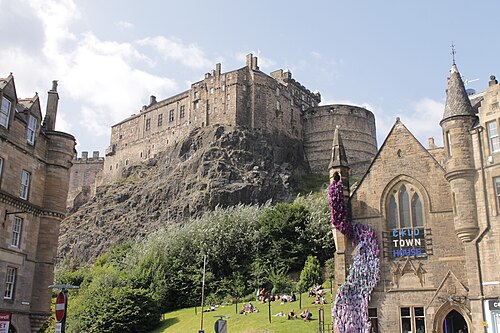 Edinburgh CastleRestored · prime 1520
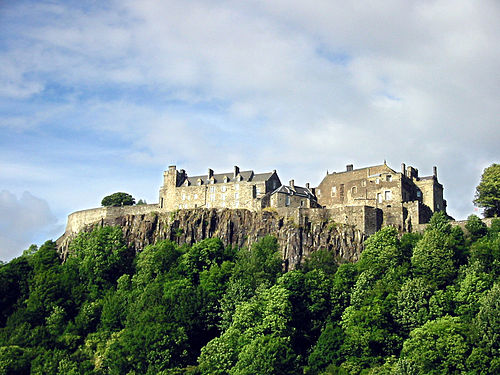 Stirling CastleRestored · prime 1542
 Glamis CastleStill standing · prime 1900
All castles in Scotland → · Strongest castles in Scotland → · Castles of Europe
Play As Your Clan
Hold a real castle against whatever you choose to send at it, take a ship out in her own service years, or stand at the shoulder of someone the record remembers. The chronicler sets the scene; the deeds are yours.
Notable bearers of the Walker name
- John Walker (1781–1859) of Stockton-on-Tees, inventor of the friction match
- John Walker (1805–1857), Kilmarnock whisky blender, founder of Johnnie Walker
- Murray Walker (1923–2021), Formula One commentator (English, with Scots-Walker descent)
- John Walker (b. 1952), New Zealand 1500m Olympic champion (Welsh-Scots descent)