Butler
The cellarer's name, and the Earls of Ormond of Kilkenny.
- Origin
- London, England
- Motto
- Comme je trouve
- Famous bearer
- Thomas Butler, 10th Earl of Ormond ("Black Tom", 1531–1614)
- Register
- English family
Ranked of all time
The 10 Most Powerful Irish Clans of All Time
The Butler arms and country

Coat of armsButler armsWikimandia · CC BY-SA 4.0 
Coat of armsArms of the House Butler of Cahir (2)Borne by the Cahir line, one branch of the name rather than all of it.MostEpic · CC BY-SA 4.0

.svg)
- Coat of arms: Granted to an individual and inherited down that one documented line. These are the arms of particular families of the name, not of everyone who shares the surname.
This name is thick on both sides of the border, so the map shows the whole of Britain and Ireland with every region it touches highlighted. It is a regional pattern for the surname, not proof that your branch lived in each place.
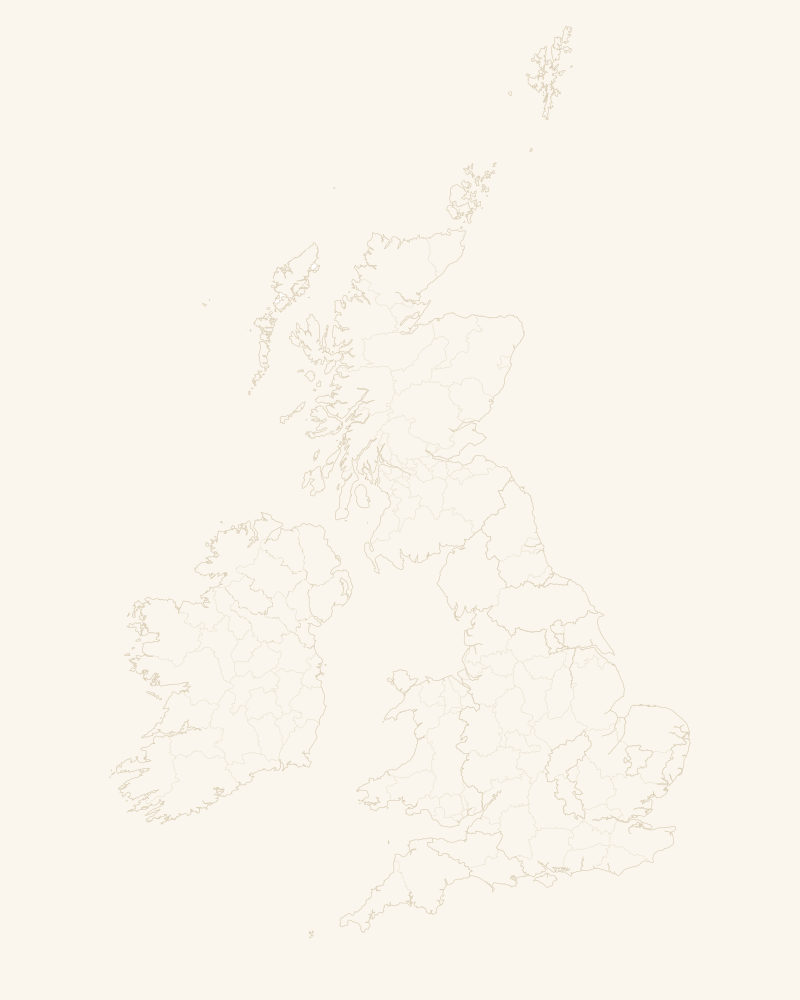
CoreHistoric reach
The seat of Butler
Seat vacantChief
No one leads the Butler community yet. When the movement opens, you can stand for its leadership, or help elect whoever does.
Current mission
No shared goal set yet. Once Butler has leadership, it sets the public focus: a restoration, a gathering, a real-world project that helps its own.
The Butler clan is being rebuilt. Join the waiting list for the movement today, and you help decide who leads it and what it does.
Help rebuild the Butler clan →Motto
Comme je trouve
“As I find”
What does the Butler name mean?
Occupational, butteler, wine-cellar officer. Anglo-Norman noble households froze the office into surname. The senior line in these islands is the Anglo-Norman Butler family who came to Ireland with King John in 1185 and rose to be the Earls of Ormond from 1328, the Anglo-Irish house of the late mediaeval period and the great rivals of the FitzGerald earls of Desmond. The English-Butler population overwhelmingly descends from the same noble-household occupational frame.
The history of Butler
The office before it was a name
Butler did not begin as a family. It began as a job. The word comes through Anglo-Norman buteler from Old French botellier, the officer in charge of the king's wine bottles, from boteille, bottle. His kingdom was the buttery, which has nothing to do with butter: it was the store for the butts, the casks of wine and ale. When drink was kept in barrels rather than glass, that room held a serious slice of a household's wealth, so its keeping went to a man the lord could not afford to be wrong about.
The office married trust and theatre: the butler held the key, and the right to pour at high table was public standing as much as duty. The Chief Butler of England was a hereditary ceremonial office held under Grand Sergeanty, by which a landholder kept his estates in return for a named service to the king. Serving the royal wine at a coronation was not cellar work; it was a claim on the constitution. Granted in Ireland, the same office produced a dynasty.
Theobald Walter and the butlership of Ireland
The senior Butler line in these islands is Hiberno-Norman and descends from one grant to one man. Theobald Walter, also written Theobald Fitzwalter, received the office of Chief Butler of Ireland from John, then Lord of Ireland and later king. The date is disputed: one account puts the grant at 1177, another at 1185, when John came to Ireland in person. Either way it was hereditary, and it stuck so hard that the family took its name from it. Theobald's son and successor was known as Theobald le Botiller, and after him the descendants of a wine office were simply Butlers. Land came with it: the manor of Gowran went to the first Chief Butler after the Anglo-Norman arrival of 1169.
A Smith's name recorded what his grandfather did with his hands; this Butler's name recorded a standing office of the lordship of Ireland, attached to estates, which separates it from every other occupational surname in Europe. Two populations carry it: the Ormond Butlers, one family with one documented descent, and the far larger body of English Butlers, who descend from the ordinary version of the same word, household officers whose post-name hardened into an inherited surname the way English surnames did: first among the nobility and gentry after the Norman Conquest, then downward, until by about 1400 most families had one.
From cellar office to earldom, 1315-1391
The Butlers built their power in the Irish south-east in the first half of the fourteenth century, and they built it in stone. Ormonde Castle at Carrick-on-Suir came to them in 1315 and stayed until the twentieth century; Roscrea was granted the same year and held for nearly four hundred. In 1328 James Butler was created first Earl of Ormonde. Cahir, on its rock in the Suir, came in 1375 and was held by the branch that became Barons Cahir for nearly six hundred years. Then in 1391 the family took Kilkenny Castle, and Kilkenny became what it stayed for five and a half centuries: the seat of the house, one of the few places where a family's name and a city's are the same fact.
The fifteenth century is thinner in the record: the fourth Earl died in 1452, the fifth in 1462, the sixth in 1478, the seventh in 1515. Four earls in sixty-three years, in the century when the English crown tore at itself and the Anglo-Irish lords had to choose sides. Recovery came under Piers Butler, eighth Earl, who died in 1539 and was also created first Earl of Ossory: a house negotiating hard with the Tudor state rather than resisting it.
The three covered cups, and the cousinage
The arms of the Earls of Ormond carry three covered cups: the butlership itself, a family telling anyone who looks that its rank began in a wine cellar and it is not embarrassed. They stand over the fireplace of the Long Gallery at Kilkenny and on Black Tom's tomb in St Canice's Cathedral.
Around the main line the house threw off branches that became powers in their own right, which is why the surname lies thick across Tipperary, Kilkenny, Carlow, Waterford and Wexford. The Viscounts Mountgarret begin with Richard Butler, first Viscount, 1500 to 1571, and the title has run unbroken to the eighteenth Viscount, born in 1961. The Barons Dunboyne held Kiltinan Castle from 1452 to 1650, and were still buying in 1855, when the fourteenth Baron took Knappogue Castle. None of this was decoration: a great Irish house survived by having cousins in enough castles to hold a region.
Black Tom, and the last private battle in Ireland
Thomas Butler, tenth Earl of Ormond, born in 1531 and called Black Tom for his colouring, best explains what the family became. Sent at twelve to the court of Henry VIII as companion to Prince Edward, he came home on his father's death in 1546 already more English in his carriage than Anglo-Irish. He spoke both tongues and paid both clergies. His mother was Joan FitzGerald, daughter of an Earl of Desmond, so the man he would meet in the field was his own first cousin.
The Butler quarrel with the FitzGerald earls of Desmond was two centuries old: cattle and rent along the Lismore boundary, the customs at Youghal, and under it the question of which house carried the political weight of southern Ireland. On the eighth of February 1565, above the ford at Affane on the lower Blackwater in County Waterford, the two settled it themselves. Desmond had about two thousand men, mostly foot; Butler had fifteen hundred and the better horse. The Butler cavalry crossed the ford and broke the FitzGerald centre, and Gerald FitzGerald, fifteenth Earl of Desmond, was unhorsed in the press and taken alive. Three hundred FitzGeralds were left on the bank; Butler counted forty-eight of his own.
Taking him alive was the point of the exercise. Desmond was held nine weeks in the Long Gallery at Kilkenny with the courtesy of his rank, and both earls were then summoned to court. By tradition, recorded in Sir James Ware's De Hibernia of 1654 rather than in any minute of the meeting, Queen Elizabeth asked Desmond at Greenwich on what authority he had fought a battle in her country without her commission. He answered, before the assembled Council: may it please your Majesty, we fought it without our own.
She was not amused enough to be lenient. Both earls were confined eighteen months and released in the autumn of 1567, on terms that put the southern Irish question into the hands of the central administration for good, and Affane was the last private pitched battle between two noble houses on Irish soil. Ormond held his earldom fifty-two years more and died at Carrick-on-Suir in 1614 in the favour of two successive sovereigns. Desmond was killed in flight during the second Desmond rebellion in 1583, and his lands were carved into the Munster Plantation.
The dukes of Ormonde, and the long sale
The seventeenth century took the family to the top of the Irish state. Walter Butler, eleventh Earl, died in 1632, and the title passed to the man who carried it furthest. James Butler, first Duke of Ormonde, born in 1610, was Lord Lieutenant of Ireland and was created Duke in 1661 at the Restoration: the head of the Butlers governing Ireland for the Crown after a war that had nearly destroyed every Anglo-Irish interest in it. He died in 1688.
Then the long sale began. A Duke of Ormonde sold Roscrea in 1703, ending nearly four hundred years of Butler tenure, and the Shankill lands went to Peter Aylward in 1708. The main line recovered inside the Union settlement rather than against it: Walter Butler was created Marquess of Ormonde in 1816, and the marquessate ran down to the seventh Marquess, who died in 1997. The family's occupation of Kilkenny Castle ended in 1935, and in 1967 the castle passed to the Irish state, open now to anyone who wants to walk into it.
The English Butlers and the household name
The other Butler story runs through the servants' hall, and it is not a lesser one. In Britain the butler began as a middle-ranking member of a great household's staff and rose, across the seventeenth and eighteenth centuries, into the senior male servant of the grandest houses. Mrs Beeton's Book of Household Management of 1861 put his wage at twenty-five to fifty pounds a year, with room, board, livery and tips on top. There were still around thirty thousand butlers in Britain when the Second World War broke out; by the mid-1980s the estimate was about a hundred.
The work was almost always male, and the first known mention of a woman doing it is a joke that became a tribute: Sydney Smith, on a poor Yorkshire living between 1809 and 1829, wrote that a manservant was too expensive, so he took a little garden girl, christened her Bunch and made her his butler. Bunch, he concluded, became the best butler in the country. The surname is also the English form of the French Boutilier and Bouthillier, and the anglicisation of the German and Swiss Beutler, Bütler and Beidler.
What the name carries now
Most Irish Butlers descend not from the earls but from the tenants of the Butler estates of the south-east, generations who farmed Ormond land and carried the landlord's surname as tenants often did. That is not a lesser inheritance. It is why Butlers number in the millions worldwide, and it makes the Kilkenny name the property of the people who worked the country as much as the family that held it.
The name's greatest bearer ran a campaign rather than an estate. Josephine Butler, born in Northumberland and married to a Liverpool clergyman, led a seventeen-year national campaign against the Contagious Diseases Acts, the laws that put prostitution under state licence. She won their repeal in 1886, and built through that campaign the first women's-rights movement in the English-speaking world against state-licensed prostitution, as a clergy wife with no vote and no office. The Irish artist Mildred Anne Butler, 1858 to 1941, and the essayist Hubert Butler kept the name in Irish paint and letters; Kathleen M. Butler, 1891 to 1972, was project manager of the Sydney Harbour Bridge.
So the name means two true things at once: an ancestor trusted with the key to the wine, which in a medieval household was a serious form of trust, and Kilkenny Castle, the three covered cups and the ford at Affane, six centuries in which a cellar office became one of the great houses of Ireland. Comme je trouve runs the motto: as I find.
Champions of the Butler name
The bearers whose lives are inseparable from this surname. Each has their own page, biography, achievements, geography, connection to the family.
Also found in
The Butler name has substantial historical presence beyond England. See it on Ireland.
Historic Places, Rebuilt
Explore the streets and seats the Butler name knew, rebuilt with AI as they stood in history.
Historic Places, Rebuilt · New
The cathedral citadel of the Kings of Munster, whole and roofed on its rock, round tower, Cormac's Chapel and Gothic cathedral.
Historic Places, Rebuilt · New
St Paul's, Covent Garden and the gaslit West End, Regency London, soot-hazed and horse-drawn.
Castles the Butler held
Strongholds this name held for a decade or more, look one up, or rebuild it to explore.
- Cahir Castle
Held by the Butlers, Barons Cahir, from 1375 for nearly 600 years.
- Kilkenny Castle
Seat of the Butler Earls and Dukes of Ormond, 1391–1935.
- Ardfinnan Castle
Transferred to Lord Cahir under Elizabeth I; Richard Butler of Ardfinnan Castle was a grandson of an Earl of Ormond.
- Knappogue Castle
Acquired in 1855 by Theobold Fitzwalter Butler, 14th Baron Dunboyne; the seat of the Dunboyne family.
- Ormonde Castle
Held by the Butlers, Earls and Dukes of Ormond, from 1315 until the mid-20th century.
- Gowran Castle
The Manor of Gowran was granted to Theobald Fitzwalter, first Chief Butler of Ireland, after 1169; James Butler, 3rd Earl of Ormond, built the first castle in 1385 and made it his usual residence.
- Roscrea Castle
Granted to the Butlers of Ormond in 1315 and held until the Duke of Ormonde sold it in 1703; the 4th Earl built the stone gate building in the 15th century.
- Kiltinan Castle
A Butler stronghold, held by the branch that carried the title Baron Dunboyne, 1452–1650.
- Kilcash Castle
Held by the Butlers of Ormond from the early 17th century until sold to the Irish State in 1997.
- Shankill Castle
The original tower-house was a Butler house; the family sold the lands to Peter Aylward in 1708.
The castles of the homeland
The great strongholds of the homeland, look one up, see what it looked like in its prime, and recreate it to explore.
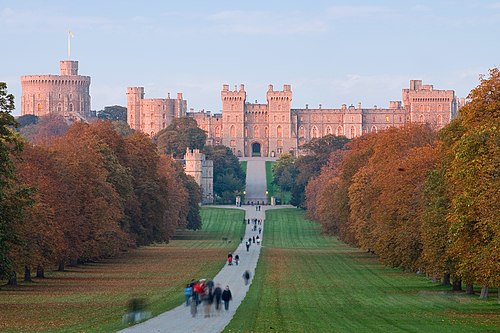 Windsor CastleRestored · prime 1820
 Tower of LondonRestored · prime 1285
 Bamburgh CastleRestored · prime 1904
All castles in England → · Strongest castles in England → · Castles of Europe
Play As Your Clan
Hold a real castle against whatever you choose to send at it, take a ship out in her own service years, or stand at the shoulder of someone the record remembers. The chronicler sets the scene; the deeds are yours.
Notable bearers of the Butler name
- Thomas Butler, 10th Earl of Ormond ("Black Tom", 1531–1614)
- James Butler, 1st Duke of Ormonde (1610–1688), Lord Lieutenant of Ireland