Howard
Norman guardian-name, and Howard ducal house.
- Origin
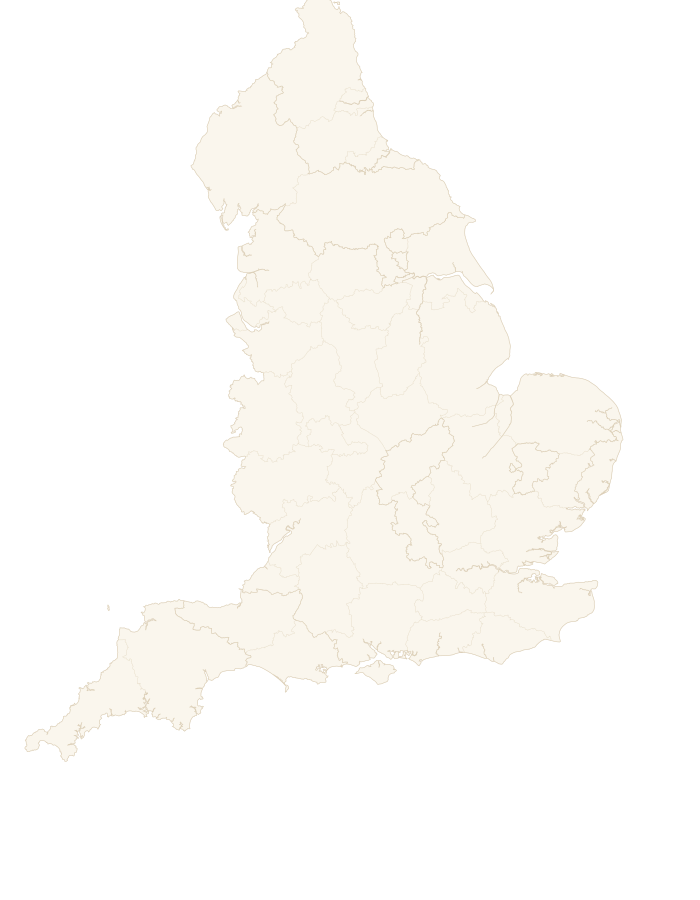
- East of England, England
- Motto
- Sola virtus invicta
- Famous bearer
- John Howard, 1st Duke of Norfolk (c.1425-1485), creation of the dukedom
- Register
- English family
Ranked of all time
The 15 Most Powerful English Houses of All Time
The Howard arms and country

Coat of armsHoward arms (augmented)Saltspan · CC BY-SA 4.0
.svg)
- Coat of arms: Granted to an individual and inherited down that one documented line. These are the arms of particular families of the name, not of everyone who shares the surname.
CoreHistoric reach
The seat of Howard
Seat vacantChief
No one leads the Howard community yet. When the movement opens, you can stand for its leadership, or help elect whoever does.
Current mission
No shared goal set yet. Once Howard has leadership, it sets the public focus: a restoration, a gathering, a real-world project that helps its own.
The Howard clan is being rebuilt. Join the waiting list for the movement today, and you help decide who leads it and what it does.
Help rebuild the Howard clan →Motto
Sola virtus invicta
“Virtue alone is unconquered”
What does the Howard name mean?
Norman patronymic from Huard / Anglo-Scandinavian Hávarðr; or fused with Howard place-names in Norfolk.
The history of Howard
A lawyer out of the Norfolk marshland
The name arrived with the Normans, or close behind them. The dominant reading of Howard takes it from the French personal names Huard and Houard, adapted into English after the Norman Conquest of 1066, from a Germanic root close to Old High German Hugihard, "heart-brave", or Hoh-ward, "high defender, chief guardian". Running alongside it, and often confused with it, is the Anglo-Scandinavian personal name Haward from the Norse Hávarðr: ha(r) "high" or hǫð "battle", plus varðr, "guardian". A few bearers owe the name instead to the unrelated Hayward, and in rare cases to Old English eowu hierde, "ewe herd". The Anglo-Norman habit of writing French -ou- as -ow- (couard to coward, tour to tower) is what produced the modern spelling. The first public record of the surname is dated 1221, in Cambridgeshire.
How the ducal Howards themselves came by it is genuinely disputed, and the family has told the story more than one way. A pedigree compiled and signed by Sir William Dugdale, Norroy King of Arms, and dated 8 April 1665, derived them from the Howarths of Great Howarth Hall at Rochdale in Lancashire. Dugdale claimed it was clear "from above seventy deeds, without date" that the Dukes of Norfolk descended from that house, and that its founder Osbert Howard de Howarth had been given lands in Rochdale for his service as Master of King Henry I's Buckhounds. The rival account makes the founder a son of a John Howard de Wiggenhale, whose kin held land in and around Wiggenhall in Norfolk. A third and much older story, cherished by later Howards, claimed descent from Hereward the Wake, the Fenland rebel who held the Isle of Ely against William the Conqueror and was in the end pardoned and given his lands back. That last is legend rather than pedigree, and should be read as such.
What is not in doubt is the man the documented line begins with. Sir William Howard, born 1237 by the Dugdale scroll, settled at East Winch and Wiggenhall in west Norfolk and made his career in the law. He was knighted around 1278, summoned as a justice to the Model Parliament of 1295, and appointed a Justice of the Court of Common Pleas in 1297. His first wife was Alice de Ufford, daughter of the justiciar and Suffolk landowner Sir Robert de Ufford, the marriage that probably drew him out of Lancashire to Norfolk in the first place, if Dugdale had it right. His son Sir John Howard became Sheriff of Norfolk and Suffolk and married Joan de Cornwall, an illegitimate granddaughter of Richard, 1st Earl of Cornwall and King of the Romans, second son of King John. Sir John died in 1308. In one generation a working lawyer's family had married into the blood of the English crown.
The Mowbray marriage and a dukedom from Richard III
Five generations on, Sir Robert Howard married Lady Margaret Mowbray, elder daughter of Thomas Mowbray, 1st Duke of Norfolk (1366-1399). It was an unremarkable match at the time and it turned out to be the making of the family. The Mowbray dukes died out in the male line in 1476, and the heiress of the last duke, Anne Mowbray, died at the age of nine in 1481. Her widower was Edward IV's younger son, Richard of Shrewsbury, Duke of York. When Richard III declared that boy illegitimate, the Mowbray inheritance fell to the senior co-heir of the old barony: Margaret's son, John Howard.
Richard III created him Duke of Norfolk on 28 June 1483, the third creation of the title and, pointedly, the 200th anniversary of the Barony of Mowbray to which he was co-heir. He had already been summoned to Parliament as Lord Howard by Edward IV. With the dukedom came the office of hereditary Earl Marshal. Two years later he repaid it in the only currency that mattered: John Howard, 1st Duke of Norfolk, fought and died at the Battle of Bosworth Field in 1485, in defence of the House of York, against the man who became Henry VII.
That should have finished the family. The dukedom was attainted and the Howards were the losing side's dead. They came back the way they would come back again and again over the next two centuries, by making themselves useful to the crown that had beaten them. John's son Thomas Howard, 2nd Duke of Norfolk, led the defence of England against a Scottish invasion at the Battle of Flodden, and the new Tudor dynasty restored the family to favour. Grants followed: Henry VII gave him Acton Burnell Castle in Shropshire after 1487. The old Mowbray fortress at Framlingham in Suffolk became the Howard seat, and Henry VIII later sold Castle Rising in Norfolk to a Thomas Howard as well. The pattern of the whole family history is already visible here: ruin, service, restoration.
Two queens, and what it cost to be the king's uncle
The victor of Flodden, the 2nd Duke, was grandfather to two queens of England (Anne Boleyn and Catherine Howard, the second and fifth wives of Henry VIII) and great-grandfather to Queen Elizabeth I. No other subject family came so close to the Tudor throne, and none was so thoroughly burnt by it. Catherine Howard (c.1523-1542) was queen consort for barely more than a year before her arrest and execution in 1542, the second of Henry's wives to die on the block and the second of them a Howard on the paternal or maternal side.
Her uncle, Thomas Howard, 3rd Duke of Norfolk, was one of the central figures of Henrician politics, and he outlived his own niece's disgrace only to be caught in the last convulsion of the reign. In late 1546 he and his son, the poet Henry Howard, Earl of Surrey, were arrested and accused of plotting to seize the crown from Henry's heir, Prince Edward, and to reverse the Reformation by returning the English church to papal jurisdiction. Both were tried for treason and both were sentenced to death. Surrey was executed in January 1547.
The 3rd Duke was saved by the narrowest margin in English history: the king died before the warrant could be carried out. He spent the whole of Edward VI's reign a prisoner in the Tower of London, was freed early in the reign of the Catholic Mary I in 1553, and died the following year. The dukedom passed over the executed Surrey to Surrey's son Thomas, the 4th Duke, a family in which the title now regularly skipped a generation, because the generation in between had been beheaded.
The recusant century: four Howards in a row in the Tower
After the English Reformation the Howards became the most high-profile recusant family in England, the great house that would not conform. It cost them four heads of the family in a row, each falling from grace, convicted or imprisoned over their Catholic faith, and the sources of the family's own tradition put it bluntly: it became a tradition among the Howards to suffer for being Catholics.
Thomas Howard, 4th Duke of Norfolk (1536-1572) was the most powerful subject of Elizabeth I in the early years of her reign, and a Catholic despite the Protestant education he had been given as a child. He was imprisoned in 1569 on suspicion of involvement in the rebellion of the Catholic earls of the north, and released in August 1570 when the evidence would not hold. In 1571 he went further and joined the Ridolfi Plot, a scheme to overthrow and possibly assassinate Elizabeth, marry Mary, Queen of Scots, put her on the throne and restore Catholicism in England. He was arrested that September, sentenced to death in January 1572, and executed in June.
His son Philip Howard, 13th Earl of Arundel, was deprived of the dukedom, which lay under attainder, but kept the earldom of Arundel. He was imprisoned in the Tower for his Catholicism in 1585 and stayed there for over ten years, dying of dysentery in October 1595 without ever being released. He is honoured as a saint. William Howard, 1st Viscount Stafford, is honoured as a blessed. Two martyrs in one family is a rare and very heavy inheritance, and it is the reason the Howards are still spoken of as the senior Catholic house of England.
It was the 4th Duke's first marriage that gave the family its greatest seat. He married Mary FitzAlan, who became heiress to the Arundel estates of her father Henry FitzAlan, 12th Earl of Arundel, after her brother Henry died in 1556. Arundel Castle in Sussex passed to the Howards in 1555 and the earldom itself was inherited in 1580, when the Howards became the genealogical successors of the paternally extinct FitzAlans, a house that had come to Britain from Brittany and was ancient kin to the Stuarts. That inheritance is why the present duke's surname is FitzAlan-Howard and why his seat is Arundel, held by the family for over 400 years.
Attainted, restored, attainted again
Both the dukedom and the Earl Marshalship were the subject of repeated attainders and restorations across the 15th, 16th and 17th centuries. A lesser family would have been erased by any one of them. The Howards survived because the honours were never all held in one pair of hands: while the dukedom lay forfeit, the family still held the earldom of Arundel through the FitzAlan heiress, and the cadet branches went on rising in their own right. Charles II restored the titles for good, and the hereditary office of Earl Marshal was settled on the family in 1672.
The senior line today holds the Dukedom of Norfolk together with the earldoms of Arundel, Surrey and Norfolk and six baronies, and stands as Premier Duke and Premier Earl in the Peerage of England, the senior peer of the realm outside the royal family, and the longest-running non-royal English dukedom, held continuously since 1483 apart from those attainder years. The arms record the accumulation as clearly as any charter: the original Howard white bend on red with crosslets, quartered from the first duke with the arms of Thomas of Brotherton, Earl of Norfolk and son of Edward I, and those of Mowbray; the chequered blue and gold of the Warenne Earls of Surrey added by the 2nd Duke; and the gold lion on red of the FitzAlans of Arundel taken into the fourth quarter by Philip Howard's descendants.
The Earl Marshal is the eighth of the Great Officers of State, ranking below the Lord High Constable and above the Lord High Admiral, and a leading officer of arms. The duty is to organise the coronation in Westminster Abbey, state funerals and the state opening of Parliament. It is not ceremonial in the empty sense: it means a Howard runs the day. Edward Howard, 18th Duke of Norfolk (b.1956), organised both the funeral of Elizabeth II and the coronation of Charles III.
The faith that cost them so much was only slowly forgiven. The Roman Catholic Relief Act of 1829 finally reopened the House of Lords to Catholic peers, and the head of the family took his seat in a chamber his ancestors had been barred from for the better part of three centuries. Between the Reformation and that Act, the premier duke of England could not sit in the parliament he outranked.
Effingham, the Armada and the Howard admirals
The Howard talent for the sea ran through a cadet line. The Earls of Effingham descend from the fourth son of the 2nd Duke of Norfolk, who served as Lord High Admiral, and it was his son who took the fleet out against Philip II. Charles Howard, Lord Howard of Effingham and 1st Earl of Nottingham (1536-1624), commanded the English fleet that defeated the Spanish Armada in 1588, the moment an English naval reputation was made, under a Howard.
There is a sting in the tail of that branch's story, and it is worth telling straight. When the dukedom was restored, the Effingham line was expressly excluded from eligibility to inherit it. The family that had saved the kingdom at sea was passed over in the settlement of its own house's chief honour. The Effingham earldom survives to this day regardless.
Where the branches went: Suffolk, Carlisle, Penrith and the northern castles
The Howard cadet branches are unusually well documented, and several of them are still going. In order of genealogical seniority, the Barons Howard of Penrith descend from a younger brother of the 12th Duke; the Earls of Suffolk and Berkshire, created in 1603 and seated at Audley End in Essex, from the second son of the 4th Duke; the Earls of Carlisle, created in 1661, from the third son of the 4th Duke; and the Earls of Effingham from the fourth son of the 2nd Duke.
The Carlisle line went north and stayed. Lord William Howard's marriage to Elizabeth Dacre in 1577 brought in the Dacre inheritance: Henderskelfe in Yorkshire, where Castle Howard now stands and where a branch of the family has been seated for over 300 years; Naworth Castle in Cumberland, under the Duke of Norfolk's control from the late 16th century and now the Carlisle seat; Morpeth Castle in Northumberland, where the Howards were the last of the great families to hold it, taking it by female-line descent from the Dacres. Greystoke Castle came into Howard hands by the 4th Duke's marriage into the same family, by 1571, and remains a private family residence. Lord William bought Corby Castle in Cumberland in 1611 and his branch held it until 1994. Featherstone Castle in Northumberland was acquired by a Sir William Howard in the 17th century and sold on by the Earl of Carlisle in 1711.
Further south the family had been Lords of the Manor of Reigate, and owners of its castle, from 1397. The senior line's houses tell the same story of accumulation: Arundel Castle in Sussex, Carlton Towers in Yorkshire, Norfolk House in London, and Framlingham in Suffolk before them. Very few English families can point at that many roofs and say the name has been over all of them.
The name beyond the dukes
Most people called Howard are not descended from the Dukes of Norfolk, and the honest version of the history says so. The surname is a common English one with several separate origins (the Norman Huard and Houard, the Norse Hávarðr, the occupational Hayward, the ewe-herd) and it was already in the public record in Cambridgeshire in 1221, generations before any Howard sat in the Common Pleas. Families in Ireland and across the English counties carried it independently. The American director Ron Howard, for instance, comes from a separate Irish-American pool of the name; the connection to Arundel is etymological, not genealogical.
The name travelled well. John Howard (born 1939) became the second-longest-serving Prime Minister of Australia, in office from 1996 to 2007, and the author of the gun-law reform that is still studied around the world, a Howard at the head of a nation on the far side of the earth from Norfolk. Others carried it into the fighting line: Major John Howard (1912-1999) led the glider-borne coup de main that seized the Orne bridges and opened D-Day on 6 June 1944.
The motto the senior line carries is Sola virtus invicta: virtue alone is unconquered. For a family beheaded under Henry VIII, executed under Elizabeth, imprisoned under Edward VI, attainted repeatedly and shut out of public life for its religion until 1829, it is not a boast. It is a description of the only thing they were never actually stripped of. The dukedom has run since 1483, the Earl Marshal's staff is still in Howard hands, and Arundel is still the family's home.
Champions of the Howard name
The bearers whose lives are inseparable from this surname. Each has their own page, biography, achievements, geography, connection to the family.
Historic Places, Rebuilt
Explore the streets and seats the Howard name knew, rebuilt with AI as they stood in history.
Castles the Howard held
Strongholds this name held for a decade or more, look one up, or rebuild it to explore.
- Arundel Castle
Passed to the Howards, Dukes of Norfolk, in 1555, their seat ever since.
- Naworth Castle
Under the control of the Duke of Norfolk from the late 16th century; now the seat of the Howard Earls of Carlisle, cognatic descendants of the Dacres.
- Greystoke Castle
In Howard hands from the 4th Duke of Norfolk's marriage into the Dacres, by 1571; still the family's private residence.
- Castle Rising Castle
Sold by Henry VIII to Thomas Howard, Duke of Norfolk; the current owner is Baron Howard of Rising.
- Corby Castle
Ancestral home of a cadet branch of the Howards from Lord William Howard's purchase in 1611 until the sale of 1994.
- Featherstone Castle
Acquired by Sir William Howard in the 17th century; sold back by the Earl of Carlisle in 1711.
- Reigate Castle
Among the Lords of the Manor of Reigate who owned the castle from 1397.
- Morpeth Castle
The last of the great families to hold Morpeth, receiving it by female-line descent from the Dacres.
- Acton Burnell Castle
Granted by Henry VII to Thomas Howard, 2nd Duke of Norfolk, after 1487.
- Henderskelfe Castle
Came to the Howards after Lord William Howard's 1577 marriage to Elizabeth Dacre; Castle Howard now stands on the site.
Landmarks the Howard held
Palaces, houses and great buildings tied to this name, look one up, or rebuild it to explore.
- Castle Howard
Home of the Carlisle branch of the Howard family for more than 300 years; commissioned by the 3rd Earl of Carlisle.
- Audley End House
Built 1605-1614 as the prodigy house of Thomas Howard, 1st Earl of Suffolk; the Howard Earls of Suffolk held it either side of a spell as Charles II's palace.
The castles of the homeland
The great strongholds of the homeland, look one up, see what it looked like in its prime, and recreate it to explore.
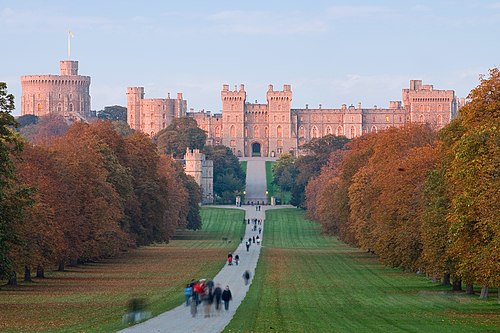 Windsor CastleRestored · prime 1820
 Tower of LondonRestored · prime 1285
 Bamburgh CastleRestored · prime 1904
All castles in England → · Strongest castles in England → · Castles of Europe
Play As Your Clan
Hold a real castle against whatever you choose to send at it, take a ship out in her own service years, or stand at the shoulder of someone the record remembers. The chronicler sets the scene; the deeds are yours.
Notable bearers of the Howard name
- John Howard, 1st Duke of Norfolk (c.1425-1485), creation of the dukedom
- Thomas Howard, 4th Duke of Norfolk (1536-1572), the most powerful subject of Elizabeth I
- Lord Howard of Effingham (1536-1624), commander of the English fleet against the Spanish Armada
- Catherine Howard (c.1523–1542), queen consort
- Michael Howard (b. 1941), politician
- Edward Howard, 18th Duke of Norfolk (b.1956), current Earl Marshal of England
Stories of Howard
Catherine Howard's last night
1542Catherine Howard, fifth wife of Henry VIII, was the niece of the Duke of Norfolk and a cousin of Anne Boleyn, who had been executed for treason at the same end of the same Tower yard six years earlier. She had been queen for fifteen months. She was, by the historical balance, between sixteen and twenty years old, and very probably nineteen. Charges of pre-marital intercourse with Francis Dereham and adulterous intent with Thomas Culpeper had been brought before the Council in November 1541. She was attainted by Parliament in February 1542 without a trial. On the evening of the twelfth of February 1542, by Eustace Chapuys's account written to Charles V, she asked the Lieutenant of the Tower, Sir John Gage, to have the executioner's block brought to her room so that she might rehearse the laying of her head upon it. The request was, by the practice of the Tower, granted. She was beheaded the next morning at seven o'clock on Tower Green by a single stroke of the axe.
Read the story →
Effingham and the Armada
1588On the evening of the seventh of August 1588, while the Spanish Armada under Medina Sidonia lay at anchor off Calais waiting for the Duke of Parma's army to come down from Flanders, the English fleet of Lord Howard of Effingham, Lord High Admiral, sent eight fireships into the anchored line at midnight. The Spanish cut their cables and ran north before a south-westerly. The English fleet under Howard, with Drake on the Revenge, Hawkins on the Victory, Frobisher on the Triumph, gave chase up the Channel through the morning of the eighth. At the action off Gravelines that day they broke the Spanish line, drove four ships ashore on the Flemish coast, and pushed the rest into a North Sea where the wind would carry them around the top of Scotland and break a third of them on the Irish coast. Charles Howard, second Baron Howard of Effingham, was fifty-two years old, a Catholic in religion in a Protestant fleet, the cousin of the queen, and the man whose decision not to anchor inshore at the Isle of Wight on the third of August had kept the Spanish from a deepwater harbour in southern England.
Read the story →